___ Act of 2025
Summary
What This Bill Does
This placeholder-titled bill is a broad congressional-review bill for Executive Orders and agency rules. Before an Executive Order takes effect, the President must publish supporting data, scientific and economic studies, cost-benefit analyses, online access instructions, and a report to Congress and the Comptroller General. Major Executive Orders require enactment of a joint resolution of approval within a 70-session-or-legislative-day window unless a 90-day temporary emergency, criminal-law, national-security, or trade-agreement exception is invoked. The bill sets expedited House and Senate procedures for approving major Executive Orders. It also rewrites chapter 8 of title 5 so federal agencies must publish the basis for rules, submit copies, classifications, economic effects, cost-benefit analyses, jobs effects, Regulatory Flexibility Act materials, Unfunded Mandates Act materials, and related information to Congress and GAO. Major rules cannot take effect without a joint resolution of approval, with a similar 90-day emergency exception. Nonmajor rules take effect subject to a congressional disapproval process. OIRA defines major rules based on $100 million annual effects, major cost or price increases, or significant adverse competitive or employment effects. Judicial review is mostly barred, but courts may determine whether a rule completed the chapter's requirements to take effect. Federal Reserve Board and Federal Open Market Committee monetary policy rules are exempt. The bill preserves effective-date treatment for certain hunting, fishing, camping, and good-cause rules, and requires GAO to study the number of effective rules, major rules, and total estimated economic cost within one year.
Who Benefits and How
Congress benefits because major Executive Orders and major agency rules would require affirmative legislative approval before taking effect. Regulated businesses benefit when major rules and Executive Orders face more disclosure, cost-benefit analysis, committee review, and approval votes. GAO and congressional committees benefit from mandatory reports on rule classifications, procedural compliance, economic effects, and federal regulatory costs. Financial markets benefit from the explicit monetary-policy exemption for the Federal Reserve Board and Federal Open Market Committee.
Who Bears the Burden and How
Federal agencies and White House policy staff must prepare supporting analyses, classifications, cost-benefit materials, economic effects lists, jobs effects, committee reports, and online access instructions before actions take effect. Presidents and agencies risk delay or rejection for major actions if Congress does not approve them within the statutory window. Congressional committees and floor staff must process expedited joint resolutions under strict deadlines. Regulated parties may face uncertainty while rules or Executive Orders await approval, and courts have limited review authority over most determinations.
Key Provisions
- Requires public supporting information and congressional reports before Executive Orders or agency rules can take effect.
- Requires affirmative congressional approval before major Executive Orders and major rules take effect.
- Creates expedited House and Senate procedures for major-action approval resolutions.
- Creates a congressional disapproval process for nonmajor rules.
- Defines major rules through OIRA criteria, limits judicial review, exempts monetary policy, preserves certain effective-date exceptions, and requires a GAO regulatory-cost study.
Evidence Chain:
This summary is generated from the full bill text using AI analysis. Expand "Detailed Analysis" below for identified beneficiaries/burden bearers with clause-level evidence links.
At a Glance
What This Bill Does
Requires congressional review and approval before major Executive Orders and major agency rules can take effect, creates expedited approval procedures for major actions and disapproval procedures for nonmajor rules, requires supporting data and economic analysis reports to Congress and GAO, limits judicial review, exempts Federal Reserve monetary policy rules, preserves certain emergency or good-cause effective dates, and requires GAO to study the number and cost of federal rules.
Key Policy Areas
Government, Financial Services, Professional Services
Primary Purpose
Requires congressional review and approval before major Executive Orders and major agency rules can take effect, creates expedited approval procedures for major actions and disapproval procedures for nonmajor rules, requires supporting data and economic analysis reports to Congress and GAO, limits judicial review, exempts Federal Reserve monetary policy rules, preserves certain emergency or good-cause effective dates, and requires GAO to study the number and cost of federal rules.
Policy Domains
Substantive provisions
Identified Gains
- Congressional committees
- GAO rule analysts
- Regulated businesses
- Financial markets
- Public access researchers
- OIRA reviewers
Identified Costs
- White House policy staff
- Federal agency rulemaking staff
- Presidents issuing major Executive Orders
- Congressional floor staff
- Federal courts
- Regulated parties awaiting approvals
Sponsors
Legislative Progress
In CommitteeReferred to the Committee on the Judiciary, and in addition …
Introduced in House
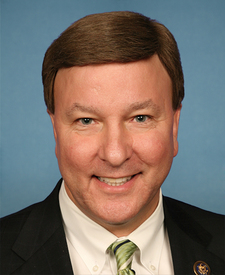
Mr. Rogers of Alabama introduced the following bill; which was …
Stakeholder Effects
cui bono?How this legislation distributes effects. Mention counts reflect frequency, not effect magnitude.
Camping permit program managers, Comptroller General staff, Congressional committees
Congressional committees, Federal agency rulemaking staff face effects in multiple directions
Positive-direction: Camping permit program managers, Congressional oversight committees, Federal agency litigators, Fishing permit program managers, Hunting permit program managers, Senate members filing discharge petitions
Negative-direction: Comptroller General staff, Congressional leadership offices, Federal courts, GAO rule analysts, House committees, OIRA reviewers, Presidents issuing major Executive Orders, Senate committees, White House policy staff
Regulated businesses, Regulated businesses affected by Executive Orders, Regulated businesses challenging rules
Positive-direction: Regulated businesses, Regulated businesses affected by Executive Orders
Negative-direction: Regulated businesses challenging rules
Federal Open Market Committee, Federal Reserve Board, Financial markets
Bill Structure & Actor Mappings
Who is "The Secretary" in each section?
We use a combination of our own taxonomy and classification in addition to large language models to assess meaning and potential beneficiaries. High confidence means strong textual evidence. Always verify with the original bill text.
Learn more about our methodology