PROTECT Military Families Act
Summary
What This Bill Does
The PROTECT Military Families Act amends INA section 212(d)(5) to create a mandatory parole pathway for certain relatives of current and former service members. DHS must parole into the United States the spouse, widow or widower, parent, or child of an active-duty Armed Forces member, Selected Reserve member, or former active-duty or Selected Reserve member discharged under conditions other than dishonorable. Parole must be granted in one-year increments. A denial is allowed only if the Secretary of Homeland Security, Secretary of Defense, and Secretary of Veterans Affairs jointly issue a written justification; that responsibility cannot be delegated. If denied, DHS must publish information about the denial and a detailed justification on a public website, excluding personally identifiable information. The bill also replaces Attorney General references with Secretary of Homeland Security in this parole provision.
Who Benefits and How
Military families benefit because qualifying relatives receive a mandatory parole route instead of a fully discretionary case-by-case process. Active-duty service members, reservists, veterans, widows, widowers, parents, spouses, and children benefit from reduced family-separation risk. Immigration attorneys and military legal assistance offices benefit from clearer statutory criteria and a high-level written-denial requirement.
Who Bears the Burden and How
DHS parole adjudicators must identify qualifying military relationships, issue parole in one-year increments, maintain public denial information, protect personal identifiers, and comply with a narrower denial standard. The DHS Secretary, Defense Secretary, and VA Secretary personally bear the burden of issuing any denial justification and cannot delegate that responsibility. Defense and VA staff must support verification and coordination, and federal agencies must update forms, guidance, website notices, and compliance workflows.
Key Provisions
- Requires DHS to parole qualifying relatives of active-duty service members, Selected Reserve members, and covered former service members.
- Provides one-year parole increments for spouses, widows, widowers, parents, and children.
- Limits denial to cases with a joint written justification from the DHS, Defense, and VA Secretaries.
- Prohibits delegation of the secretarial denial responsibility.
- Requires DHS to publish denial information and detailed justifications without personally identifiable information.
Evidence Chain:
This summary is generated from the full bill text using AI analysis. Expand "Detailed Analysis" below for identified beneficiaries/burden bearers with clause-level evidence links.
At a Glance
What This Bill Does
Requires DHS to grant one-year parole to spouses, widows, widowers, parents, and children of active-duty Armed Forces members, Selected Reserve members, and honorably or non-dishonorably discharged former service members, unless the DHS, Defense, and VA Secretaries personally issue a joint written denial justification published without personal identifiers.
Key Policy Areas
Immigration, Defense, Veterans
Primary Purpose
Requires DHS to grant one-year parole to spouses, widows, widowers, parents, and children of active-duty Armed Forces members, Selected Reserve members, and honorably or non-dishonorably discharged former service members, unless the DHS, Defense, and VA Secretaries personally issue a joint written denial justification published without personal identifiers.
Policy Domains
Substantive provisions
Identified Gains
- Military spouses
- Military widows
- Military widowers
- Parents of service members
- Children of service members
- Active-duty service members
- Reservists
- Veterans
Identified Costs
- DHS parole adjudicators
- Homeland Security Secretary staff
- Defense Secretary staff
- VA Secretary staff
- Military legal assistance offices
- Federal website compliance staff
Sponsors
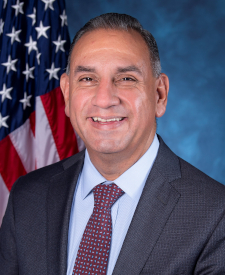
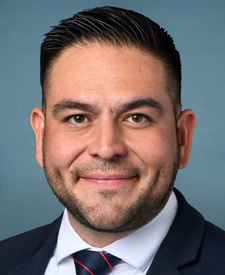

Legislative Progress
In CommitteeMr. Cisneros (for himself and Mr. Carbajal) introduced the following …
Referred to the House Committee on the Judiciary.
Introduced in House
Stakeholder Effects
cui bono?How this legislation distributes effects. Mention counts reflect frequency, not effect magnitude.
Children of service members, Defense Secretary staff, Military spouses
Positive-direction: Children of service members, Military spouses, Parents of service members
Negative-direction: Defense Secretary staff
Bill Structure & Actor Mappings
Who is "The Secretary" in each section?
We use a combination of our own taxonomy and classification in addition to large language models to assess meaning and potential beneficiaries. High confidence means strong textual evidence. Always verify with the original bill text.
Learn more about our methodology