Jobs for a Carbon Free Transportation System Act
Summary
What This Bill Does
The Jobs for a Carbon Free Transportation System Act combines transportation decarbonization with worker-transition policy. It creates Department of Transportation grants for low carbon corridors connecting public transportation, rail, roads, pedestrian and bicycle facilities, high-speed rail, electric or automated vehicle lanes, Smart Cities connectivity, transit-oriented development, carbon fees, and value capture. It creates technical assistance and standards for State and local value-capture mechanisms, lets DOT designate Federal value-capture tax increment financing districts, and directs Treasury to certify assessed capital-gains values and issue rules. It creates qualified transit-oriented development bonds for projects within one-half mile of major public transportation facilities, subject to local policies for affordable housing, affordable commercial space, density, mixed use, value capture, and Davis-Bacon labor rules. It also creates Labor Department grants for local or Tribal governments to plan transitions from fossil-fuel jobs to sustainable industries and a National Employment Corps to guarantee jobs, wages, benefits, materials, training, supportive services, transportation, childcare, counseling, adult education, and placement support for eligible workers not successfully transitioned.
Who Benefits and How
State, local, and Tribal governments benefit from grants, technical assistance, tax-increment district designations, and transition planning money. Metropolitan planning organizations benefit from low-carbon corridor grants. Transit riders, pedestrians, cyclists, and communities near transit benefit from investment in connected low-carbon corridors and affordable transit-oriented development. Affordable housing developers and local businesses near stations benefit from qualified bond financing and value-capture districts. Fossil-fuel workers and communities benefit from transition plans, apprenticeships, sustainable-industry training, wage and benefits support, wrap-around services, and a job-guarantee backstop through the National Employment Corps.
Who Bears the Burden and How
The Departments of Transportation, Treasury, Labor, and Energy must design grant programs, certify district values, issue regulations, monitor labor standards, evaluate eligible areas, and administer job guarantees. Participating States, local governments, Tribal governments, and metropolitan planning organizations must adopt value-capture or transit-oriented-development policies, nominate districts, prepare plans, coordinate with employers and labor organizations, comply with Davis-Bacon and other labor standards, and report results. Federal taxpayers bear the cost of grants, bond support, wage and benefit payments, supportive services, and direct employment projects. Property owners, businesses, and local tax administrators in value-capture districts may face dedicated revenue mechanisms or user fees tied to infrastructure financing.
Key Provisions
- Establishes low-carbon corridor grants for multimodal transportation, transit-oriented development, high-speed rail, bicycle, pedestrian, electric-vehicle, and Smart Cities projects.
- Creates value-capture technical assistance and Federal value-capture tax increment financing district designations.
- Requires Treasury rules for capital-gains value certification and congressional notification of designated districts.
- Creates qualified transit-oriented development bonds for projects near major transportation facilities with affordable housing, mixed-use, and value-capture policies.
- Establishes renewable-energy transition planning grants for fossil-fuel-dependent local and Tribal governments.
- Creates a National Employment Corps to guarantee jobs, training, wages, benefits, materials, and wrap-around services for eligible displaced workers.
Evidence Chain:
This summary is generated from the full bill text using AI analysis. Expand "Detailed Analysis" below for identified beneficiaries/burden bearers with clause-level evidence links.
At a Glance
What This Bill Does
Creates grants, value-capture finance tools, qualified transit-oriented development bonds, fossil-fuel worker transition planning grants, and a National Employment Corps to build low-carbon transportation corridors, affordable transit-oriented development, and job guarantees for workers not successfully transitioned from fossil-fuel employment.
Key Policy Areas
Transportation, Climate, Labor, Housing, Tax, Infrastructure
Primary Purpose
Creates grants, value-capture finance tools, qualified transit-oriented development bonds, fossil-fuel worker transition planning grants, and a National Employment Corps to build low-carbon transportation corridors, affordable transit-oriented development, and job guarantees for workers not successfully transitioned from fossil-fuel employment.
Policy Domains
Substantive provisions
Identified Gains
- State governments
- Local governments
- Tribal governments
- Metropolitan planning organizations
- Transit riders
- Pedestrians
- Cyclists
- Affordable housing developers
- Local businesses near transit stations
- Fossil-fuel workers
- Fossil-fuel-dependent communities
Identified Costs
- Department of Transportation staff
- Treasury tax administrators
- Department of Labor staff
- Department of Energy staff
- Participating State governments
- Participating local governments
- Participating Tribal governments
- Metropolitan planning organizations
- Property owners in value-capture districts
- Businesses in value-capture districts
- Federal taxpayers
Legislative Progress
In CommitteeReferred to the Subcommittee on Railroads, Pipelines, and Hazardous Materials.
Referred to the Subcommittee on Highways and Transit.
Referred to the Committee on Transportation and Infrastructure, and in …
Introduced in House
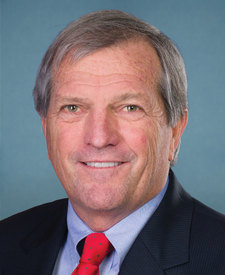
Mr. DeSaulnier introduced the following bill; which was referred to …
Stakeholder Effects
cui bono?How this legislation distributes effects. Mention counts reflect frequency, not effect magnitude.
Local and Tribal governments receiving employment-guarantee grants, Local governments building value-capture systems, Local governments planning fossil-fuel worker transitions
Positive-direction: Local and Tribal governments receiving employment-guarantee grants, Local governments building value-capture systems, Local governments planning fossil-fuel worker transitions, Local transportation agencies, State and local governments and project sponsors financing transit-oriented development, State and local governments seeking federal value capture financing district designation, State and local governments using federal value capture tax increment financing districts, State governments building value-capture systems, State transportation agencies, State, local, Tribal, and regional transportation entities developing low-carbon corridors
Negative-direction: States and local governments seeking district designation
Department of Energy analysts, Department of Labor and participating federal agencies, Department of Labor grant staff
Communities and travelers using lower-carbon multimodal transportation corridors, Residents seeking affordable housing near transit, Workers displaced by the transition from traditional energy sources to sustainable energy sources
Public transportation agencies, Transit riders
Affordable housing developers near transit, Affordable transit-oriented developers
Tribal governments planning fossil-fuel worker transitions
Bill Structure & Actor Mappings
Who is "The Secretary" in each section?
We use a combination of our own taxonomy and classification in addition to large language models to assess meaning and potential beneficiaries. High confidence means strong textual evidence. Always verify with the original bill text.
Learn more about our methodology