Hawai‘i National Cemetery Act
Summary
What This Bill Does
The Hawaiʻi National Cemetery Act addresses a burial-access gap for veterans and eligible family members in Hawaiʻi. Congress finds that VA seeks to keep most veterans within 75 miles of a national, State, or Tribal veterans cemetery, but that Hawaiʻi’s only national cemetery, the National Memorial Cemetery of the Pacific, has been essentially closed to casket burials since 1991 and is expected to stop accepting cremated remains by 2036. Veterans in Hawaiʻi who want inground national-cemetery burial may have to use a cemetery at least 2,500 miles away, creating travel, casket transportation, and visitation costs. The bill directs VA to establish a new national cemetery in Hawaiʻi, consult the Governor, veterans service organizations, and other stakeholders, identify appropriate sites within one year, and report annually until operations begin.
Who Benefits and How
Veterans in Hawaiʻi benefit because the bill starts the process for a national-cemetery option closer to home. Spouses, dependents, and eligible family members benefit from less burdensome burial and memorial visitation access. Hawaiʻi veterans service organizations benefit from a formal consultation role. The National Cemetery Administration benefits from congressional direction that aligns cemetery planning with island geography rather than only mainland distance metrics.
Who Bears the Burden and How
The Secretary of Veterans Affairs and National Cemetery Administration staff must select a site, conduct NEPA review, acquire land, complete master planning and design, prepare construction documents, award contracts, oversee construction, begin operations, and report annually to congressional veterans committees. Hawaiʻi officials and veterans service organizations must participate in consultation. Federal taxpayers bear the cost of planning, land acquisition, construction, and cemetery operations.
Key Provisions
- Requires VA to establish a new national cemetery in Hawaiʻi.
- Requires site selection to prioritize population-center access, transportation access, and minimized environmental impact.
- Requires consultation with the Governor of Hawaiʻi, local veterans service organizations, and other appropriate entities.
- Requires a site-identification report within one year.
- Requires annual progress reports on environmental review, land acquisition, design, construction contracting, construction completion, and operations.
Evidence Chain:
This summary is generated from the full bill text using AI analysis. Expand "Detailed Analysis" below for identified beneficiaries/burden bearers with clause-level evidence links.
At a Glance
What This Bill Does
Requires the Department of Veterans Affairs to establish a new national cemetery in Hawaiʻi, prioritize accessible and lower-impact locations, consult Hawaiʻi officials and veterans service organizations, report candidate sites within one year, and report annually on site selection, environmental review, land acquisition, design, contracting, construction, and operations until the cemetery opens.
Key Policy Areas
Veterans, Public Lands, Government Oversight
Primary Purpose
Requires the Department of Veterans Affairs to establish a new national cemetery in Hawaiʻi, prioritize accessible and lower-impact locations, consult Hawaiʻi officials and veterans service organizations, report candidate sites within one year, and report annually on site selection, environmental review, land acquisition, design, contracting, construction, and operations until the cemetery opens.
Policy Domains
Substantive provisions
Identified Gains
- Veterans in Hawaiʻi
- Spouses of veterans in Hawaiʻi
- Dependents of veterans in Hawaiʻi
- Eligible family members
- Hawaiʻi veterans service organizations
- National Cemetery Administration planners
Identified Costs
- Secretary of Veterans Affairs
- National Cemetery Administration staff
- Hawaiʻi officials
- Veterans service organizations
- Federal taxpayers
- Congressional veterans committees
Sponsors
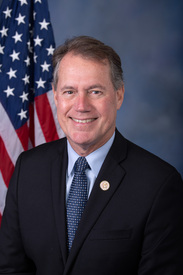
Ed Case
D-HI | Primary Sponsor
Legislative Progress
In CommitteeSubcommittee Hearings Held
Referred to the Subcommittee on Disability Assistance and Memorial Affairs.
Referred to the House Committee on Veterans' Affairs.
Introduced in House
Mr. Case (for himself and Ms. Tokuda) introduced the following …
Stakeholder Effects
cui bono?How this legislation distributes effects. Mention counts reflect frequency, not effect magnitude.
Veterans and eligible family members in Hawaii seeking national-cemetery burial access
Department of Veterans Affairs National Cemetery Administration staff
Bill Structure & Actor Mappings
Who is "The Secretary" in each section?
We use a combination of our own taxonomy and classification in addition to large language models to assess meaning and potential beneficiaries. High confidence means strong textual evidence. Always verify with the original bill text.
Learn more about our methodology