To require the United States Executive Director at the International Monetary Fund to advocate for increased transparency with respect to exchange rate policies of the People’s Republic of China, and for other purposes.
Summary
What This Bill Does
The China Exchange Rate Transparency Act of 2025 states congressional findings that China has obligations under IMF Article IV to maintain orderly exchange-rate arrangements, avoid exchange-rate manipulation, and cooperate with IMF surveillance, and that IMF Article VIII can require China to furnish data on gold and foreign-exchange holdings, including assets held by non-official agencies. It cites Treasury's November 2022 report concluding that China provides very limited transparency about its exchange-rate mechanism, policy objectives, offshore RMB activity, foreign-exchange intervention, and broader currency-management tools.
The bill requires the Treasury Secretary to instruct the United States Executive Director at the International Monetary Fund to use the U.S. voice and vote to advocate for increased transparency from China and enhanced IMF multilateral and bilateral surveillance of Chinese exchange-rate arrangements, including indirect intervention through Chinese financial institutions or state-owned enterprises. During Article IV consultations, the U.S. Executive Director must advocate inclusion of any significant divergences between Chinese exchange-rate policies and those of other Special Drawing Rights currency issuers. During IMF governance reviews, the U.S. must push IMF members and management to consider China's performance as a responsible stakeholder when evaluating quota and voting shares. The Act sunsets 30 days after the earlier of a U.S. Governor report that China is in substantial compliance with IMF exchange-rate obligations and SDR-consistent practices, or seven years after enactment.
Who Benefits and How
U.S. manufacturers competing with Chinese imports, U.S. exporters, Treasury international-affairs staff, the United States Executive Director at the IMF, IMF surveillance staff, congressional trade overseers, currency-market analysts, and companies exposed to yuan exchange-rate policy benefit because the bill presses for more disclosure, surveillance, and governance consequences around Chinese currency management.
Who Bears the Burden and How
The People's Republic of China, Chinese financial institutions, Chinese state-owned enterprises, Chinese currency-management authorities, IMF governance officials, Treasury officials, and the U.S. IMF Executive Director bear diplomatic, reporting, surveillance, and advocacy burdens because the bill requires the United States to press for scrutiny of China's exchange-rate practices until substantial compliance or the seven-year sunset.
Key Provisions
- Finds that China has IMF obligations on orderly exchange-rate arrangements, exchange-rate manipulation, and data disclosure.
- Cites Treasury findings that China lacks transparency on exchange-rate mechanisms, policy objectives, offshore RMB activity, and foreign-exchange intervention.
- Requires the Treasury Secretary to instruct the U.S. IMF Executive Director to advocate for increased Chinese exchange-rate transparency.
- Requires advocacy for enhanced IMF surveillance of direct and indirect Chinese foreign-exchange intervention through financial institutions or state-owned enterprises.
- Requires Article IV consultations to address significant divergences from other Special Drawing Rights currency issuers.
- Requires IMF governance reviews to consider China's performance as a responsible international monetary stakeholder.
- Provides a sunset after substantial Chinese compliance or seven years after enactment.
Evidence Chain:
This summary is generated from the full bill text using AI analysis. Expand "Detailed Analysis" below for identified beneficiaries/burden bearers with clause-level evidence links.
At a Glance
What This Bill Does
Requires the Treasury Secretary to instruct the U.S. IMF Executive Director to advocate for greater Chinese exchange-rate transparency, stronger IMF surveillance of direct and indirect foreign-exchange intervention, consideration of China's IMF governance performance, and sunsets after substantial Chinese compliance or seven years.
Key Policy Areas
International Finance, Trade, China Policy, Currency
Primary Purpose
Requires the Treasury Secretary to instruct the U.S. IMF Executive Director to advocate for greater Chinese exchange-rate transparency, stronger IMF surveillance of direct and indirect foreign-exchange intervention, consideration of China's IMF governance performance, and sunsets after substantial Chinese compliance or seven years.
Policy Domains
Substantive provisions
Identified Gains
- U.S. manufacturers competing with Chinese imports
- U.S. exporters
- Treasury international-affairs staff
- Department of the Treasury
- United States Executive Director at the IMF
- IMF surveillance staff
- Congressional trade committee staff
- Currency-market analysts
- Manufacturers exposed to yuan exchange-rate policy
Identified Costs
- Chinese government agencies
- Chinese financial institutions
- Chinese state-owned enterprises
- Chinese currency-management authorities
- Chinese state-owned enterprise managers
- IMF governance staff
- Department of the Treasury
- United States Executive Director at the IMF
Sponsors
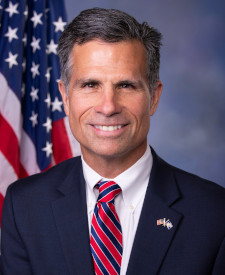




Legislative Progress
Passed HouseReceived; read twice and referred to the Committee on Foreign …
Passed House (inferred from eh version)
Mr. Meuser (for himself, Mr. Loudermilk, Ms. Lee of Nevada, …
Stakeholder Effects
cui bono?How this legislation distributes effects. Mention counts reflect frequency, not effect magnitude.
China (People's Republic of China), Chinese state-owned enterprises
US exporters, US manufacturers competing with Chinese imports
Bill Structure & Actor Mappings
Who is "The Secretary" in each section?
- "imf"
- → International Monetary Fund
- "sdr"
- → Special Drawing Rights
- "treasury"
- → Department of the Treasury
We use a combination of our own taxonomy and classification in addition to large language models to assess meaning and potential beneficiaries. High confidence means strong textual evidence. Always verify with the original bill text.
Learn more about our methodology