Federal Program Integrity and Fraud Prevention Act of 2026
Summary
What This Bill Does
The Federal Program Integrity and Fraud Prevention Act adds a new section 4715 to title 41. It requires individuals convicted of covered federal felonies arising out of an agency contract, grant, cooperative agreement, loan, or other financial assistance to be listed as excluded sources in the System for Award Management Exclusions list for three years.
Covered convictions include federal court judgments, findings of guilt, accepted guilty or nolo contendere pleas, and deferred-prosecution or similar arrangements. Covered felonies include fraud, theft, bribery, embezzlement, false statements, tax evasion, and similar offenses connected to federal funds. The Attorney General must notify the Administrator of General Services of each covered conviction, and GSA must promptly enter the three-year prohibition in SAM.
The bill lets an agency head waive the prohibition in a particular case if the agency head makes a written determination that the exemption is warranted. Each written exemption must be transmitted to Congress immediately. DOJ, in consultation with GSA, must issue implementation and compliance guidance within one year of enactment.
Who Benefits and How
Federal taxpayers benefit because people convicted of federal assistance fraud are barred from receiving covered federal awards for three years. Contracting officers benefit because SAM exclusions provide a centralized award-screening signal. Federal grant managers benefit because the same exclusion applies to grants, cooperative agreements, loans, and other financial assistance. Honest federal contractors benefit if competitors convicted of award-related felony misconduct are temporarily excluded. Congressional oversight committees benefit from immediate notice of agency-head waivers.
Who Bears the Burden and How
Individuals convicted of covered federal felonies bear a direct three-year exclusion from federal awards. The Attorney General must identify covered convictions and notify GSA. GSA SAM Exclusions administrators must enter and maintain the prohibitions. Agency heads using waiver authority must make written determinations and transmit them to Congress immediately. Federal award officials must incorporate the new exclusion into award checks and compliance workflows.
Key Provisions
- Creates a three-year SAM exclusion for individuals convicted of covered federal felonies tied to federal funds.
- Requires the Attorney General to notify GSA of covered convictions.
- Requires GSA to promptly enter the prohibition in SAM or a successor system.
- Provides agency-head waiver authority for warranted cases.
- Requires immediate congressional transmission of each written waiver.
- Defines covered agencies, convictions, and felony offenses.
- Requires DOJ-GSA implementation guidance within one year.
Evidence Chain:
This summary is generated from the full bill text using AI analysis. Expand "Detailed Analysis" below for identified beneficiaries/burden bearers with clause-level evidence links.
At a Glance
What This Bill Does
Creates a three-year System for Award Management exclusion for individuals convicted in federal court of felony fraud, theft, bribery, embezzlement, tax evasion, false statements, or similar offenses arising from federal contracts, grants, loans, cooperative agreements, or other financial assistance, with agency-head waivers reported to Congress and DOJ-GSA implementation guidance within one year.
Key Policy Areas
Federal Procurement, Fraud Prevention, Grants, Government Accountability
Primary Purpose
Creates a three-year System for Award Management exclusion for individuals convicted in federal court of felony fraud, theft, bribery, embezzlement, tax evasion, false statements, or similar offenses arising from federal contracts, grants, loans, cooperative agreements, or other financial assistance, with agency-head waivers reported to Congress and DOJ-GSA implementation guidance within one year.
Policy Domains
House resolution provisions
Identified Gains
- Federal taxpayers
- Contracting officers
- Federal grant managers
- Honest federal contractors
- Congressional oversight committees
Identified Costs
- Individuals convicted of covered federal felonies
- Attorney General
- GSA SAM Exclusions administrators
- Agency heads using waiver authority
- Federal award officials
Sponsors
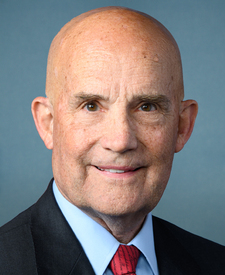
Keith Self
R-TX | Primary Sponsor

Legislative Progress
ReportedReceived in the Senate and Read twice and referred to …
Received; read twice and referred to the Committee on Homeland …
The title of the measure was amended. Agreed to without …
Motion to reconsider laid on the table Agreed to without …
On motion to suspend the rules and pass the bill, …
Passed/agreed to in House: On motion to suspend the rules …
DEBATE - The House proceeded with forty minutes of debate …
Considered under suspension of the rules. (consideration: CR H3923-3925)
Mr. Gill (TX) moved to suspend the rules and pass …
Ordered to be Reported (Amended) by the Yeas and Nays: …
Stakeholder Effects
cui bono?How this legislation distributes effects. Mention counts reflect frequency, not effect magnitude.
Federal award officials, Federal contracting officers, GSA SAM Exclusions administrators
Positive-direction: Federal award officials, Federal contracting officers
Negative-direction: GSA SAM Exclusions administrators
Attorney General, Department of Justice guidance staff
Individuals convicted of federal assistance fraud
Bill Structure & Actor Mappings
Who is "The Secretary" in each section?
- "ag"
- → Attorney General
- "gsa"
- → Administrator of General Services
We use a combination of our own taxonomy and classification in addition to large language models to assess meaning and potential beneficiaries. High confidence means strong textual evidence. Always verify with the original bill text.
Learn more about our methodology