Chesapeake Bay Watershed Advancement for Training, Education, Restoration, and Science (WATERS) Act
Summary
What This Bill Does
The WATERS Act makes NOAA Chesapeake Bay Office the primary NOAA representative in the watershed and rewrites the office statute. It requires a Director with Chesapeake Bay research or resource-management expertise, aligns the office with the Chesapeake Bay Program and Chesapeake Executive Council, adds coastal hazards, climate change, education, integrated ecosystem assessments, and program-support functions, and creates program activities for peer-reviewed science. It supports integrated coastal observations, Chesapeake Bay Interpretive Buoy System data, weather and ecological forecasts, monitoring of water quality effects on living marine resources, K-12 watershed education and teacher development, internships and career pathways, coastal living resources management, native oyster and submerged aquatic vegetation restoration, shellfish aquaculture, and research on species such as striped bass, menhaden, oysters, blue crabs, and other ecologically important species.
Who Benefits and How
Chesapeake Bay communities, K-12 students, teachers, scientists, state resource managers, fisheries, aquaculture operators, and habitat-restoration groups benefit from better NOAA science, education grants, observations, forecasts, and restoration coordination.
Who Bears the Burden and How
NOAA Chesapeake Bay Office staff, the Office Director, Chesapeake Executive Council agencies, grant applicants, and federal taxpayers must comply with peer review, consultation, monitoring, grant administration, data-products, education, and habitat-program duties.
Key Provisions
- Reauthorizes the NOAA Chesapeake Bay Office under a Director with Chesapeake Bay expertise.
- Expands NOAA coordination with the Chesapeake Bay Program and Chesapeake Executive Council.
- Authorizes integrated coastal observations, buoy-system data, ecosystem assessments, education grants, and career pathways.
- Supports coastal living resources management, native oyster restoration, submerged aquatic vegetation, aquaculture, and fisheries research.
Evidence Chain:
This summary is generated from the full bill text using AI analysis. Expand "Detailed Analysis" below for identified beneficiaries/burden bearers with clause-level evidence links.
At a Glance
What This Bill Does
Reauthorizes and modernizes the NOAA Chesapeake Bay Office, expanding its science, observation, education, habitat, living-resources, and coordination roles in the Chesapeake Bay watershed.
Key Policy Areas
Environment, Education, Research & Science, Fisheries, Government
Primary Purpose
Reauthorizes and modernizes the NOAA Chesapeake Bay Office, expanding its science, observation, education, habitat, living-resources, and coordination roles in the Chesapeake Bay watershed.
Policy Domains
Substantive provisions
Identified Gains
- Chesapeake Bay communities
- K-12 students
- Teachers
- Fisheries
- Aquaculture operators
Identified Costs
- NOAA Chesapeake Bay Office staff
- Chesapeake Executive Council agencies
- Grant applicants
- Federal taxpayers
Sponsors



Legislative Progress
ReportedOrdered to be Reported in the Nature of a Substitute …
Committee Consideration and Mark-up Session Held
Subcommittee on Water, Wildlife and Fisheries Discharged
Subcommittee Hearings Held
Referred to the Subcommittee on Water, Wildlife and Fisheries.
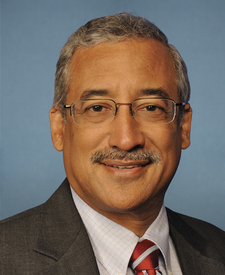
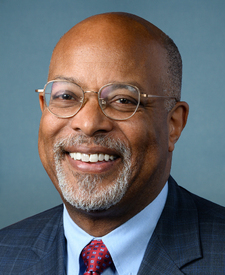
Mr. Scott of Virginia (for himself, Mr. Wittman, Mrs. Kiggans …
Referred to the House Committee on Natural Resources.
Introduced in House
Stakeholder Effects
cui bono?How this legislation distributes effects. Mention counts reflect frequency, not effect magnitude.
K-12 students, Teachers in the Chesapeake watershed
Chesapeake Executive Council agencies, NOAA Chesapeake Bay Office staff
Bill Structure & Actor Mappings
Who is "The Secretary" in each section?
We use a combination of our own taxonomy and classification in addition to large language models to assess meaning and potential beneficiaries. High confidence means strong textual evidence. Always verify with the original bill text.
Learn more about our methodology