FREE Act
Summary
What This Bill Does
The FREE Act changes federal permitting from discretionary case-by-case review toward "permitting by rule" where that approach is legally and practically suitable. Congress states that many permit systems give agencies broad discretion, lack usable time constraints, and create delay and expense for both the government and applicants.
The reported version first requires the Director of the Office of Management and Budget to issue implementation guidance within 120 days. After that guidance, every agency head must report to Congress and the Comptroller General on each type of permit the agency issues, the statutory and regulatory requirements for each permit, review steps, typical timelines, enforcement actions when applications do not meet requirements, the interests the permit protects, and whether that permit can be converted to permitting by rule.
For permits suitable for permitting by rule, agencies must issue rules within 12 months that let applicants certify compliance with clear written standards. If an agency does not act within 180 days, the permit is treated as approved. Agencies retain audit and enforcement authority, but if they deny a permit and the applicant substantially prevails in court, the agency must pay attorney fees and costs. GAO must report to Congress on agency implementation.
Who Benefits and How
Private permit applicants benefit because eligible permits would have clearer written standards, certification-based filing, and a 180-day deemed-approval backstop. Infrastructure developers benefit if slow environmental, energy, transportation, or land-use permits can be converted to rule-based approvals. Government permit applicants benefit from the same predictable standards and deadlines. Congressional permitting committees benefit from detailed agency permit inventories and GAO oversight. Federal taxpayers may benefit if agencies spend less time on routine individualized reviews, though savings depend on implementation.
Who Bears the Burden and How
Federal permitting agencies must inventory their permit types, report statutory requirements and review steps, decide which permits can move to permitting by rule, write new rules within 12 months, audit certifications, and defend denials. OMB regulatory staff must issue government-wide guidance. The Comptroller General must review agency implementation and report to Congress. Public-interest advocates may bear risk if agency review shifts from front-end case review to after-the-fact auditing. Agencies that wrongfully deny permits must pay applicant attorney fees and costs.
Key Provisions
- Requires OMB permitting-by-rule guidance within 120 days.
- Requires each agency to report every permit type, legal requirement, review step, timeline, enforcement practice, protected interest, and conversion determination.
- Directs agencies to implement permitting by rule for suitable permits within 12 months.
- Provides deemed approval if an agency fails to act on a qualifying permit within 180 days.
- Preserves agency audit and enforcement authority after certification-based approval.
- Requires agencies to pay attorney fees and costs when applicants substantially prevail against wrongful denials.
- Directs GAO to report to Congress on implementation.
Evidence Chain:
This summary is generated from the full bill text using AI analysis. Expand "Detailed Analysis" below for identified beneficiaries/burden bearers with clause-level evidence links.
At a Glance
What This Bill Does
Requires OMB guidance and agency reports on federal permits, then directs agencies to move suitable permits to permitting-by-rule systems with written standards, applicant certifications, 180-day deemed approvals, auditing and enforcement authority, attorney-fee remedies for wrongful denials, and GAO reporting to Congress.
Key Policy Areas
Regulatory Reform, Federal Permitting, Government Operations
Primary Purpose
Requires OMB guidance and agency reports on federal permits, then directs agencies to move suitable permits to permitting-by-rule systems with written standards, applicant certifications, 180-day deemed approvals, auditing and enforcement authority, attorney-fee remedies for wrongful denials, and GAO reporting to Congress.
Policy Domains
House resolution provisions
Identified Gains
- Private permit applicants
- Infrastructure developers
- Government permit applicants
- Congressional permitting committees
- Federal taxpayers
Identified Costs
- Federal permitting agencies
- OMB regulatory staff
- Comptroller General staff
- Public-interest advocates
- Agency litigation staff
Sponsors
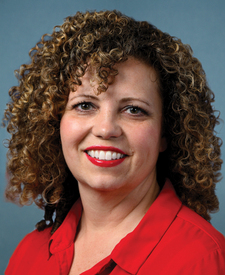
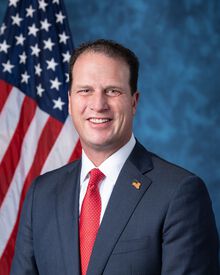

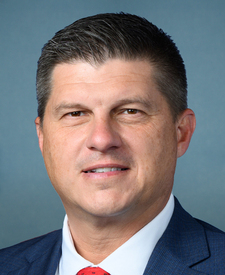
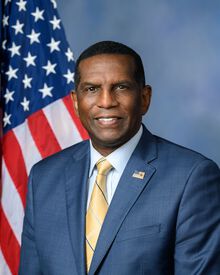
Legislative Progress
ReportedAdditional sponsors: Ms. Hageman and Mr. Hurd of Colorado
Reported with an amendment, committed to the Committee of the …
Placed on the Union Calendar, Calendar No. 303.
Reported (Amended) by the Committee on Oversight and Government Reform. …
Ordered to be Reported by the Yeas and Nays: 23 …
Committee Consideration and Mark-up Session Held
Ms. Maloy (for herself, Mr. Finstad, Mr. Moore of Utah, …
Referred to the House Committee on Oversight and Government Reform.
Introduced in House
Stakeholder Effects
cui bono?How this legislation distributes effects. Mention counts reflect frequency, not effect magnitude.
Comptroller General staff, Federal permitting agencies, Government permit applicants
Positive-direction: Government permit applicants
Negative-direction: Comptroller General staff, Federal permitting agencies
Bill Structure & Actor Mappings
Who is "The Secretary" in each section?
- "agency_head"
- → Head of each federal permitting agency
- "omb_director"
- → Director of the Office of Management and Budget
- "comptroller_general"
- → Comptroller General of the United States
We use a combination of our own taxonomy and classification in addition to large language models to assess meaning and potential beneficiaries. High confidence means strong textual evidence. Always verify with the original bill text.
Learn more about our methodology