BRIDGE Act
Summary
What This Bill Does
The BRIDGE Act adds a new section 5313 to title 49 authorizing the Secretary of Transportation to make grants to public transportation operators for capital costs of maintaining, replacing, or rehabilitating commuter rail bridges, including bridges also used for intercity passenger rail, other public transportation, or roadways. Eligible costs are limited to the net public-transportation capital costs attributable to projected bridge use, and operators seeking grants for bridges they do not own must maintain access agreements with bridge owners. DOT must solicit applications within 30 days after funds are available for a full fiscal year and award grants within 75 days after solicitation closes or by fiscal year end. Selection factors include commuter rail system size, existing section 5337 funding, bridge age and condition, and transit asset-management priority. The bill authorizes 1.5 billion dollars annually for fiscal years 2027 through 2031.
Who Benefits and How
Public transportation operators, commuter rail riders, bridge owners with access agreements, construction firms, engineering firms, and communities served by commuter rail benefit from a dedicated grant stream for bridge safety and reliability.
Who Bears the Burden and How
DOT grant staff, federal taxpayers, smaller transit agencies, and transit operators using bridges they do not own must comply with competitive applications, bridge-access agreements, cost allocation, priority scoring, and grant administration.
Key Provisions
- Creates a commuter rail bridge grant program for maintenance, replacement, and rehabilitation capital costs.
- Requires bridge-access agreements when an applicant does not own the commuter rail bridge.
- Directs DOT to solicit and award grants on fixed competitive timelines.
- Authorizes 1.5 billion dollars per year for fiscal years 2027 through 2031.
Evidence Chain:
This summary is generated from the full bill text using AI analysis. Expand "Detailed Analysis" below for identified beneficiaries/burden bearers with clause-level evidence links.
At a Glance
What This Bill Does
Creates a Department of Transportation commuter rail bridge grant program for maintenance, replacement, and rehabilitation, with competitive deadlines, access-agreement rules, priority factors, and 1.5 billion dollars per year authorized for fiscal years 2027 through 2031.
Key Policy Areas
Transportation, Construction, Government, State & Local Government
Primary Purpose
Creates a Department of Transportation commuter rail bridge grant program for maintenance, replacement, and rehabilitation, with competitive deadlines, access-agreement rules, priority factors, and 1.5 billion dollars per year authorized for fiscal years 2027 through 2031.
Policy Domains
Substantive provisions
Identified Gains
- Public transportation operators
- Commuter rail riders
- Construction firms
- Engineering firms
Identified Costs
- DOT grant staff
- Federal taxpayers
- Transit operators using non-owned bridges
- Smaller transit agencies
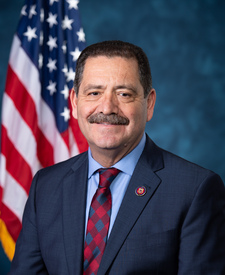
Sponsors

Legislative Progress
In CommitteeReferred to the Subcommittee on Railroads, Pipelines, and Hazardous Materials.
Mr. Quigley introduced the following bill; which was referred to …
Referred to the House Committee on Transportation and Infrastructure.
Introduced in House
Stakeholder Effects
cui bono?How this legislation distributes effects. Mention counts reflect frequency, not effect magnitude.
Bridge owners with access agreements, Public transportation operators, Smaller transit agencies
Positive-direction: Public transportation operators
Negative-direction: Transit operators using non-owned bridges
Bill Structure & Actor Mappings
Who is "The Secretary" in each section?
We use a combination of our own taxonomy and classification in addition to large language models to assess meaning and potential beneficiaries. High confidence means strong textual evidence. Always verify with the original bill text.
Learn more about our methodology