To amend title 5, United States Code, to provide for an alternative removal for performance or misconduct for Federal employees.
Analysis under review: This bill has generated analysis that may be too generic or incomplete. Clause-level evidence remains available below.
Summary
What This Bill Does
The MERIT Act of 2025 overhauls how federal agencies discipline and fire employees. It eliminates the requirement to place underperforming employees on performance improvement plans before termination, compresses the entire disciplinary process to 15 business days, and extends new-employee probationary periods from one year to two years.
Who Benefits and How
Federal agency management gains significantly expanded authority to quickly discipline or remove employees without lengthy procedural requirements. Taxpayers may benefit from faster removal of poorly performing federal workers. The Office of Personnel Management receives broader regulatory authority over federal workforce procedures.
Who Bears the Burden and How
Federal employees lose substantial job protections including the right to performance improvement plans before termination, longer response times to disciplinary notices, and the ability to grieve adverse actions through union contracts. Federal employee unions lose collective bargaining power over disciplinary matters. Employees convicted of work-related felonies may lose portions of their retirement benefits.
Key Provisions
- Eliminates mandatory performance improvement plans before termination
- Compresses disciplinary process from 30+ days to 15 business days maximum
- Extends probationary periods from 1 year to 2 years for all federal positions
- Prohibits grieving adverse actions or reductions-in-force through collective bargaining
- Reduces retirement benefits for employees convicted of work-related felonies
- Allows agencies to recoup bonuses from employees with adverse findings for 5 years
Evidence Chain:
This summary is generated from the full bill text using AI analysis. Expand "Detailed Analysis" below for identified beneficiaries/burden bearers.
At a Glance
What This Bill Does
Reforms federal employee disciplinary procedures by repealing performance improvement plan requirements, shortening timelines for adverse actions, extending probationary periods, and limiting collective bargaining rights over discipline.
Key Policy Areas
Federal Workforce, Government Administration, Labor Relations
Primary Purpose
Reforms federal employee disciplinary procedures by repealing performance improvement plan requirements, shortening timelines for adverse actions, extending probationary periods, and limiting collective bargaining rights over discipline.
Policy Domains
Federal Employee Discipline Reform
Identified Gains
Contextual inference, no direct clause citation- Federal agency management
- Office of Personnel Management
- Federal government (as employer)
Contextual inference, no direct clause citation
Identified Costs
Contextual inference, no direct clause citation- Federal employees
- Federal employee unions
- Senior Executive Service members
Contextual inference, no direct clause citation
Sponsors

Legislative Progress
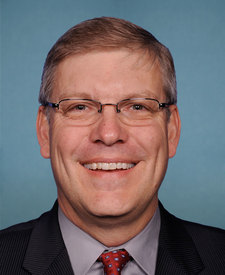
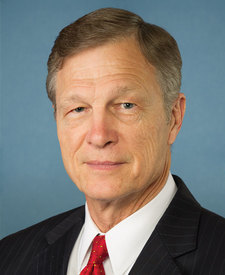
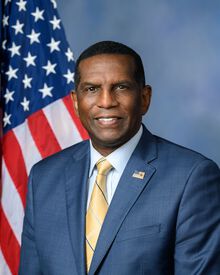
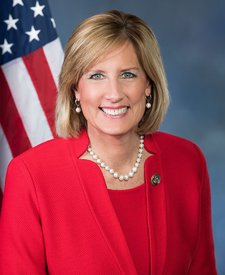
IntroducedMr. Loudermilk (for himself, Mr. Carter of Georgia, Mrs. Houchin, …
Stakeholder Effects
cui bono?How this legislation distributes effects. Mention counts reflect frequency, not effect magnitude.
Federal agency HR departments, Federal agency budgets, Federal agency heads
Merit Systems Protection Board, Office of Personnel Management face effects in multiple directions
Positive-direction: Federal agency HR departments, Federal agency budgets, Federal agency heads, Federal agency management, Federal agency management during shutdowns, Federal employees facing extended furloughs, Federal retirement system (FERS/CSRS)
Negative-direction: Federal employees convicted of felonies, Federal employees covered by CBAs, Federal employees during government shutdowns, Federal employees facing demotion, Federal employees in competitive service, Federal employees receiving bonuses, Federal employees subject to adverse actions, Federal employees subject to furlough, Federal employees who resign pending removal, Federal employees with ethics violations, Federal hiring authorities, Federal supervisors, Federal supervisors facing adverse actions, New federal employees in competitive service, SES members refusing reassignments, Senior Executive Service career appointees
Bill Structure & Actor Mappings
Who is "The Secretary" in each section?
- "the_board"
- → Merit Systems Protection Board
- "the_agency"
- → Any federal agency as defined in 5 USC 551
- "the_office"
- → Office of Personnel Management
Key Definitions
Terms defined in this bill
An individual in the competitive service not on probation with 2+ years continuous service, OR a career SES appointee who completed probation
A determination that employee conduct violated agency policy warranting removal/14+ day suspension, or violated a law with 1+ year imprisonment
Has the meaning in section 7511(a)(5)
A furlough due to a lapse in appropriations
Period of service from when employee began misconduct to removal or separation
Any day other than Saturday, Sunday, or legal public holiday under 5 USC 6103(a)
We use a combination of our own taxonomy and classification in addition to large language models to assess meaning and potential beneficiaries. High confidence means strong textual evidence. Always verify with the original bill text.
Learn more about our methodology