Veteran Suicide Prevention Act
Summary
What This Bill Does
The bill requires VA to examine deaths by suicide among covered veterans who received VA care in the prior five years, including diagnoses, medications with suicidality warnings, psychotropic prescribing, combat and trauma history, military sexual trauma, traumatic brain injury, PTSD, facility patterns, and prescribing policies. VA must identify patterns and recommendations and send the results to congressional veterans committees within 18 months.
Who Benefits and How
Veterans at suicide risk, surviving families, VA clinicians, and congressional veterans committees benefit from a required evidence review that can identify medication, diagnosis, trauma, and facility patterns tied to suicide prevention gaps.
Who Bears the Burden and How
VA suicide prevention analysts, prescribing policy staff, and facility leaders must compile clinical histories, medication data, facility-level suicide patterns, and recommendations, then report those findings to Congress under a new administrative burden.
Key Provisions
- Requires VA to review suicides among veterans who received VA care during the preceding five years.
- Directs VA to examine medication, diagnosis, trauma, TBI, PTSD, military sexual trauma, facility, and prescribing-policy patterns.
- Requires a report to congressional veterans committees with identified patterns and recommendations.
Evidence Chain:
This summary is generated from the full bill text using AI analysis. Expand "Detailed Analysis" below for identified beneficiaries/burden bearers with clause-level evidence links.
At a Glance
What This Bill Does
Directs the Department of Veterans Affairs to review recent veteran suicides connected to VA care and report demographic, clinical, medication, trauma, facility, and policy patterns to Congress.
Key Policy Areas
Veterans, Healthcare, Government
Primary Purpose
Directs the Department of Veterans Affairs to review recent veteran suicides connected to VA care and report demographic, clinical, medication, trauma, facility, and policy patterns to Congress.
Policy Domains
Substantive provisions
Identified Gains
- Veterans at suicide risk
- Surviving families of veterans
- Congressional veterans committees
Identified Costs
- Department of Veterans Affairs suicide prevention analysts
- VA prescribing policy staff
- VA facility leaders
Sponsors
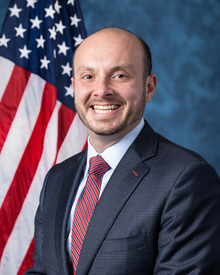
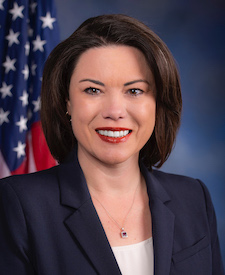

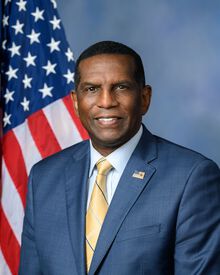
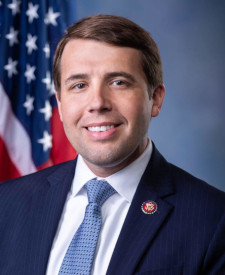
Legislative Progress
In CommitteeReferred to the Subcommittee on Health.
Mr. Garbarino (for himself, Mr. Himes, Mr. Lawler, Mr. Neguse, …
Referred to the House Committee on Veterans' Affairs.
Introduced in House
Stakeholder Effects
cui bono?How this legislation distributes effects. Mention counts reflect frequency, not effect magnitude.
Congressional veterans affairs committees, Department of Veterans Affairs suicide prevention analysts, VA prescribing policy staff
Positive-direction: Congressional veterans affairs committees
Negative-direction: Department of Veterans Affairs suicide prevention analysts, VA prescribing policy staff
Families of veterans who died by suicide, Veterans at suicide risk
Bill Structure & Actor Mappings
Who is "The Secretary" in each section?
We use a combination of our own taxonomy and classification in addition to large language models to assess meaning and potential beneficiaries. High confidence means strong textual evidence. Always verify with the original bill text.
Learn more about our methodology