Advanced Wound Care and Regenerative Medicine Access and Reform Act
Summary
What This Bill Does
The Advanced Wound Care and Regenerative Medicine Access and Reform Act changes Medicare payment and oversight for skin substitutes and regenerative wound-care products. It adds skin substitute products to Medicare-covered medical and other health services and applies section 1847A payment methods to skin substitutes furnished on or after January 1, 2026. It requires equivalent reimbursement for skin substitute products and outpatient applications of those products regardless of outpatient site of care. It also adds program-integrity controls: beginning March 1, 2026 and every two years through March 1, 2035, HHS must identify the top 3 percent of providers by total Medicare skin-substitute payments, publish the list, and send it to the HHS Inspector General for potential fraud, waste, or abuse assessment. Certain outlier providers face prepayment claim review and postpayment review rules. Finally, HHS through FDA must review approval processes for human cellular and tissue allografts and autografts not regulated only under section 361, including liquid, gel, or powder forms, and consider tiered risk-based review, existing clinical data, real-world evidence, registry data, and harmonization for products that may transition to section 351 regulation.
Who Benefits and How
Medicare patients with chronic wounds benefit if payment reform preserves access to skin substitutes across outpatient settings. Wound care providers benefit from clearer reimbursement rules, although high-payment outliers face scrutiny. Skin substitute manufacturers and tissue allograft developers benefit from a defined Medicare payment path and possible FDA approval streamlining. Tissue banks and procurement organizations benefit from required consultation in the FDA review.
Who Bears the Burden and How
CMS payment staff must implement section 1847A payment for skin substitutes and site-neutral outpatient reimbursement. HHS program-integrity staff must identify outlier providers, publish lists, and conduct prepayment or postpayment review. HHS Inspector General staff must assess referred outliers for fraud, waste, or abuse. FDA reviewers must complete the approval-process review and consult manufacturers, tissue banks, procurement organizations, clinicians, and other stakeholders.
Key Provisions
- Adds skin substitute products to Medicare-covered services and section 1847A payment beginning January 1, 2026.
- Requires equivalent reimbursement for skin substitute products and outpatient applications regardless of outpatient site of care.
- Requires HHS to identify and publish the top 3 percent of skin-substitute payment outlier providers every two years through 2035.
- Requires HHS Inspector General referral, prepayment review, and postpayment review for specified outlier providers.
- Directs HHS and FDA to review and streamline approval processes for human cellular and tissue allografts and autografts.
Evidence Chain:
This summary is generated from the full bill text using AI analysis. Expand "Detailed Analysis" below for identified beneficiaries/burden bearers with clause-level evidence links.
At a Glance
What This Bill Does
Moves Medicare skin substitute products into a payment framework under section 1847A beginning January 1, 2026, requires equivalent reimbursement across outpatient sites of care, creates program-integrity rules for high-payment outlier providers including public lists, HHS Inspector General referrals, prepayment review, and postpayment review, and directs HHS and FDA to review and streamline approval pathways for human cellular and tissue allografts and autografts.
Key Policy Areas
Medicare, Wound Care, Regenerative Medicine
Primary Purpose
Moves Medicare skin substitute products into a payment framework under section 1847A beginning January 1, 2026, requires equivalent reimbursement across outpatient sites of care, creates program-integrity rules for high-payment outlier providers including public lists, HHS Inspector General referrals, prepayment review, and postpayment review, and directs HHS and FDA to review and streamline approval pathways for human cellular and tissue allografts and autografts.
Policy Domains
Substantive provisions
Identified Gains
- Medicare patients with chronic wounds
- Wound care providers
- Skin substitute manufacturers
- Tissue allograft developers
- Tissue banks
Identified Costs
- CMS payment staff
- HHS program-integrity staff
- HHS Inspector General staff
- FDA reviewers
- High-payment skin substitute providers
Sponsors

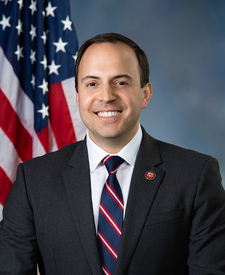
Gabe Evans
R-CO | Primary Sponsor
Legislative Progress
In CommitteeMr. Evans of Colorado introduced the following bill; which was …
Referred to the Committee on Energy and Commerce, and in …
Introduced in House
Stakeholder Effects
cui bono?How this legislation distributes effects. Mention counts reflect frequency, not effect magnitude.
High-payment skin substitute providers, Medicare patients with chronic wounds, Skin substitute manufacturers
Positive-direction: Medicare patients with chronic wounds, Skin substitute manufacturers, Tissue allograft developers, Tissue banks
Negative-direction: High-payment skin substitute providers
CMS payment staff, FDA reviewers, HHS Inspector General staff
Positive-direction: Medicare trust funds
Negative-direction: CMS payment staff, FDA reviewers, HHS Inspector General staff, HHS policy staff
Bill Structure & Actor Mappings
Who is "The Secretary" in each section?
We use a combination of our own taxonomy and classification in addition to large language models to assess meaning and potential beneficiaries. High confidence means strong textual evidence. Always verify with the original bill text.
Learn more about our methodology