To improve technology and address human factors in aviation safety, and for other purposes.
Analysis under review: This bill has generated analysis that may be too generic or incomplete. Clause-level evidence remains available below.
Summary
What This Bill Does
The Safe Landings Act addresses aviation safety by requiring development of cockpit technology to alert pilots when they are not aligned with the correct runway, mandating studies on human factors in aviation safety, and establishing task forces to review safety procedures. It also requires a minimum of two pilots in the cockpit for all commercial passenger and cargo flights.
Who Benefits and How
Pilots and flight crews benefit from enhanced safety technology, mandatory two-pilot requirements, and stronger whistleblower protections. Aviation safety researchers and academic institutions benefit from $20 million per year in new research funding. Passengers benefit from improved runway alignment technology and stronger safety oversight.
Who Bears the Burden and How
Airlines and aircraft manufacturers face new compliance costs for installing cockpit runway alignment technology on aircraft. Air carriers must file new maintenance reports to the FAA every six months and cannot reduce cockpit crew below two pilots. The FAA faces increased oversight and reporting requirements to Congress.
Key Provisions
- Requires development and installation of cockpit systems to alert pilots of runway misalignment at Class B and C airports
- Mandates two pilots minimum for all Part 121 commercial flights
- Creates Task Force on Human Factors in Aviation Safety with 2-year term
- Authorizes $20 million annually (2024-2029) for aviation safety data analysis research
- Requires air carriers to report maintenance failures and repairs to FAA every 6 months
Evidence Chain:
This summary is generated from the full bill text using AI analysis. Expand "Detailed Analysis" below for identified beneficiaries/burden bearers.
At a Glance
What This Bill Does
To improve aviation safety by enhancing runway safety technology, studying human factors in aviation, creating new task forces, and strengthening pilot requirements and whistleblower protections.
Key Policy Areas
Aviation, Transportation Safety, Research and Development, Labor and Employment
Primary Purpose
To improve aviation safety by enhancing runway safety technology, studying human factors in aviation, creating new task forces, and strengthening pilot requirements and whistleblower protections.
Policy Domains
Safe Landings Act - Aviation Safety Improvements
Identified Gains
Contextual inference, no direct clause citation- Pilots and flight crews
- Aviation safety researchers
- Academic research institutions
- Air passengers
- Whistleblowers in aviation industry
Contextual inference, no direct clause citation
Identified Costs
Contextual inference, no direct clause citation- Commercial airlines (Part 121 carriers)
- Aircraft and avionics manufacturers
- FAA
- Foreign air carriers (Part 129)
Contextual inference, no direct clause citation
Sponsors
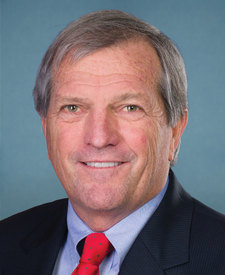
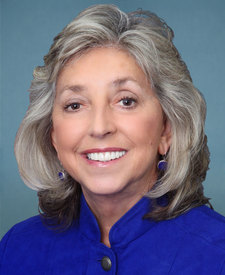
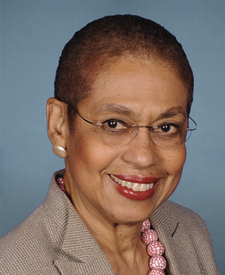
Legislative Progress
IntroducedMr. DeSaulnier (for himself, Ms. Norton, and Ms. Titus) introduced …
Stakeholder Effects
cui bono?How this legislation distributes effects. Mention counts reflect frequency, not effect magnitude.
Air carriers, Airline pilots, Airport operators
Air carriers faces effects in multiple directions
Positive-direction: Airline pilots, Aviation industry whistleblowers, Commercial airline pilots, Pilot labor organizations, U.S. air carriers, U.S. flight crews
Negative-direction: Airport operators, Commercial airlines (Part 121 carriers), Part 121 air carriers, Part 129 foreign air carriers
Air traffic controllers, DOT Inspector General, FAA
Positive-direction: FAA employees reporting safety concerns, NASA Aviation Safety
Negative-direction: Air traffic controllers, DOT Inspector General, FAA, FAA Flight Standards, GAO, NTSB
Aircraft maintenance repair organizations (MROs), Aircraft manufacturers, Avionics manufacturers
Positive-direction: Aircraft manufacturers, Avionics manufacturers
Negative-direction: Aircraft maintenance repair organizations (MROs), Single-pilot aircraft automation developers
Aviation safety researchers, NEXTOR III research consortium, National Academies of Sciences
Air passengers, Aviation accident victims and families
Bill Structure & Actor Mappings
Who is "The Secretary" in each section?
- "the_secretary"
- → Secretary of Transportation
- "the_administrator"
- → Administrator of the Federal Aviation Administration
- "the_inspector_general"
- → Inspector General of the Department of Transportation
- "the_comptroller_general"
- → Comptroller General (GAO)
Key Definitions
Terms defined in this bill
The Administrator of the Federal Aviation Administration
A category A or B runway incursion; landing on taxiway, incorrect runway, or non-runway area; descent below 300 feet on approach to wrong surface; or landing notwithstanding go-around instruction
The Federal Aviation Administration
An air carrier that holds a certificate issued under part 121 of title 14, Code of Federal Regulations
An air carrier that holds a certificate issued under part 129 of title 14, Code of Federal Regulations
We use a combination of our own taxonomy and classification in addition to large language models to assess meaning and potential beneficiaries. High confidence means strong textual evidence. Always verify with the original bill text.
Learn more about our methodology