Establishing the Veterans Economic Opportunity and Transition Administration Act of 2025
Summary
What This Bill Does
The Establishing the Veterans Economic Opportunity and Transition Administration Act reorganizes VA economic-opportunity programs into a dedicated administration. It adds a new chapter 80 to title 38 creating the Veterans Economic Opportunity and Transition Administration, whose primary function is administering VA programs that provide economic-opportunity assistance to veterans, dependents, and survivors. The new administration is responsible for vocational rehabilitation and employment, educational assistance, veterans housing loan and related programs, the Transition Assistance Program under title 10, and any other appropriate programs. The bill creates an Under Secretary for Veterans Economic Opportunity and Transition, appointed by the President with Senate confirmation, selected without regard to politics and based on demonstrated ability in information technology and administration of similar programs. The Under Secretary heads the new administration, reports to the VA Secretary, must be included in succession planning for vacancies, and can use personnel and services from other VA offices. VA must include annual program metrics in the section 529 report to Congress, including claims received, claims decided, average processing time, successful outcomes, full-time equivalent employees, and IT spending. VA must also report within 180 days on establishment progress and service transfer, and cannot transfer veteran service functions until certifying to the veterans affairs committees that the transition will not negatively affect services and that services are ready, with certification due no earlier than April 1, 2027 and no later than September 1, 2027 or an explanatory report if late.
Who Benefits and How
Veterans, dependents, and survivors using education, rehabilitation, transition, and housing benefits benefit from a dedicated VA administration focused on economic opportunity rather than dispersing those programs across other offices. Congressional veterans affairs committees benefit from annual performance metrics and a required transition certification. VA program users benefit from the safeguard that services cannot transfer until VA certifies the move will not negatively affect delivery.
Who Bears the Burden and How
VA leadership must create the new administration, appoint and support a Senate-confirmed Under Secretary, reorganize programs, produce annual metrics, and manage transition certification. Existing VA education, vocational rehabilitation, housing loan, and transition-assistance offices must prepare for transfer to the new administration. The VA Secretary must report progress within 180 days and explain any missed certification deadline. Federal taxpayers bear implementation and reorganization costs.
Key Provisions
- Establishes a Veterans Economic Opportunity and Transition Administration in VA.
- Transfers responsibility for vocational rehabilitation, education assistance, housing loan programs, and the Transition Assistance Program.
- Creates a Senate-confirmed Under Secretary selected for information technology and program-administration ability.
- Requires annual reporting on claims, processing times, successful outcomes, staffing, and IT spending.
- Requires a 180-day transition progress report to the veterans affairs committees.
- Blocks transfer of veteran services until VA certifies readiness and no negative effect on service delivery.
Evidence Chain:
This summary is generated from the full bill text using AI analysis. Expand "Detailed Analysis" below for identified beneficiaries/burden bearers with clause-level evidence links.
At a Glance
What This Bill Does
Creates a Veterans Economic Opportunity and Transition Administration inside VA to administer economic-opportunity programs for veterans, dependents, and survivors, including vocational rehabilitation, education assistance, housing loan programs, and the Transition Assistance Program; establishes a Senate-confirmed Under Secretary for that administration; requires annual performance reporting; and restricts transfer of veteran services until VA certifies the transition will not harm service delivery.
Key Policy Areas
Veterans Affairs, Education, Housing, Workforce
Primary Purpose
Creates a Veterans Economic Opportunity and Transition Administration inside VA to administer economic-opportunity programs for veterans, dependents, and survivors, including vocational rehabilitation, education assistance, housing loan programs, and the Transition Assistance Program; establishes a Senate-confirmed Under Secretary for that administration; requires annual performance reporting; and restricts transfer of veteran services until VA certifies the transition will not harm service delivery.
Policy Domains
Substantive provisions
Identified Gains
- Veterans using education benefits
- Veterans using housing loan benefits
- Veterans in vocational rehabilitation
- Transitioning service members
- Dependents and survivors
- Congressional veterans affairs committees
Identified Costs
- Department of Veterans Affairs leadership
- VA education program staff
- VA housing loan program staff
- VA vocational rehabilitation staff
- VA transition-assistance staff
- Federal taxpayers
Legislative Progress
In CommitteeCommittee Hearings Held
Committee Hearings Held
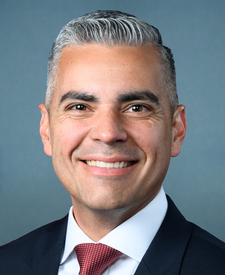
Mr. Ciscomani introduced the following bill; which was referred to …
Referred to the House Committee on Veterans' Affairs.
Introduced in House
Stakeholder Effects
cui bono?How this legislation distributes effects. Mention counts reflect frequency, not effect magnitude.
Congressional veterans affairs committees, Department of Veterans Affairs leadership, Under Secretary for Veterans Economic Opportunity
Positive-direction: Congressional veterans affairs committees
Negative-direction: Department of Veterans Affairs leadership, Under Secretary for Veterans Economic Opportunity, Under Secretary staff, VA program offices
Dependents and survivors, Veterans in vocational rehabilitation, Veterans receiving VA services
Bill Structure & Actor Mappings
Who is "The Secretary" in each section?
We use a combination of our own taxonomy and classification in addition to large language models to assess meaning and potential beneficiaries. High confidence means strong textual evidence. Always verify with the original bill text.
Learn more about our methodology