Fair Competition for Small Business Act of 2025
Summary
What This Bill Does
The Fair Competition for Small Business Act is a narrow antitrust-enforcement amendment. It changes section 4C(a)(1) of the Clayton Act, the provision that lets State attorneys general bring parens patriae damages actions on behalf of natural persons injured by antitrust violations. The amendment adds a reference to section 2 of this Act after Sherman Act violations, which is designed to let State enforcers use the Clayton Act representative-action framework for the bill-specified competition claim rather than leaving enforcement only to private suits or federal agencies.
Who Benefits and How
Small businesses and consumers benefit if State attorneys general can pursue damages or enforcement leverage when anticompetitive conduct injures local markets. State antitrust offices benefit because the amendment broadens their litigation hook under the Clayton Act representative-action framework. Local competitors benefit from a public enforcement pathway that can aggregate harms that may be too costly for individual firms or customers to litigate alone.
Who Bears the Burden and How
State attorneys general must decide when to bring the expanded claim and carry the litigation burden. Businesses accused of anticompetitive conduct face greater exposure to State parens patriae suits. Federal and State courts may need to adjudicate additional competition claims brought through the Clayton Act framework.
Key Provisions
- Amends Clayton Act section 4C to add a new statutory reference for State attorney general actions.
- Expands public antitrust enforcement options when competition harms affect residents or small businesses.
- Requires courts and litigants to handle the added claim through the representative-action framework.
Evidence Chain:
This summary is generated from the full bill text using AI analysis. Expand "Detailed Analysis" below for identified beneficiaries/burden bearers with clause-level evidence links.
At a Glance
What This Bill Does
Expands a Clayton Act parens patriae antitrust remedy so State attorneys general can pursue additional competition claims tied to the Act, giving public enforcers another tool when anticompetitive conduct harms small businesses or residents.
Key Policy Areas
Antitrust, Small Business, State Enforcement
Primary Purpose
Expands a Clayton Act parens patriae antitrust remedy so State attorneys general can pursue additional competition claims tied to the Act, giving public enforcers another tool when anticompetitive conduct harms small businesses or residents.
Policy Domains
Substantive provisions
Identified Gains
- Small businesses
- Consumers
- State antitrust offices
- Local competitors
Identified Costs
- State attorneys general
- Businesses accused of anticompetitive conduct
- Federal courts
- State courts
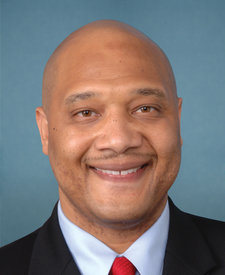
Sponsors




Legislative Progress
In CommitteeReferred to the House Committee on the Judiciary.
Introduced in House
Ms. Waters (for herself, Mr. Nadler, Ms. Norton, Mr. Thompson …
Bill Structure & Actor Mappings
Who is "The Secretary" in each section?
We use a combination of our own taxonomy and classification in addition to large language models to assess meaning and potential beneficiaries. High confidence means strong textual evidence. Always verify with the original bill text.
Learn more about our methodology