Alyssa’s Act of 2025
Summary
What This Bill Does
Alyssas Act expands the Federal Clearinghouse on School Safety Evidence-based Practices in DHS. The clearinghouse may carry out public education on school emergency prevention and response, including school shootings, and must provide training and technical assistance on evidence-based practices and individualized consulting for schools. The Secretary must hire personnel and contractors with school safety and school administration expertise and run a development, testing, and evaluation program for panic alarm technology. Beginning in fiscal year 2026, federal funds may not be used to procure an emergency response map that fails specified digital, interoperability, data ownership, secured API, U.S. data-center, orientation, imagery, and annual-verification requirements. Within one year, DHS, Education, and HHS must submit a federal strategy for critical-site emergency response maps. Within four years and annually thereafter, DHS must report on the establishment and effectiveness of master plans for school shooting prevention and response.
Who Benefits and How
Students, educators, and school communities benefit from more federal support for emergency-prevention tools, panic alarm technology, and school-specific consulting. Local educational agencies and school administrators benefit from technical assistance and evidence-based recommendations. First responders and public safety agencies benefit from standardized emergency response maps that are digital, interoperable, shareable, and annually verified. School safety technology vendors, GIS mapping providers, and panic alarm developers may benefit from federal standards and testing programs that increase demand for compliant products.
Who Bears the Burden and How
DHS and the Federal Clearinghouse must expand staffing, public education, technical assistance, technology testing, consulting, and reporting. Federal agencies procuring emergency response maps must comply with the new map standards beginning in fiscal year 2026. Local educational agencies must verify map accuracy annually if maps are procured with federal funds. States and localities may face added planning expectations as DHS evaluates master plans. Technology vendors must meet digital, interoperability, data ownership, API security, U.S. data-center, and imagery requirements.
Key Provisions
- Expands the Federal Clearinghouse on School Safety Evidence-based Practices to provide public education, training, technical assistance, and individualized consulting.
- Requires DHS to hire school safety subject-matter experts and run a panic alarm technology development program.
- Blocks federal procurement of emergency response maps that fail specified digital, interoperability, ownership, security, and verification standards.
- Requires a federal strategy for emergency response maps at critical federal sites within one year.
- Requires annual reports on the establishment and effectiveness of school-safety master plans.
Evidence Chain:
This summary is generated from the full bill text using AI analysis. Expand "Detailed Analysis" below for identified beneficiaries/burden bearers with clause-level evidence links.
At a Glance
What This Bill Does
Expands the Federal Clearinghouse on School Safety Evidence-based Practices with public education, training, individualized consulting, subject-matter experts, panic alarm technology development, emergency response map standards, federal procurement restrictions, and annual reports on school-safety master plans.
Key Policy Areas
Education, Homeland Security, Public Safety, Technology
Primary Purpose
Expands the Federal Clearinghouse on School Safety Evidence-based Practices with public education, training, individualized consulting, subject-matter experts, panic alarm technology development, emergency response map standards, federal procurement restrictions, and annual reports on school-safety master plans.
Policy Domains
Substantive provisions
Identified Gains
- Students
- Educators
- Local educational agencies
- School administrators
- First responders
- School safety technology vendors
- GIS mapping providers
Identified Costs
- Department of Homeland Security staff
- Federal Clearinghouse staff
- Federal procurement officials
- Local educational agencies
- State education agencies
- Technology vendors
Sponsors
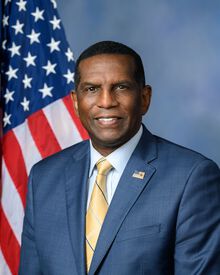
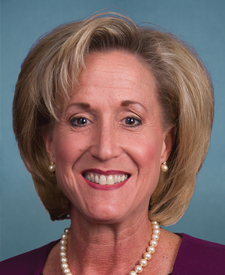


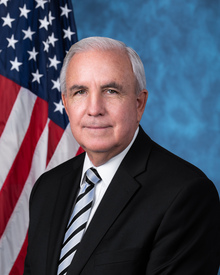
Legislative Progress
In CommitteeReferred to the Subcommittee on Counterterrorism and Intelligence.
Mr. Owens (for himself, Mr. Gottheimer, Mr. Diaz-Balart, and Mr. …
Referred to the Committee on Education and Workforce, and in …
Introduced in House
Stakeholder Effects
cui bono?How this legislation distributes effects. Mention counts reflect frequency, not effect magnitude.
Local educational agencies, School administrators, School communities
Local educational agencies faces effects in multiple directions
Congressional oversight committees, Department of Homeland Security staff, Federal Clearinghouse staff
Positive-direction: Congressional oversight committees, Federal Clearinghouse staff
Negative-direction: Department of Homeland Security staff, Federal procurement officials
Emergency response map vendors, School safety technology vendors
Positive-direction: School safety technology vendors
Negative-direction: Emergency response map vendors
Local governments, State education agencies
Bill Structure & Actor Mappings
Who is "The Secretary" in each section?
We use a combination of our own taxonomy and classification in addition to large language models to assess meaning and potential beneficiaries. High confidence means strong textual evidence. Always verify with the original bill text.
Learn more about our methodology