CLEAR Act of 2025
Summary
What This Bill Does
The CLEAR Act is a narrow disapproval-style bill aimed at a specific Forest Service rule published at 89 Fed. Reg. 92808 on November 25, 2024. The rule relates to law enforcement criminal prohibitions on National Forest System lands. The bill prohibits the Forest Service within the Department of Agriculture from administering, implementing, or enforcing that rule and states that the rule has no force or effect. Because the local clause table has no DiffEvent rows for this bill, this repair can only update the bill-level analysis, not clause-level targets.
Who Benefits and How
National Forest users, recreation groups, ranchers, timber operators, and permit holders benefit if they avoid new or expanded federal criminal-prohibition exposure under the 2024 rule. State and local law enforcement agencies benefit if the bill preserves a larger role for nonfederal enforcement on National Forest lands. Rural communities near National Forest lands benefit from maintaining the pre-rule enforcement framework.
Who Bears the Burden and How
Forest Service law enforcement staff lose the authority and procedures that would have flowed from the 2024 rule and must continue under prior enforcement practice. Federal land managers may have fewer federal criminal tools for conduct on National Forest System lands. Communities that supported the rule for safety or resource-protection reasons may bear the burden of less federal enforcement capacity. USDA legal and field staff must unwind or avoid any implementation work tied to the rule.
Key Provisions
- Blocks Forest Service administration, implementation, and enforcement of the November 25, 2024 criminal-prohibitions rule.
- Repeals the practical effect of the rule by declaring it has no force or effect.
- Preserves the pre-rule enforcement framework for National Forest System lands.
- Limits Forest Service law enforcement expansion without creating a replacement rule.
Evidence Chain:
This summary is generated from the full bill text using AI analysis. Expand "Detailed Analysis" below for identified beneficiaries/burden bearers with clause-level evidence links.
At a Glance
What This Bill Does
Blocks the Forest Service from administering, implementing, or enforcing the November 25, 2024 Law Enforcement; Criminal Prohibitions rule for National Forest System lands and declares that rule to have no force or effect.
Key Policy Areas
Public Lands, Law Enforcement, Forestry
Primary Purpose
Blocks the Forest Service from administering, implementing, or enforcing the November 25, 2024 Law Enforcement; Criminal Prohibitions rule for National Forest System lands and declares that rule to have no force or effect.
Policy Domains
Substantive provisions
Identified Gains
- National Forest users
- Ranchers
- Timber operators
- State law enforcement agencies
- Local law enforcement agencies
- Rural communities
Identified Costs
- Forest Service law enforcement staff
- USDA legal staff
- Federal land managers
- Communities supporting federal enforcement
Sponsors

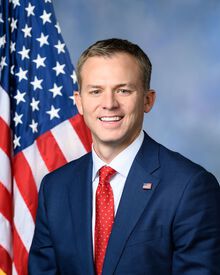
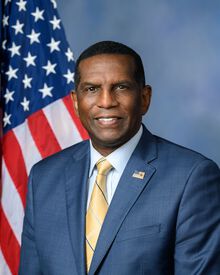
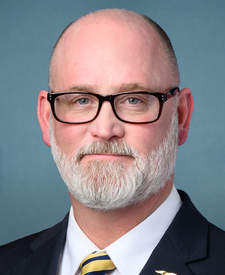

Legislative Progress
In CommitteeReferred to the Subcommittee on Forestry and Horticulture.
Ms. Maloy (for herself, Mr. Fulcher, Mr. Moore of Utah, …
Referred to the House Committee on Agriculture.
Introduced in House
Bill Structure & Actor Mappings
Who is "The Secretary" in each section?
We use a combination of our own taxonomy and classification in addition to large language models to assess meaning and potential beneficiaries. High confidence means strong textual evidence. Always verify with the original bill text.
Learn more about our methodology