School MEALS Act of 2025
Summary
What This Bill Does
The School MEALS Act updates the National School Lunch Act and related school-meal reporting law. It gives states more time to implement measures when direct certification rates lag, creates direct certification improvement grants for state agencies and Tribal organizations that administer school lunch programs, and prioritizes the lowest-performing states and Tribal organizations. Grant funds can improve technology, provide technical assistance to local educational agencies, revise certification systems, buy equipment, and coordinate with other public-benefit programs. On October 1, 2025, Treasury must transfer $28 million to the Secretary of Agriculture, with at least $2 million for Food Distribution Program on Indian Reservations work and up to $3 million for technical assistance. The bill also broadens community eligibility counting windows, increases the direct-certification demonstration cap from 10 to 20 states, and requires reporting on technical assistance and progress for weak certification rates.
Who Benefits and How
Low-income students benefit when eligible children are automatically certified for free school meals without a separate household application. State school meal agencies and Tribal organizations benefit from grants to upgrade data systems, equipment, and public-benefit coordination. Local educational agencies benefit from technical assistance and improved certification processes. Tribal food distribution programs benefit from a dedicated minimum funding reservation. High-poverty schools benefit from more flexible community eligibility counting windows.
Who Bears the Burden and How
The Secretary of Agriculture and USDA nutrition staff must administer grants, prioritize low certification rates, provide technical assistance, and report on state progress. State agencies and Tribal organizations receiving grants must use funds for system improvements and document results. Federal taxpayers fund the $28 million transfer. Schools and local educational agencies may need to update counts, systems, and coordination processes.
Key Provisions
- Expands the direct-certification corrective-measure timeline for low-performing states.
- Authorizes $28 million in mandatory funding for direct certification grants and technical assistance.
- Provides grants to state agencies and Tribal organizations to improve direct certification systems, technology, equipment, and public-benefit coordination.
- Requires at least $2 million for Food Distribution Program on Indian Reservations certification work and allows up to $3 million for technical assistance.
- Expands community eligibility counting windows and raises the demonstration cap from 10 to 20 states.
- Requires reports on technical assistance and progress for states with low direct certification performance.
Evidence Chain:
This summary is generated from the full bill text using AI analysis. Expand "Detailed Analysis" below for identified beneficiaries/burden bearers with clause-level evidence links.
At a Glance
What This Bill Does
Expands and funds school-meal direct certification improvements by extending corrective-measure timelines, creating $28 million in grants and technical assistance for states and Tribal organizations, reserving at least $2 million for Food Distribution Program on Indian Reservations work, widening community eligibility counting windows, and increasing the direct-certification demonstration cap from 10 to 20 states.
Key Policy Areas
Education, Nutrition, Tribal Nations, Social Services
Primary Purpose
Expands and funds school-meal direct certification improvements by extending corrective-measure timelines, creating $28 million in grants and technical assistance for states and Tribal organizations, reserving at least $2 million for Food Distribution Program on Indian Reservations work, widening community eligibility counting windows, and increasing the direct-certification demonstration cap from 10 to 20 states.
Policy Domains
Substantive provisions
Identified Gains
- Low-income students
- State school meal agencies
- Tribal organizations
- Local educational agencies
- High-poverty schools
- Tribal food distribution programs
Identified Costs
- Secretary of Agriculture
- USDA nutrition staff
- State school meal agencies
- Tribal grant recipients
- Federal taxpayers
- Local educational agencies
Sponsors
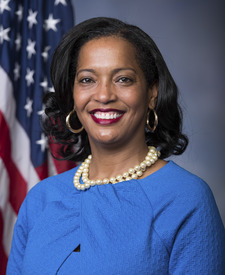
Jahana Hayes
D-CT | Primary Sponsor

Legislative Progress
In CommitteeMrs. Hayes (for herself and Ms. Omar) introduced the following …
Referred to the House Committee on Education and Workforce.
Introduced in House
Stakeholder Effects
cui bono?How this legislation distributes effects. Mention counts reflect frequency, not effect magnitude.
Bill Structure & Actor Mappings
Who is "The Secretary" in each section?
- "the_secretary"
- → Secretary of Agriculture
We use a combination of our own taxonomy and classification in addition to large language models to assess meaning and potential beneficiaries. High confidence means strong textual evidence. Always verify with the original bill text.
Learn more about our methodology