To authorize the Land Port of Entry Community Infrastructure Program to address deficiencies in community infrastructure supportive of land ports of entry, and for other purposes.
Summary
What This Bill Does
This bill authorizes the Land Port of Entry Community Infrastructure Program within DHS. Eligible community infrastructure includes government-owned or member-owned utility projects that directly support a land port of entry, are focused on modernization, or sit within 25 miles and are supportive of, or disproportionately affected by, port operations. DHS may award grants and supplement other federal funds for state, Tribal, and local governments and not-for-profit member-owned utility services. Eligible project criteria cover legitimate trade and travel, border security and illicit drug seizure metrics, resilience and emergency preparedness, CBP mission performance, agriculture inspection, and access to land-port facilities. The bill authorizes such sums as necessary, subject to annual appropriations.
Who Benefits and How
Border communities benefit because roads, water systems, utilities, telecommunications, and related infrastructure strained by port traffic can receive federal assistance. State governments, Tribal governments, local governments, and member-owned utility services benefit as eligible grant recipients. CBP operations benefit if nearby infrastructure improves inspection capacity, agriculture screening, security metrics, and reliable port access.
Who Bears the Burden and How
DHS grant staff must define criteria, coordinate with other federal programs, award funds, and monitor eligibility. Grant recipients must document that projects support port operations or are in the affected 25-mile area. Federal taxpayers bear the cost of appropriations, and other federal agencies may need to coordinate when DHS supplements non-DHS program funds.
Key Provisions
- Defines eligible land-port community infrastructure, including transportation, water, wastewater, telecommunications, electric, gas, and related utility projects.
- Authorizes DHS grants and supplemental funding for state, Tribal, and local governments and member-owned utility services.
- Requires project criteria for trade, travel, border security, port resilience, CBP mission performance, agriculture inspection, and port access.
- Authorizes appropriations as necessary and keeps program funds available until expended.
Evidence Chain:
This summary is generated from the full bill text using AI analysis. Expand "Detailed Analysis" below for identified beneficiaries/burden bearers with clause-level evidence links.
At a Glance
What This Bill Does
Authorizes a Department of Homeland Security grant program for infrastructure that supports or is disproportionately affected by land ports of entry, including transportation, utility, water, wastewater, telecommunications, border-security, resilience, agriculture-inspection, and customs-processing projects.
Key Policy Areas
Homeland Security, Infrastructure, Border Communities
Primary Purpose
Authorizes a Department of Homeland Security grant program for infrastructure that supports or is disproportionately affected by land ports of entry, including transportation, utility, water, wastewater, telecommunications, border-security, resilience, agriculture-inspection, and customs-processing projects.
Policy Domains
Substantive provisions
Identified Gains
- Border communities
- State governments
- Tribal governments
- Local governments
- Member-owned utility services
- Customs and Border Protection operations
Identified Costs
- DHS grant staff
- Grant recipient governments
- Federal taxpayers
- Federal program administrators
Sponsors

Legislative Progress
In CommitteeReferred to the Subcommittee on Transportation and Maritime Security.
Referred to the Subcommittee on Border Security and Enforcement.
Referred to the Subcommittee on Economic Development, Public Buildings, and …
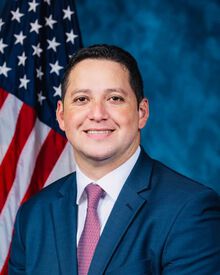
Mr. Tony Gonzales of Texas (for himself and Ms. Johnson …
Referred to the Committee on Transportation and Infrastructure, and in …
Introduced in House
Stakeholder Effects
cui bono?How this legislation distributes effects. Mention counts reflect frequency, not effect magnitude.
Land port infrastructure grant recipients, Local governments, State governments
Taxpayers
Taxpayers faces effects in multiple directions
Bill Structure & Actor Mappings
Who is "The Secretary" in each section?
- "the_secretary"
- → Secretary of Homeland Security
We use a combination of our own taxonomy and classification in addition to large language models to assess meaning and potential beneficiaries. High confidence means strong textual evidence. Always verify with the original bill text.
Learn more about our methodology