Producing Real Opportunities for Technology and Entrepreneurs Investing in Nutrition Act
Summary
What This Bill Does
The PROTEIN Act treats alternative proteins, biomass conversion, and food biomanufacturing as agricultural research, manufacturing, workforce, and national-strategy priorities. It directs USDA to recognize at least 3 centers of excellence for emerging and innovative food and agriculture, including one led by an 1890 Institution, focused on edible protein diversification, bioprocessing, biomanufacturing, biomass conversion into proteins and fats, student success, workforce development, business development, and demonstration. It adds tools and production methods for edible protein sources to Agriculture and Food Research Initiative priorities. It creates a new Agricultural Research Service national protein-security program focused on rural prosperity, farmer profits, bioprocessing, biomanufacturing, and under-utilized biomass, authorized at $10 million per year for fiscal years 2026 through 2030. It requires USDA within 180 days to establish a food biomanufacturing and production grant program for U.S.-headquartered, U.S.-controlled entities, National Laboratories, higher education institutions, State or local governments, and consortia, with grants of at least $10 million and authorization of $50 million per year for fiscal years 2026 through 2030. It also requires a competitive food bioworkforce development grant program, authorized at $25 million per year for fiscal years 2026 through 2030, for training, technology centers, scholarships, economic planning, regulatory technical assistance, and financing support. Finally, USDA must finalize within 1 year a national protein-security strategy with Defense, Energy, Commerce, NSF, NIH, FDA, CDC, EPA, and OSTP, and the Act states that it does not support insect production for food or animal feed.
Who Benefits and How
Food biomanufacturing companies benefit from grants supporting demonstration projects, commercial-scale facilities, and facility retrofits or expansions. 1890 Institutions, universities, National Laboratories, agricultural researchers, and alternative protein researchers benefit from centers of excellence, AFRI eligibility, and ARS program funding. Farmers benefit if under-utilized biomass becomes a higher-value input for proteins and fats. Workers, community colleges, Indian Tribes, workforce boards, and training providers benefit from bioworkforce grants, scholarships, training centers, regulatory assistance, and business or lending support. Consumers and food manufacturers benefit if protein diversification improves supply resilience and creates more choices.
Who Bears the Burden and How
USDA research, grant, ARS, and strategy staff must recognize centers, run new grant competitions, enforce U.S. ownership and control eligibility, monitor minimum $10 million awards, coordinate the ARS program, administer workforce grants, and finalize the national strategy within 1 year. Grant applicants must document U.S. headquarters, U.S. operations, 51 percent U.S. citizen ownership and control, and U.S.-owned intellectual property or content. Defense, Energy, Commerce, NSF, NIH, FDA, CDC, EPA, and OSTP officials must coordinate on the national strategy. Federal taxpayers fund authorized appropriations of $10 million, $50 million, and $25 million per year across the bill.
Key Provisions
- Establishes at least 3 food and agriculture innovation centers of excellence, including one led by an 1890 Institution.
- Expands Agriculture and Food Research Initiative priorities to include edible protein bioprocessing, biomanufacturing, and biomass conversion.
- Authorizes $10 million per year from fiscal years 2026 through 2030 for an ARS protein-security program.
- Creates a food biomanufacturing and production grant program with grants of at least $10 million and $50 million per year authorized.
- Creates a food bioworkforce development grant program with $25 million per year authorized for training, scholarships, technical assistance, and financing support.
- Requires a whole-of-government national protein-security strategy within 1 year.
- Provides that the Act does not support insect production for food or animal feed.
Evidence Chain:
This summary is generated from the full bill text using AI analysis. Expand "Detailed Analysis" below for identified beneficiaries/burden bearers with clause-level evidence links.
At a Glance
What This Bill Does
Creates a USDA-centered alternative protein and food biomanufacturing package with research centers of excellence, Agriculture and Food Research Initiative protein priorities, a $10 million annual ARS protein-security program, $50 million annual food biomanufacturing grants, $25 million annual bioworkforce grants, a whole-of-government protein-security strategy, and a rule that the Act does not support insect production for food or feed.
Key Policy Areas
Agriculture, Biotechnology, Food Manufacturing, Workforce, Research
Primary Purpose
Creates a USDA-centered alternative protein and food biomanufacturing package with research centers of excellence, Agriculture and Food Research Initiative protein priorities, a $10 million annual ARS protein-security program, $50 million annual food biomanufacturing grants, $25 million annual bioworkforce grants, a whole-of-government protein-security strategy, and a rule that the Act does not support insect production for food or feed.
Policy Domains
Substantive provisions
Identified Gains
- Food biomanufacturing companies
- 1890 Institutions
- Universities
- National Laboratories
- Alternative protein researchers
- Farmers
- Bioworkforce trainees
- Indian Tribes
Identified Costs
- USDA research staff
- USDA grant administrators
- ARS program staff
- Grant applicants
- Interagency strategy officials
- Federal taxpayers
Sponsors


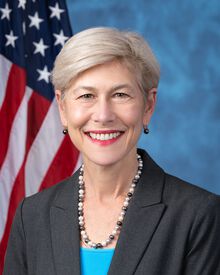


Legislative Progress
In CommitteeReferred to the Subcommittee on Conservation, Research, and Biotechnology.
Ms. Brownley (for herself, Mr. Khanna, Mr. Mullin, Mr. Lieu, …
Referred to the Committee on Agriculture, and in addition to …
Introduced in House
Stakeholder Effects
cui bono?How this legislation distributes effects. Mention counts reflect frequency, not effect magnitude.
Interagency science officials, USDA ARS program staff, USDA grant administrators
Agricultural Research Service scientists, Agricultural researchers, Alternative protein researchers
1890 Institutions, Community colleges, Training providers
Bill Structure & Actor Mappings
Who is "The Secretary" in each section?
- "agencies"
- → ['Department of Agriculture', 'Agricultural Research Service', 'National Science Foundation', 'National Institutes of Health', 'Food and Drug Administration', 'Environmental Protection Agency', 'Office of Science and Technology Policy']
- "affected_groups"
- → ['Food biomanufacturing companies', '1890 Institutions', 'Universities', 'Farmers', 'Bioworkforce trainees', 'Grant applicants', 'Federal taxpayers']
We use a combination of our own taxonomy and classification in addition to large language models to assess meaning and potential beneficiaries. High confidence means strong textual evidence. Always verify with the original bill text.
Learn more about our methodology