To facilitate the development of fair and affordable housing, decrease housing costs, and for other purposes.
Sponsors
Legislative Progress
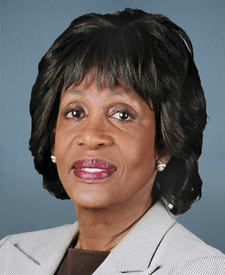
IntroducedMs. Waters introduced the following bill; which was referred to …
Summary
What This Bill Does
The Housing Crisis Response Act of 2025 appropriates approximately $100 billion in fiscal year 2026 to address America's affordable housing crisis. The bill provides massive funding for public housing repairs, affordable housing construction, rental assistance vouchers, homeownership assistance for first-generation buyers, and investments in underserved communities including Native American tribes and rural areas.
Who Benefits and How
- Low-income renters benefit from $24 billion in new housing vouchers and $65 billion for public housing improvements, reducing housing costs and improving living conditions
- First-generation homebuyers (particularly minorities and former foster youth) can receive up to $20,000 in downpayment assistance through $10 billion in new funding
- Community Development Financial Institutions (CDFIs) and nonprofit housing organizations gain new grant programs worth over $3 billion
- Native American tribes and Native Hawaiian communities receive $1 billion for housing programs
- Elderly and disabled persons benefit from $1 billion in expanded supportive housing programs
- Affordable housing developers and construction contractors gain access to over $30 billion in grants, loans, and project financing
Who Bears the Burden and How
- Federal taxpayers bear approximately $100 billion in new spending
- Federal Home Loan Banks must increase mandatory contributions to affordable housing programs from 10% to 15% of net income
- Housing developers receiving federal assistance face new compliance requirements including 10% accessibility standards for mobility impairments and visitability standards for single-family homes
Key Provisions
- $65 billion for public housing capital improvements and transformation grants
- $24 billion for housing choice vouchers, including targeted vouchers for homeless, domestic violence survivors, and trafficking survivors
- $25 billion for affordable housing production through HOME and Housing Trust Fund programs
- $10 billion for first-generation downpayment assistance (up to $20,000 per qualified homebuyer)
- $5 billion for lead paint and housing health hazard remediation
- $3 billion for community land trusts and shared equity homeownership programs
- Cancellation of all National Flood Insurance Program debt to Treasury
- $1.75 billion for grants incentivizing zoning reform and regulatory streamlining
Evidence Chain:
This summary is derived from the structured analysis below. See "Detailed Analysis" for per-title beneficiaries/burden bearers with clause-level evidence links.
Primary Purpose
Appropriates approximately $100 billion for fiscal year 2026 to address the housing crisis through investments in public housing, affordable housing production, homeownership assistance, community development, and fair housing enforcement.
Policy Domains
Legislative Strategy
"Major appropriations bill providing direct spending for housing programs without requiring annual appropriations, using one-time large infusions to address housing affordability crisis and racial homeownership gaps"
Likely Beneficiaries
- Low-income renters in public and assisted housing
- First-generation homebuyers (particularly minorities and former foster youth)
- Affordable housing developers and nonprofit housing organizations
- Community Development Financial Institutions (CDFIs)
- Native American tribes and Native Hawaiian communities
- Elderly persons needing supportive housing
- Persons with disabilities needing accessible housing
- Fair housing organizations
- State and local housing agencies
- Federal Home Loan Banks
- Public housing authorities
- Community land trusts
Likely Burden Bearers
- Federal taxpayers (approximately $100 billion in new spending)
- Federal Home Loan Banks (increased mandatory AHP contributions from 10% to 15%)
- Private developers building federally-assisted housing (new 10% accessibility requirements)
- Single-family home builders receiving federal assistance (new visitability requirements)
Bill Structure & Actor Mappings
Who is "The Secretary" in each section?
- "the_secretary"
- → Secretary of Housing and Urban Development
- "the_administrator"
- → Administrator of the Rural Housing Service (for Sec. 108-109)
- "the_secretary"
- → Secretary of Housing and Urban Development
- "the_administrator"
- → Administrator of FEMA (for Sec. 204)
- "the_secretary"
- → Secretary of Housing and Urban Development (primary); Secretary of Agriculture (for rural programs); Secretary of Treasury (for loan purchases)
- "the_secretary"
- → Secretary of Housing and Urban Development
Note: 'The Secretary' refers to HUD Secretary in most sections, but refers to Secretary of Agriculture in Sections 108-109 and 304 (Rural Housing), and Secretary of Treasury in parts of Section 302 (home loan purchases)
Key Definitions
Terms defined in this bill
FHA-insured or USDA Rural Housing-guaranteed mortgage for purchase of principal residence
CDFI Fund certified community development financial institution, nonprofit organization having affordable housing as a principal purpose, or a consortium of CDFIs and nonprofit housing organizations
Property receiving project-based assistance under Section 202 Housing Act 1959, Section 811 NAHA, or Section 8(b) of US Housing Act 1937
Community of manufactured homes where residents own or are purchasing their homes, or resident-owned communities
Forward mortgage with original principal balance of $100,000 or less, secured by 1-4 unit principal residence, insured by HUD
First-time homebuyer whose parents or legal guardians do not currently own and have not previously owned a home, or who was in foster care at age 14 or older
Project of 5+ dwelling units assisted under Section 8, Section 202, Section 811, or Section 236 programs
We use a combination of our own taxonomy and classification in addition to large language models to assess meaning and potential beneficiaries. High confidence means strong textual evidence. Always verify with the original bill text.
Learn more about our methodology