Payer State Transparency Act of 2025
Summary
What This Bill Does
This bill requires the Commerce Department, through the Bureau of Economic Analysis, to calculate each State federal tax burden for every calendar year. Individual federal taxes are assigned to the taxpayer State of residence, while business-entity taxes are allocated across States based on where economic activity occurs. OMB, in coordination with the Council of Economic Advisers and Treasury, must calculate the federal outlays each State receives each fiscal year, including allocation rules for contract awards and other spending. Commerce and OMB must submit the results to Congress and publish them on a BEA website within 180 days after each calendar year begins.
Who Benefits and How
States, taxpayers, journalists, fiscal researchers, and policymakers benefit from a recurring public comparison of federal taxes paid and federal spending received by State. The report could clarify donor-State and recipient-State debates with consistent allocation rules for individuals, businesses, federal contracts, and federal outlays.
Who Bears the Burden and How
The Bureau of Economic Analysis, Office of Management and Budget, Council of Economic Advisers, and Treasury must collect data, apply allocation formulas, coordinate annual calculations, submit reports to Congress, and publish the results online. Businesses and agencies involved in federal contract allocation may face indirect data demands if the agencies need better information about where contract performance occurs.
Key Provisions
- Requires BEA to calculate each State annual federal tax burden.
- Requires OMB to calculate total federal outlays received by each State each fiscal year.
- Allocates business taxes and federal contract awards based on where economic activity or performance occurs.
- Requires Commerce and OMB to submit an annual joint report to Congress within 180 days after each calendar year begins.
- Requires public publication of the report on a BEA website.
Evidence Chain:
This summary is generated from the full bill text using AI analysis. Expand "Detailed Analysis" below for identified beneficiaries/burden bearers with clause-level evidence links.
At a Glance
What This Bill Does
Require annual State-by-State calculations of federal tax burdens and federal outlays, followed by a joint public BEA and OMB report to Congress.
Key Policy Areas
Tax, Federal Spending, Government Transparency
Primary Purpose
Require annual State-by-State calculations of federal tax burdens and federal outlays, followed by a joint public BEA and OMB report to Congress.
Policy Domains
Substantive provisions
Identified Gains
- States
- Taxpayers
- Fiscal researchers
- Journalists
- Policymakers
Identified Costs
- Bureau of Economic Analysis
- Office of Management and Budget
- Council of Economic Advisers
- Department of the Treasury
- Federal contract administrators
Sponsors



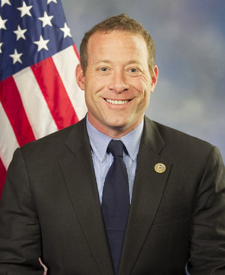
Legislative Progress
In CommitteeMr. Foster (for himself, Ms. Schakowsky, Mr. Gottheimer, and Mr. …
Referred to the House Committee on Oversight and Government Reform.
Introduced in House
Stakeholder Effects
cui bono?How this legislation distributes effects. Mention counts reflect frequency, not effect magnitude.
Bureau of Economic Analysis publishing staff, Bureau of Economic Analysis tax-burden analysts, Congressional budget analysts
Positive-direction: Congressional budget analysts
Negative-direction: Bureau of Economic Analysis publishing staff, Bureau of Economic Analysis tax-burden analysts, Office of Management and Budget outlay analysts, Office of Management and Budget reporting staff
States receiving federal balance data
Bill Structure & Actor Mappings
Who is "The Secretary" in each section?
- "Beneficiaries"
- → ['States', 'Taxpayers', 'Researchers', 'Journalists', 'Policymakers']
- "Administrators"
- → ['Bureau of Economic Analysis', 'Office of Management and Budget', 'Council of Economic Advisers', 'Department of the Treasury', 'Contract administrators']
Key Definitions
Terms defined in this bill
We use a combination of our own taxonomy and classification in addition to large language models to assess meaning and potential beneficiaries. High confidence means strong textual evidence. Always verify with the original bill text.
Learn more about our methodology