Bring Our Heroes Home Act
Summary
What This Bill Does
This bill creates a Missing Armed Forces and Civilian Personnel Records Collection at the National Archives and a five-member Missing Armed Forces and Civilian Personnel Records Review Board. It directs Government offices to search for records about missing Armed Forces and civilian personnel, including POW debriefings, intelligence reports, White House and agency memoranda, live-sighting reports, POW camp records, and status-change records, then transmit copies to the Archivist for public disclosure unless narrow postponement grounds apply.
Who Benefits and How
Families of missing service members, families of missing civilian personnel, veterans researchers, historians, and the public benefit from a stronger presumption of disclosure and a centralized National Archives collection. The bill gives them more access to records about loss, fate, status, MIA-to-KIA changes, POW information, and related federal decisionmaking.
Who Bears the Burden and How
Executive agencies, military departments, the National Archives, the Review Board, and the Justice Department must search, certify, transmit, review, index, declassify, disclose, reconsider postponements, seek court or grand-jury materials when appropriate, and defend privacy or national-security withholdings under strict deadlines. Federal taxpayers also bear the open-ended cost of such sums as are necessary to carry out the review and disclosure regime.
Key Provisions
- Establishes the Missing Armed Forces and Civilian Personnel Records Collection at the National Archives.
- Requires Government offices to identify, certify, transmit, and periodically reconsider disclosure of missing-personnel records.
- Creates a five-member Review Board with authority to review records, issue disclosure rules, and direct transmission to the Archivist.
- Narrows postponement grounds and requires clear evidence before records can be withheld from public release.
- Authorizes appropriations as necessary and keeps the disclosure provisions in effect until the Archivist certifies completion.
Evidence Chain:
This summary is generated from the full bill text using AI analysis. Expand "Detailed Analysis" below for identified beneficiaries/burden bearers with clause-level evidence links.
At a Glance
What This Bill Does
Create a National Archives collection and independent review board to identify, transmit, declassify, and publicly disclose federal records about missing Armed Forces and civilian personnel.
Key Policy Areas
Veterans, Defense, Government Transparency, Archives
Primary Purpose
Create a National Archives collection and independent review board to identify, transmit, declassify, and publicly disclose federal records about missing Armed Forces and civilian personnel.
Policy Domains
Substantive provisions
Identified Gains
- Families of missing service members
- Families of missing civilian personnel
- Veterans researchers
- Historians
- Public records users
Identified Costs
- Executive agencies
- Military departments
- National Archives staff
- Review Board staff
- Justice Department attorneys
- Federal taxpayers
Sponsors


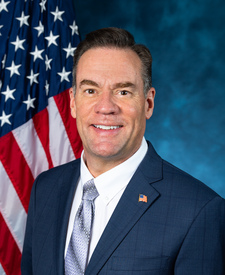
Legislative Progress
In CommitteeMr. Pappas (for himself and Mr. Fulcher) introduced the following …
Referred to the House Committee on Oversight and Government Reform.
Introduced in House
Stakeholder Effects
cui bono?How this legislation distributes effects. Mention counts reflect frequency, not effect magnitude.
Executive agencies defending withholding claims, Executive agencies holding missing-personnel records, Executive agencies requesting disclosure postponement
Positive-direction: Government offices seeking deadline extensions, Intelligence agencies protecting sources, National Archives missing-records work, Review Board operations
Negative-direction: Executive agencies defending withholding claims, Executive agencies holding missing-personnel records, Executive agencies requesting disclosure postponement, Executive agencies subject to missing-record definitions, Government offices relying on nondisclosure rules, Justice Department attorneys supporting unsealing requests, National Archives staff creating the records collection, National Archives staff receiving transmitted records, National Archives staff supporting Review Board work, Office of Government Ethics staff, Review Board members, Review Board staff, Review Board staff evaluating extension requests, Review Board staff issuing disclosure rules, Review Board staff reviewing missing-personnel records
Families of missing service members, Families seeking missing-personnel records
Families of missing civilian personnel, Public records users seeking disclosure, Public records users seeking missing-personnel records
Researchers seeking sealed missing-personnel materials, Researchers using missing-personnel records
Bill Structure & Actor Mappings
Who is "The Secretary" in each section?
- "Cost bearers"
- → ['Federal taxpayers']
- "Beneficiaries"
- → ['Families', 'Veterans researchers', 'Historians', 'Public records users']
- "Federal offices"
- → ['Executive agencies', 'Military departments', 'National Archives', 'Review Board', 'Justice Department']
Key Definitions
Terms defined in this bill
We use a combination of our own taxonomy and classification in addition to large language models to assess meaning and potential beneficiaries. High confidence means strong textual evidence. Always verify with the original bill text.
Learn more about our methodology