State Industrial Competitiveness Act of 2025
Summary
What This Bill Does
The bill adds a flex-tech energy program to the Energy Policy and Conservation Act. DOE may provide financial assistance to state energy agencies with approved plans and to Indian Tribes to build, improve, or expand programs that give manufacturers energy studies, technical assistance, administrative help, and implementation funding. Eligible studies can cover energy and water systems, resilience, emissions reduction, utility cost savings, advanced manufacturing technology, artificial intelligence, industrial heat pumps, storage, renewable thermal, electrification, and other on-site energy options. The bill sets a five percent Tribal set-aside, requires public lists of qualified engineering firms, limits administrative costs to 10 percent, caps support for one facility at the greater of 100000 dollars or five percent, and prioritizes small manufacturers with fewer than 500 full-time employees.
Who Benefits and How
Manufacturers, especially small manufacturers, benefit from subsidized studies and implementation support for efficiency, water, resilience, emissions, and utility-cost improvements. State energy agencies, Indian Tribes, and qualified engineering firms benefit from federal assistance and program work.
Who Bears the Burden and How
DOE must administer approvals, formula funding, Tribal set-asides, technical assistance, and program limits. State energy agencies and Indian Tribes must maintain qualified engineering firm lists and follow spending caps. Federal taxpayers bear the cost of whatever appropriations fund the program.
Key Provisions
- Creates a DOE flex-tech energy program for state energy agencies and Indian Tribes.
- Provides manufacturers with technical assistance, energy studies, administrative support, and implementation funding.
- Requires public lists of qualified engineering firms and support for small manufacturers with fewer than 500 full-time employees.
- Limits administration, per-facility assistance, and requires at least five percent of funds for Indian Tribes or Indian Country manufacturers.
Evidence Chain:
This summary is generated from the full bill text using AI analysis. Expand "Detailed Analysis" below for identified beneficiaries/burden bearers with clause-level evidence links.
At a Glance
What This Bill Does
Creates a DOE flex-tech energy program that funds state energy agencies and Indian Tribes to help manufacturers improve energy performance, resilience, emissions, and competitiveness.
Key Policy Areas
Energy, Manufacturing, State & Local Government, Tribal Nations
Primary Purpose
Creates a DOE flex-tech energy program that funds state energy agencies and Indian Tribes to help manufacturers improve energy performance, resilience, emissions, and competitiveness.
Policy Domains
Substantive provisions
Identified Gains
- manufacturers
- small manufacturers
- state energy agencies
- Indian Tribes
- qualified engineering firms
Identified Costs
- Department of Energy staff
- state energy agencies
- Indian Tribes
- federal taxpayers
Sponsors
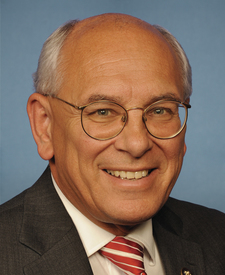
Legislative Progress
In CommitteeMr. Tonko introduced the following bill; which was referred to …
Referred to the House Committee on Energy and Commerce.
Introduced in House
Stakeholder Effects
cui bono?How this legislation distributes effects. Mention counts reflect frequency, not effect magnitude.
manufacturers receiving energy studies, manufacturers receiving flex-tech assistance, small manufacturers under 500 employees
state energy agencies administering flex-tech programs, state energy agencies maintaining qualified firm lists
Positive-direction: state energy agencies administering flex-tech programs
Negative-direction: state energy agencies maintaining qualified firm lists
Indian Tribes administering flex-tech programs, Indian Tribes receiving set-aside funds
Department of Energy program staff, Department of Energy technical assistance staff
qualified engineering firms providing flex-tech studies
Bill Structure & Actor Mappings
Who is "The Secretary" in each section?
- "Secretary"
- → Secretary of Energy
We use a combination of our own taxonomy and classification in addition to large language models to assess meaning and potential beneficiaries. High confidence means strong textual evidence. Always verify with the original bill text.
Learn more about our methodology