Clean Water Standards for PFAS Act of 2025
Summary
What This Bill Does
The bill puts PFAS into the Clean Water Act rulemaking pipeline. EPA must publish human-health water quality criteria for measurable PFAS, finalize Method 1633A, and issue effluent limitation guidelines for named industrial categories on staged deadlines from 2026 through 2028. It also authorizes 200 million dollars per year for publicly owned treatment works grants and 12 million dollars per year for EPA implementation from fiscal years 2026 through 2030.
Who Benefits and How
Communities exposed to PFAS-contaminated waters benefit from enforceable water criteria, source monitoring, and treatment works grants. Publicly owned treatment works receive grant authority to support PFAS pretreatment and source monitoring.
Who Bears the Burden and How
EPA water program staff must complete multiple rulemakings, method updates, and congressional notices on fixed deadlines. Industrial dischargers in organic chemicals, electroplating, metal finishing, textiles, landfills, leather, paint, plastics, pulp and paper, airports, and electronics must prepare for monitoring and PFAS effluent controls. Federal taxpayers bear the authorized grant and implementation costs.
Key Provisions
- Requires EPA to publish human-health water quality criteria for measurable PFAS or PFAS classes within three years.
- Directs phased PFAS effluent limitation guidelines for specified industrial source categories by 2026, 2027, and 2028.
- Requires covered categories to begin PFAS monitoring on enactment while EPA decides whether additional guidelines are needed.
- Authorizes 200 million dollars annually for publicly owned treatment works PFAS grants and 12 million dollars annually for EPA implementation through fiscal year 2030.
Evidence Chain:
This summary is generated from the full bill text using AI analysis. Expand "Detailed Analysis" below for identified beneficiaries/burden bearers with clause-level evidence links.
At a Glance
What This Bill Does
Requires EPA to create PFAS water-quality criteria, PFAS test methods, phased industrial effluent limits, monitoring rules, and grants for publicly owned treatment works.
Key Policy Areas
Environment, Water Infrastructure, Manufacturing
Primary Purpose
Requires EPA to create PFAS water-quality criteria, PFAS test methods, phased industrial effluent limits, monitoring rules, and grants for publicly owned treatment works.
Policy Domains
Substantive provisions
Identified Gains
- PFAS-exposed communities
- publicly owned treatment works
Identified Costs
- Environmental Protection Agency water staff
- industrial dischargers
- federal taxpayers
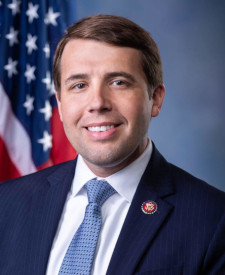
Sponsors

Legislative Progress
In CommitteeReferred to the Subcommittee on Water Resources and Environment.
Mr. Pappas (for himself and Mr. Fitzpatrick) introduced the following …
Referred to the House Committee on Transportation and Infrastructure.
Introduced in House
Stakeholder Effects
cui bono?How this legislation distributes effects. Mention counts reflect frequency, not effect magnitude.
Environmental Protection Agency water program staff
Bill Structure & Actor Mappings
Who is "The Secretary" in each section?
- "Administrator"
- → Environmental Protection Agency Administrator
Key Definitions
Terms defined in this bill
Each perfluoroalkyl or polyfluoroalkyl substance or class detectable by EPA methods such as Method 1633A.
We use a combination of our own taxonomy and classification in addition to large language models to assess meaning and potential beneficiaries. High confidence means strong textual evidence. Always verify with the original bill text.
Learn more about our methodology