To amend the Higher Education Act of 1965 to ensure that public institutions of higher education eschew policies that improperly constrain the expressive rights of students, and to ensure that private institutions of higher education are transparent about, and responsible for, their chosen speech policies.
Legislative Progress
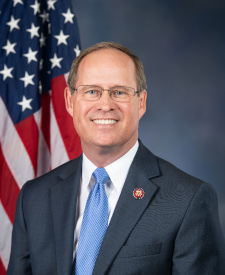
IntroducedMr. Murphy introduced the following bill; which was referred to …
Summary
What This Bill Does
The Campus Free Speech Restoration Act protects students' First Amendment rights on college campuses. It prohibits public universities receiving federal financial aid from restricting peaceful expressive activities like protesting, distributing literature, or carrying signs in generally accessible campus areas. It also requires private universities to publicly disclose their speech policies.
Who Benefits and How
Students and student organizations benefit through stronger legal protections for free speech on campus, including the right to sue universities for violations with minimum $500 damages plus daily penalties. Free speech advocacy groups gain new legal tools to challenge restrictive campus policies. Attorneys representing students in speech-related litigation benefit from court-awarded legal fees. Religious colleges and universities are completely exempt from the private institution requirements, protecting their autonomy. Military academies are also exempt from the public university requirements.
Who Bears the Burden and How
Public universities face significant new compliance burdens - they must ensure all speech policies meet strict constitutional standards or risk losing federal funding eligibility. University administrators must navigate a complex multi-stage Department of Education review process for any complaints. The Department of Education's Office of Postsecondary Education takes on substantial new responsibilities for receiving complaints, conducting investigations, and making compliance determinations. Students at institutions that lose federal funding eligibility could face serious consequences, including loss of access to federal financial aid programs (though existing students are protected for 3 years). Private universities must publicly disclose all speech policies on their websites and in student handbooks.
Key Provisions
- Prohibits public universities from restricting peaceful expressive activity in generally accessible campus areas, and requires any time/place/manner restrictions to meet strict scrutiny (compelling interest, least restrictive means, content-neutral)
- Creates private right of action allowing students to sue for violations with minimum $500 damages plus $50/day for continuing violations
- Establishes three-stage complaint and review process at Department of Education that can result in loss of federal funding eligibility
- Requires private universities to publicly post all speech policies within two clicks of their homepage and include them in new student handbooks
- Exempts military academies from public university requirements and religious institutions from private university requirements
- Includes anti-retaliation protections for students who file complaints
Evidence Chain:
This summary is derived from the structured analysis below. See "Detailed Analysis" for per-title beneficiaries/burden bearers with clause-level evidence links.
Primary Purpose
This bill establishes protections for student free speech at institutions of higher education by prohibiting public institutions from restricting expressive activity in generally accessible areas and requiring private institutions to disclose speech policies, with enforcement through loss of federal funding eligibility and private lawsuits.
Policy Domains
Legislative Strategy
"Uses federal funding leverage (Title IV financial aid eligibility) to enforce free speech protections at colleges and universities through a multi-stage complaint and review process"
Likely Beneficiaries
- Students and student organizations seeking to exercise free speech on campus
- Free speech advocacy organizations
- Attorneys representing students in speech-related litigation (attorney fee awards)
- Conservative speakers and organizations who have faced campus speech restrictions
Likely Burden Bearers
- Public universities that maintain speech zones or restrictive speech policies
- Private universities (disclosure and policy publication requirements)
- University administrators (compliance burden with multi-stage review process)
- Department of Education (new enforcement and complaint-handling responsibilities)
- Students at institutions that lose Title IV eligibility (loss of federal financial aid access)
Bill Structure & Actor Mappings
Who is "The Secretary" in each section?
- "the_secretary"
- → Secretary of Education
- "the_department"
- → Department of Education
- "the_secretary"
- → Secretary of Education
- "the_attorney_general"
- → Attorney General of the United States
- "the_secretary"
- → Secretary of Education
Key Definitions
Terms defined in this bill
Includes peacefully assembling, protesting, speaking, or listening; distributing literature; carrying a sign; circulating a petition; or other expressive rights guaranteed under the First Amendment, including religious rights. Does NOT include unprotected speech as defined by Supreme Court precedents.
Designated areas on campus for speech activities - the bill states these are inherently at odds with First Amendment guarantees.
Systems that are susceptible to abuses that may put them at odds with First Amendment freedom of speech (referenced in Sense of Congress provision).
Areas on an institution campus where expressive activity protections apply under subsection (b)(1). Non-generally accessible areas are excluded from protection.
We use a combination of our own taxonomy and classification in addition to large language models to assess meaning and potential beneficiaries. High confidence means strong textual evidence. Always verify with the original bill text.
Learn more about our methodology