Child Care Access and Affordability Act of 2025
Summary
What This Bill Does
The Child Care Access and Affordability Act of 2025 requires the Government Accountability Office to conduct a state-by-state study within 18 months after enactment and report the results to congressional committees. The study must identify barriers that children and parents face in meeting state standards under the Child Care and Development Block Grant Act because of state median income eligibility limits. It must examine the extent of waitlists for child care services under the Act and state-level reforms that reduced those waitlists. It must review payment rates made to center-based child care providers, family child care providers, and other compensated child care providers. It also must analyze the impact of inflation on child care availability and affordability, expansion of family access to services, and payment-rate improvements.
Who Benefits and How
Children and parents benefit because Congress would receive a state-by-state picture of eligibility barriers, waitlists, provider payment rates, and inflation pressures. Child care providers benefit if GAO identifies payment-rate gaps for center-based, family, and other providers. State child care agencies benefit from comparative evidence on reforms that reduced waitlists. Congressional committees benefit from information for future CCDBG policy changes.
Who Bears the Burden and How
GAO analysts must collect state-level data, compare eligibility limits, assess waitlists, evaluate provider payment rates, and report within 18 months. State child care agencies may need to provide data on standards, waitlists, reforms, payment rates, and inflation impacts. Providers and families may be surveyed or represented in data collection. Federal taxpayers fund the GAO study. Congress must decide whether to act on the findings.
Key Provisions
- Requires GAO to conduct a state-by-state child care access and affordability study within 18 months.
- Requires review of barriers caused by state median income eligibility limits under CCDBG.
- Requires analysis of CCDBG child care waitlists and state reforms that reduced waitlists.
- Requires review of payment rates for center-based, family, and other compensated child care providers.
- Requires analysis of inflation effects on child care availability, affordability, family access, and payment rates.
Evidence Chain:
This summary is generated from the full bill text using AI analysis. Expand "Detailed Analysis" below for identified beneficiaries/burden bearers with clause-level evidence links.
At a Glance
What This Bill Does
Requires GAO within 18 months to study every state and report to Congress on child care access barriers tied to state median income eligibility limits, CCDBG waitlists and reforms, provider payment rates, and inflation effects on availability, affordability, family access, and payment rates.
Key Policy Areas
Child Care, GAO, Families, Federal Grants
Primary Purpose
Requires GAO within 18 months to study every state and report to Congress on child care access barriers tied to state median income eligibility limits, CCDBG waitlists and reforms, provider payment rates, and inflation effects on availability, affordability, family access, and payment rates.
Policy Domains
Substantive provisions
Identified Gains
- Children
- Parents
- Child care providers
- State child care agencies
- Congressional committees
Identified Costs
- GAO analysts
- State child care agencies
- Child care providers
- Families
- Federal taxpayers
- Congress
Sponsors

Legislative Progress
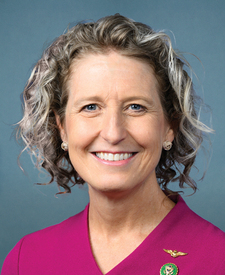
In CommitteeMs. McDonald Rivet (for herself and Mrs. Kiggans of Virginia) …
Referred to the House Committee on Education and Workforce.
Introduced in House
Stakeholder Effects
cui bono?How this legislation distributes effects. Mention counts reflect frequency, not effect magnitude.
GAO officials responsible for conducting and reporting the child care affordability study
Bill Structure & Actor Mappings
Who is "The Secretary" in each section?
- "GAO"
- → Government Accountability Office
- "CCDBG"
- → Child Care and Development Block Grant Act
Key Definitions
Terms defined in this bill
We use a combination of our own taxonomy and classification in addition to large language models to assess meaning and potential beneficiaries. High confidence means strong textual evidence. Always verify with the original bill text.
Learn more about our methodology