Improving the Federal Response to Organized Retail Crime Act of 2025
Summary
What This Bill Does
The Improving the Federal Response to Organized Retail Crime Act requires a federal coordination strategy. Within 180 days, the Attorney General, the Secretary of Homeland Security, the Postmaster General, and relevant agency heads must develop a strategy for coordination on organized retail crime. The strategy must improve information sharing among FBI, Customs and Border Protection, Homeland Security Investigations, Secret Service, the Postal Service, and other relevant agencies; help state and local law enforcement compile materials and evidence needed to prosecute organized retail crime; and increase cooperation and information sharing with the retail industry, state retail crime task forces, and other retail crime task forces. The same officials must submit a joint report to congressional committees within 180 days. GAO must publish a report within one year on coordination between the private sector and law enforcement to deter and investigate organized retail crime.
Who Benefits and How
Retailers benefit from a federal strategy aimed at better information sharing with law enforcement and task forces. State and local law enforcement agencies benefit from federal help compiling evidence for prosecutions. FBI, CBP, HSI, Secret Service, and Postal Inspection-related officials benefit from clearer interagency coordination expectations. Consumers and retail workers may benefit if organized theft networks are more effectively deterred. Congress benefits from the joint strategy report and GAO review.
Who Bears the Burden and How
Justice, Homeland Security, Postal Service, FBI, CBP, HSI, Secret Service, and other federal officials must develop the strategy and report within 180 days. GAO auditors must produce a private-sector and law-enforcement coordination report within one year. Retailers and task forces may need to share information, evidence, and operational data with federal agencies. State and local law enforcement must coordinate with federal partners to compile prosecution materials. Privacy and civil-liberties staff may need to review information-sharing practices.
Key Provisions
- Requires a federal organized retail crime coordination strategy within 180 days.
- Requires improved information sharing among FBI, CBP, HSI, Secret Service, Postal Service, and other relevant agencies.
- Requires federal support for state and local law enforcement evidence compilation.
- Requires stronger cooperation with the retail industry and retail crime task forces.
- Requires a joint congressional report within 180 days and a GAO coordination report within one year.
Evidence Chain:
This summary is generated from the full bill text using AI analysis. Expand "Detailed Analysis" below for identified beneficiaries/burden bearers with clause-level evidence links.
At a Glance
What This Bill Does
Requires Justice, Homeland Security, the Postal Service, and other relevant federal agencies to develop within 180 days a coordinated strategy and report for organized retail crime investigations, information sharing, state and local evidence support, retail-industry cooperation, and private-sector coordination review by GAO.
Key Policy Areas
Law Enforcement, Retail, Homeland Security, Postal Service
Primary Purpose
Requires Justice, Homeland Security, the Postal Service, and other relevant federal agencies to develop within 180 days a coordinated strategy and report for organized retail crime investigations, information sharing, state and local evidence support, retail-industry cooperation, and private-sector coordination review by GAO.
Policy Domains
Substantive provisions
Identified Gains
- Retailers
- State law enforcement agencies
- Local law enforcement agencies
- Federal investigators
- Consumers
- Congress
Identified Costs
- Justice Department officials
- Homeland Security officials
- Postal Service officials
- GAO auditors
- Retailers
- Task forces
- Privacy staff
Sponsors
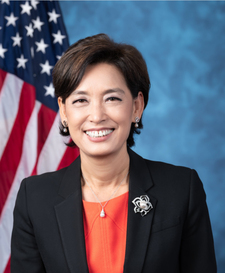
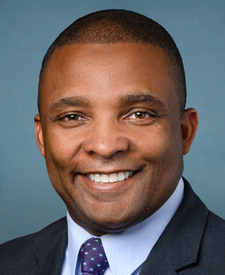
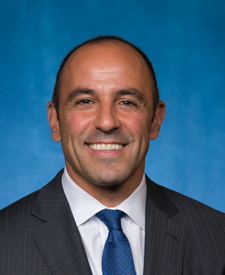
Legislative Progress
In CommitteeMrs. Kim (for herself and Mr. Panetta) introduced the following …
Referred to the House Committee on the Judiciary.
Introduced in House
Stakeholder Effects
cui bono?How this legislation distributes effects. Mention counts reflect frequency, not effect magnitude.
Federal agencies and GAO responsible for organized retail crime coordination planning and reporting
Bill Structure & Actor Mappings
Who is "The Secretary" in each section?
- "CBP"
- → Customs and Border Protection
- "DHS"
- → Department of Homeland Security
- "DOJ"
- → Department of Justice
- "FBI"
- → Federal Bureau of Investigation
- "GAO"
- → Government Accountability Office
- "HSI"
- → Homeland Security Investigations
Key Definitions
Terms defined in this bill
We use a combination of our own taxonomy and classification in addition to large language models to assess meaning and potential beneficiaries. High confidence means strong textual evidence. Always verify with the original bill text.
Learn more about our methodology