To amend title 46, United States Code, to exempt certain noncontiguous trade from the coastwise laws.
Sponsors

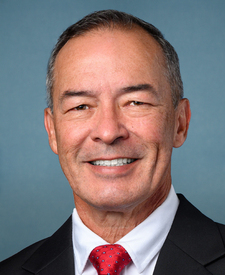
Ed Case
D-HI | Primary Sponsor
Legislative Progress
IntroducedMr. Case (for himself and Mr. Moylan) introduced the following …
Summary
What This Bill Does
The Noncontiguous Shipping Competition Act creates a new exemption to the Jones Act for shipping routes to U.S. territories and noncontiguous states (like Puerto Rico, Hawaii, and Alaska). Currently, only U.S.-flagged, U.S.-built, and U.S.-crewed vessels can carry cargo between U.S. ports. This bill would allow foreign-flagged ships to operate on these routes when there are fewer than three competing U.S. shipping companies, each carrying at least 20% of the route'''s cargo volume, and none of them under common ownership.
Who Benefits and How
Foreign shipping companies gain access to lucrative U.S. territory routes that were previously off-limits, allowing them to compete on routes where U.S. carriers have monopolies or duopolies. Importers, exporters, and businesses in Puerto Rico, Hawaii, Alaska, and other territories benefit from increased competition, which could lead to lower shipping costs and more service options. Consumers in these territories may see lower prices for imported goods due to reduced transportation costs.
Who Bears the Burden and How
U.S.-flagged vessel operators, particularly those with dominant positions on noncontiguous routes (like Matson Navigation and Pasha Hawaii), face new foreign competition that could reduce their market share and revenues. U.S. shipbuilders would see reduced demand for Jones Act-compliant vessels since foreign carriers don'''t need U.S.-built ships. U.S. maritime workers and unions could face job losses as domestic carriers lose business to foreign competitors with potentially lower labor costs.
Key Provisions
- Amends 46 U.S.C. 55101(b) to add a competition-based exemption to the Jones Act
- Exemption applies only to routes in "noncontiguous trade" (to/from Alaska, Hawaii, Puerto Rico, Guam, etc.)
- Protection remains if at least 3 independent U.S. carriers each carry 20%+ of route volume
- Routes with monopolies, duopolies, or carriers under common ownership lose Jones Act protection
- Foreign vessels must still comply with other U.S. safety and environmental regulations
Evidence Chain:
This summary is derived from the structured analysis below. See "Detailed Analysis" for per-title beneficiaries/burden bearers with clause-level evidence links.
Primary Purpose
Exempts certain noncontiguous trade routes from the Jones Act coastwise laws when there are fewer than three competing U.S.-flagged vessel operators each carrying at least 20% of route volume.
Policy Domains
Legislative Strategy
"Introduce competition-based exemptions to the Jones Act to reduce shipping costs to noncontiguous territories while maintaining protections where there is adequate U.S. carrier competition"
Likely Beneficiaries
- Foreign shipping companies (gain access to U.S. noncontiguous routes)
- International shipping lines
- Importers and exporters to/from Puerto Rico, Hawaii, Alaska, and U.S. territories
- Consumers in noncontiguous territories (potentially lower prices)
Likely Burden Bearers
- U.S.-flagged vessel operators (Jones Act carriers lose monopoly/duopoly positions)
- U.S. shipbuilders (reduced demand for U.S.-built vessels)
- U.S. maritime workers and unions (reduced employment on U.S. vessels)
- Domestic shipping companies with less than 3 competitors on routes
Bill Structure & Actor Mappings
Who is "The Secretary" in each section?
Key Definitions
Terms defined in this bill
As defined in 46 U.S.C. 53501 - trade between the continental U.S. and noncontiguous states/territories (Alaska, Hawaii, Puerto Rico, Guam, etc.)
As defined in 46 U.S.C. 55108(a) - U.S.-built, U.S.-owned, U.S.-crewed vessels eligible for coastwise trade under the Jones Act
We use a combination of our own taxonomy and classification in addition to large language models to assess meaning and potential beneficiaries. High confidence means strong textual evidence. Always verify with the original bill text.
Learn more about our methodology