Drone Safety Enhancement Act
Summary
What This Bill Does
The Drone Safety Enhancement Act focuses on research for the evolving National Airspace System. It states that autonomous aviation research is important as airspace moves from trajectory-based operations to collaborative and highly automated operations. NASA must continue research on unmanned aircraft systems and advanced air mobility, including unmanned aircraft system traffic management and autonomous capabilities, as practicable. NASA must do this in collaboration with FAA, other relevant federal agencies, and representatives of academia and industry. Within 18 months, NASA must brief the House Science, Space, and Technology Committee and the Senate Commerce, Science, and Transportation Committee on research progress. The bill defines advanced air mobility, regional air mobility, urban air mobility, UTM, and unmanned aircraft systems.
Who Benefits and How
NASA aviation researchers benefit from a clear statutory direction to keep work going on UAS traffic management and autonomy. FAA safety and airspace staff benefit from coordinated research that can inform integration of drones and advanced air mobility into the National Airspace System. Drone manufacturers, advanced air mobility companies, universities, and aviation researchers benefit from continued federal research collaboration. Congress benefits from an 18-month progress briefing on the state of the research.
Who Bears the Burden and How
NASA staff must coordinate with FAA, federal agencies, academia, and industry and prepare the congressional briefing. FAA and other federal agencies must participate in coordination around airspace, safety, and automation issues. Industry and academic participants may need to share technical input or research results. Federal taxpayers fund the agency research and briefing work through existing or future appropriations.
Key Provisions
- Directs NASA to continue research on unmanned aircraft systems and advanced air mobility.
- Requires collaboration with FAA, other federal agencies, academia, and industry representatives.
- Includes research related to UTM and autonomous capabilities.
- Requires a progress briefing to House and Senate committees within 18 months.
- Defines advanced air mobility, regional air mobility, urban air mobility, UTM, and unmanned aircraft systems.
Evidence Chain:
This summary is generated from the full bill text using AI analysis. Expand "Detailed Analysis" below for identified beneficiaries/burden bearers with clause-level evidence links.
At a Glance
What This Bill Does
Directs NASA, in collaboration with FAA, other federal agencies, academia, and industry, to continue research on unmanned aircraft systems, advanced air mobility, UTM, and autonomous aviation capabilities, with a congressional briefing within 18 months.
Key Policy Areas
Aviation, Drones, NASA, Research
Primary Purpose
Directs NASA, in collaboration with FAA, other federal agencies, academia, and industry, to continue research on unmanned aircraft systems, advanced air mobility, UTM, and autonomous aviation capabilities, with a congressional briefing within 18 months.
Policy Domains
Substantive provisions
Identified Gains
- NASA aviation researchers
- FAA safety staff
- Drone manufacturers
- Advanced air mobility companies
- Universities
- Congress
Identified Costs
- NASA staff
- FAA administrators
- Federal agency partners
- Industry participants
- Academic researchers
- Federal taxpayers
Sponsors

Legislative Progress
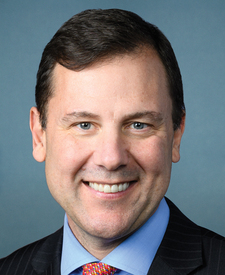
In CommitteeMr. Kean (for himself and Mr. Amo) introduced the following …
Referred to the House Committee on Science, Space, and Technology.
Introduced in House
Stakeholder Effects
cui bono?How this legislation distributes effects. Mention counts reflect frequency, not effect magnitude.
NASA and partner agencies responsible for the continued unmanned-aircraft and advanced-air-mobility research and briefing
Bill Structure & Actor Mappings
Who is "The Secretary" in each section?
- "FAA"
- → Federal Aviation Administration
- "UTM"
- → Unmanned aircraft system traffic management
- "NASA"
- → National Aeronautics and Space Administration
Key Definitions
Terms defined in this bill
We use a combination of our own taxonomy and classification in addition to large language models to assess meaning and potential beneficiaries. High confidence means strong textual evidence. Always verify with the original bill text.
Learn more about our methodology