Secure Our Skies Drone Safety Act of 2025
Summary
What This Bill Does
The Secure Our Skies Drone Safety Act directs the Comptroller General to study unmanned aircraft systems and counter-UAS systems used by federal, state, local, and Tribal agencies and report to Congress within one year. The report must recommend legal authorities and policy changes to help agencies counter drone threats, identify steps to strengthen U.S. and allied drone manufacturing and simplify UAS procurement, and provide data on deployed drones, drones bought by state, local, and Tribal agencies from entities in adversarial nations, how many drones are domestically produced, cost barriers to buying U.S. or trusted-nation drones, how often drones are used and for what purposes, operator training or certification, governing policies or protocols, privacy protections, and counter-drone strategies and training.
Who Benefits and How
Congress benefits from a comprehensive picture of public-agency drone use, foreign-adversary sourcing, domestic production, procurement barriers, and counter-drone readiness. Federal, state, local, and Tribal agencies may benefit from policy recommendations that clarify authorities, training, privacy expectations, and procurement pathways. Domestic and allied drone manufacturers could benefit if the report supports procurement changes favoring trusted supply chains.
Who Bears the Burden and How
GAO bears the study and reporting burden. Federal, state, local, and Tribal agencies may need to provide inventories, purchase records, usage data, training information, privacy policies, and counter-drone protocols. Agencies using drones from adversarial-nation entities may face scrutiny, future procurement restrictions, or cost pressure if Congress acts on recommendations to shift toward domestic or allied UAS suppliers.
Key Provisions
- Requires GAO to study public-agency UAS use and counter-UAS systems within one year.
- Requires recommendations on legal authorities and policies needed to counter drone threats.
- Requires recommendations to strengthen U.S. and allied UAS manufacturing and simplify procurement.
- Requires data on adversarial-nation drone purchases by state, local, and Tribal agencies, domestic production, cost barriers, use frequency, purposes, operator training, policies, privacy protections, and countermeasures.
Evidence Chain:
This summary is generated from the full bill text using AI analysis. Expand "Detailed Analysis" below for identified beneficiaries/burden bearers with clause-level evidence links.
At a Glance
What This Bill Does
Requires GAO to report within one year on federal, state, local, and Tribal agency drone use, counter-drone systems, adversarial-nation drone purchases, domestic production, policy gaps, privacy protections, and training.
Key Policy Areas
Aviation, Law Enforcement, National Security, Government Operations
Primary Purpose
Requires GAO to report within one year on federal, state, local, and Tribal agency drone use, counter-drone systems, adversarial-nation drone purchases, domestic production, policy gaps, privacy protections, and training.
Policy Domains
Substantive provisions
Identified Gains
- Congress
- Law enforcement agencies
- Domestic drone manufacturers
Identified Costs
- Government Accountability Office
- Public agencies
- Adversarial-nation drone suppliers
Sponsors
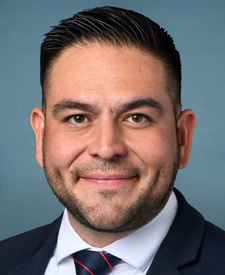


Legislative Progress
In CommitteeReferred to the Subcommittee on Aviation.
Mr. Vasquez (for himself and Mrs. Kiggans of Virginia) introduced …
Referred to the House Committee on Transportation and Infrastructure.
Introduced in House
Stakeholder Effects
cui bono?How this legislation distributes effects. Mention counts reflect frequency, not effect magnitude.
Bill Structure & Actor Mappings
Who is "The Secretary" in each section?
- "UAS"
- → Unmanned aircraft systems
- "Comptroller General"
- → Head of the Government Accountability Office
We use a combination of our own taxonomy and classification in addition to large language models to assess meaning and potential beneficiaries. High confidence means strong textual evidence. Always verify with the original bill text.
Learn more about our methodology