Supporting Blue Envelope Programs Act
Summary
What This Bill Does
The Supporting Blue Envelope Programs Act authorizes the Attorney General, through the Bureau of Justice Assistance, to make grants to law enforcement agencies and nonprofit organizations that partner to create or support blue envelope programs. These programs provide training and resources for law enforcement officers, and optionally first responders, on interactions with people who have autism spectrum disorder or developmental, cognitive, sensory, or communication disabilities. They may provide voluntary blue envelopes, decals, seatbelt covers, lanyards, keychains, pins, and similar materials that help communicate identification, diagnosis information, communication preferences, and emergency contacts during vehicle-related law-enforcement encounters. The bill prohibits a registration component or participant list, prioritizes programs with community support, scalability, multiple law-enforcement agencies, trauma-informed practices, and self-advocate feedback, directs broad geographic distribution including rural and Tribal communities, requires periodic reports to Congress, creates a public online directory, and authorizes $5 million per year for fiscal years 2027 through 2031.
Who Benefits and How
People with autism, developmental disabilities, cognitive disabilities, sensory disabilities, or communication disabilities benefit from voluntary tools that can reduce confusion and risk during traffic stops or other encounters. Families and caregivers benefit from materials that communicate emergency contacts and preferences. Law enforcement agencies and disability-service nonprofits benefit from grants for training, materials, and program support, especially in rural and Tribal communities.
Who Bears the Burden and How
The Bureau of Justice Assistance bears grant administration, prioritization, reporting, and directory-maintenance duties. Law enforcement agencies and nonprofit partners must design programs without registries, train officers, engage self-advocates, produce materials, collect feedback, and sustain the program after the grant. Federal taxpayers bear the $5 million annual authorization from 2027 through 2031.
Key Provisions
- Authorizes BJA grants for law enforcement agencies and nonprofit partners to create or support blue envelope programs.
- Requires programs to be voluntary and bars registration components or participant lists.
- Prioritizes scalable, trauma-informed, community-supported programs involving multiple law-enforcement agencies and self-advocate feedback.
- Requires a public online directory and congressional reports every two years after the first-year report.
- Authorizes $5 million per year for fiscal years 2027 through 2031.
Evidence Chain:
This summary is generated from the full bill text using AI analysis. Expand "Detailed Analysis" below for identified beneficiaries/burden bearers with clause-level evidence links.
At a Glance
What This Bill Does
Authorizes Bureau of Justice Assistance grants for voluntary blue envelope programs that improve law-enforcement encounters with people who have autism or developmental, cognitive, sensory, or communication disabilities.
Key Policy Areas
Law Enforcement, Disability Services, Grants, Government Operations
Primary Purpose
Authorizes Bureau of Justice Assistance grants for voluntary blue envelope programs that improve law-enforcement encounters with people who have autism or developmental, cognitive, sensory, or communication disabilities.
Policy Domains
Substantive provisions
Identified Gains
- People with disabilities
- Law enforcement agencies
- Nonprofit organizations
Identified Costs
- Bureau of Justice Assistance
- Grant recipients
- Federal taxpayers
Sponsors

Legislative Progress
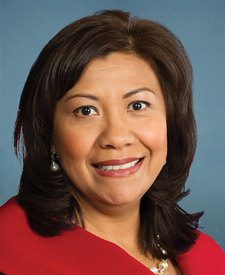
In CommitteeMrs. Torres of California (for herself and Mr. Rutherford) introduced …
Referred to the House Committee on the Judiciary.
Introduced in House
Stakeholder Effects
cui bono?How this legislation distributes effects. Mention counts reflect frequency, not effect magnitude.
Bill Structure & Actor Mappings
Who is "The Secretary" in each section?
- "Director"
- → Director of the Bureau of Justice Assistance
- "blue envelope program"
- → A voluntary program providing officer training and materials to reduce communication barriers during law-enforcement encounters
We use a combination of our own taxonomy and classification in addition to large language models to assess meaning and potential beneficiaries. High confidence means strong textual evidence. Always verify with the original bill text.
Learn more about our methodology