To amend title XVIII of the Social Security Act to adjust the eligibility for the rural emergency hospital designation under the Medicare program.
Summary
What This Bill Does
This bill amends the Medicare rural emergency hospital eligibility definition in Social Security Act section 1861(kkk)(3). Current law looks to whether a facility met specified hospital or critical access hospital criteria as of a fixed date. The bill broadens that timing to any point during the period beginning January 1, 2015 and ending on the current reference date, and adds a new eligible category: an off-campus outpatient department of a hospital that was a dedicated emergency department under federal EMTALA regulations and was located in a rural county or equivalent unit of local government. The practical effect is to let more rural emergency departments convert to or qualify for rural emergency hospital status under Medicare.
Who Benefits and How
Rural off-campus emergency departments benefit if they can qualify for rural emergency hospital designation and associated Medicare payment treatment rather than closing or operating under less suitable status. Rural patients benefit if local emergency access is preserved in communities that no longer support a full inpatient hospital. Parent hospitals and rural health systems may benefit from a new conversion pathway for outpatient emergency sites that were operating in rural areas during the lookback period.
Who Bears the Burden and How
CMS and Medicare contractors bear administrative burdens to evaluate eligibility using the expanded lookback period and new off-campus outpatient department category. Federal taxpayers and the Medicare trust funds may bear additional costs if more facilities qualify for rural emergency hospital payments. Hospitals seeking the designation must document prior dedicated emergency department status, rural location, and timing within the January 1, 2015 lookback window.
Key Provisions
- Expands rural emergency hospital eligibility from a single date test to any point during the period beginning January 1, 2015 and ending on the existing reference date.
- Adds certain rural off-campus outpatient departments that were dedicated emergency departments as a new eligible facility category.
- Requires qualifying facilities to show they were located in a rural county or equivalent unit of local government.
- Allows more rural emergency departments to seek Medicare rural emergency hospital designation and payment treatment.
Evidence Chain:
This summary is generated from the full bill text using AI analysis. Expand "Detailed Analysis" below for identified beneficiaries/burden bearers with clause-level evidence links.
At a Glance
What This Bill Does
Expands Medicare rural emergency hospital eligibility to certain rural off-campus outpatient departments that operated dedicated emergency departments between January 1, 2015 and the existing eligibility date.
Key Policy Areas
Healthcare, Medicare, Rural Development
Primary Purpose
Expands Medicare rural emergency hospital eligibility to certain rural off-campus outpatient departments that operated dedicated emergency departments between January 1, 2015 and the existing eligibility date.
Policy Domains
Substantive provisions
Identified Gains
- Rural emergency departments
- Rural patients
- Rural health systems
Identified Costs
- Centers for Medicare and Medicaid Services
- Medicare contractors
- Federal taxpayers
Sponsors

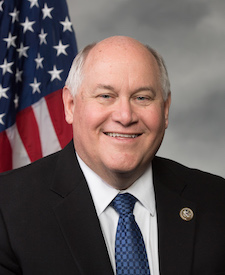
Derek Schmidt
R-KS | Primary Sponsor
Legislative Progress
In CommitteeMr. Schmidt (for himself and Mr. Estes) introduced the following …
Referred to the House Committee on Ways and Means.
Introduced in House
Stakeholder Effects
cui bono?How this legislation distributes effects. Mention counts reflect frequency, not effect magnitude.
Bill Structure & Actor Mappings
Who is "The Secretary" in each section?
- "rural area"
- → Rural area as defined in Social Security Act section 1886(d)(2)(D)
- "dedicated emergency department"
- → Dedicated emergency department as defined in 42 C.F.R. 489.24(b)
We use a combination of our own taxonomy and classification in addition to large language models to assess meaning and potential beneficiaries. High confidence means strong textual evidence. Always verify with the original bill text.
Learn more about our methodology