To end the epidemic of gun violence and build safer communities by strengthening Federal firearms laws and supporting gun violence research, intervention, and prevention initiatives.
Analysis under review: This bill has generated analysis that may be too generic or incomplete. Clause-level evidence remains available below.
Summary
What This Bill Does
This bill, To end the epidemic of gun violence and build safer communities by strengthening Federal firearms laws and supporting gun violence research, intervention, and prevention initiatives., changes federal law or congressional policy affecting law enforcement, courts, victims, and regulated public-safety actors. The main policy domain is Criminal Justice, Civil Rights, Government Operations.
Who Benefits and How
law enforcement, courts, victims, and regulated public-safety actors may benefit from new authority, funding, eligibility, regulatory clarity, or reduced risk created by the bill.
Who Bears the Burden and How
federal implementing agencies, law enforcement, courts, victims, and regulated public-safety actors may take on implementation duties, reporting obligations, compliance costs, or oversight responsibilities.
Key Provisions
- Section H094CF4E614124EC89A187537C802A34C: 1. Short title; table of contents This Act may be cited as the Gun Violence Prevention and Community Safety Act of 2023. The table of contents for this Act is...
- Section H4D6D40E7022743EB936C5544E7D08A92: 101. License to own firearms and ammunition Chapter 44 of title 18, United States Code, is amended by adding at the end the following: 935.License to own...
- Section H62306F69AB1843C7BB550A5988D317EF: 935. License to own firearms and ammunition Except as otherwise provided in this section, it shall be unlawful for any individual who is not licensed under...
- Section H320A25A40CDC41F3B05655B4E0E4C823: 102. State firearms licensing Title I of the Omnibus Crime Control and Safe Streets Act of 1968 (34 U.S.C. 10101 et seq.) is amended by adding at the end the...
- Section H5B476F40A86B4D50944706772246364C: 3061. Definitions In this part— the term covered license means a— firearms license; or firearms dealer license; the term extreme risk protection order— means a...
Evidence Chain:
This summary is generated from the full bill text using AI analysis. Expand "Detailed Analysis" below for identified beneficiaries/burden bearers with clause-level evidence links.
At a Glance
What This Bill Does
This bill, To end the epidemic of gun violence and build safer communities by strengthening Federal firearms laws and supporting gun violence research, intervention, and prevention initiatives., changes federal law or congressional policy affecting law enforcement, courts, victims, and regulated public-safety actors.
Key Policy Areas
Criminal Justice, Civil Rights, Government Operations
Primary Purpose
This bill, To end the epidemic of gun violence and build safer communities by strengthening Federal firearms laws and supporting gun violence research, intervention, and prevention initiatives., changes federal law or congressional policy affecting law enforcement, courts, victims, and regulated public-safety actors.
Policy Domains
Whole bill
Identified Gains
- law enforcement, courts, victims, and regulated public-safety actors
Identified Costs
- federal implementing agencies
- law enforcement, courts, victims, and regulated public-safety actors
Sponsors
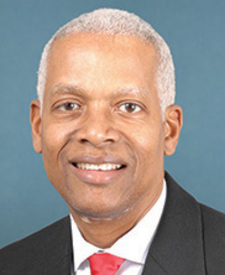
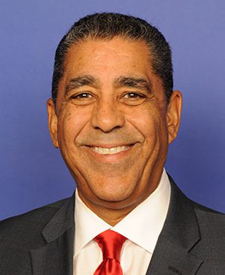
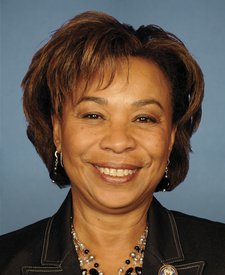
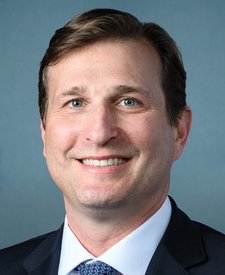
Legislative Progress
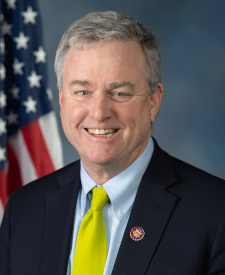
IntroducedMr. Johnson of Georgia (for himself, Ms. Norton, Mr. Lynch, …
Impact analysis is available but no clear stakeholder effects identified. View clause-level analysis →
Bill Structure & Actor Mappings
Who is "The Secretary" in each section?
- "the_commission"
- → The commission identified in the operative section
Key Definitions
Terms defined in this bill
the chief of police, the sheriff, or an equivalent officer or the designee of any such individual
an offense that— is a misdemeanor crime of stalking under Federal, State, Tribal, or municipal law
any— parent, spouse, sibling, or child related by blood, marriage, or adoption to the respondent
a Federal and State background check, which may include a fingerprint-based background check. For purposes of this part, a State— shall establish standards for categorizing an individual as a prohibited individual for purposes of receiving a covered license
any material that creates a magnetic field equivalent to or more than 3.7 ounces of 17–4 pH stainless steel
an individual who is— employed by a private institution of higher education that is eligible for funding under title IV of the Higher Education Act of 1965 (20 U.S.C. 1070 et seq.)
a Federal and State background check, which may include a fingerprint-based background check. For purposes of this part, a State— shall establish standards for categorizing an individual as a prohibited individual for purposes of receiving a covered license
an individual who is— employed by a private institution of higher education that is eligible for funding under title IV of the Higher Education Act of 1965 (20 U.S.C. 1070 et seq.)
any repeating firearm that— utilizes a portion of the energy of a firing cartridge to extract the fired cartridge case and chamber the next round
an individual who is— employed by a private institution of higher education that is eligible for funding under title IV of the Higher Education Act of 1965 (20 U.S.C. 1070 et seq.)
any— parent, spouse, sibling, or child related by blood, marriage, or adoption to the respondent
an individual named in the petition for an extreme risk protection order or subject to an extreme risk protection order. The term State means— a State
We use a combination of our own taxonomy and classification in addition to large language models to assess meaning and potential beneficiaries. High confidence means strong textual evidence. Always verify with the original bill text.
Learn more about our methodology