Domestic Organic Investment Act of 2025
Summary
What This Bill Does
The Domestic Organic Investment Act of 2025 adds a Domestic Organic Investment Program to the Agricultural Marketing Act of 1946. USDA, acting through the Agricultural Marketing Service, would provide competitive grants to eligible domestic entities that produce or handle certified organic products or are transitioning to certification, including producer cooperatives, commercial organic handlers, units of Tribal government, and other entities designated by the Secretary. The program is designed to expand domestic organic supply-chain capacity, modernize manufacturing, tracking, storage, and information technology systems, improve food safety and organic-certification compliance, increase storage, cold storage, aggregation, processing, and distribution capacity, build domestic markets now served by imports, and address supply-chain bottlenecks. Grants can support capacity-expansion projects up to $2 million and equipment-only projects up to $100,000, generally for terms up to three years. Recipients must provide 50 percent non-federal match for capacity projects and 25 percent for equipment-only projects, though USDA may waive or reduce match for beginning farmers, ranchers, and veterans. USDA may also provide technical assistance and cooperative agreements, and appropriations are authorized for fiscal years 2026 through 2030.
Who Benefits and How
Certified organic producers, producer cooperatives, handlers, processors, suppliers, Tribal governments, beginning farmers, ranchers, and veterans benefit from grants and technical assistance that can pay for cold storage, processing, aggregation, distribution, equipment, traceability, and quality-compliance upgrades. Domestic organic consumers and retailers may benefit if more domestic capacity reduces reliance on organic imports and eases supply bottlenecks. Tribal governments and rural communities may benefit where organic infrastructure projects create new market access or processing options.
Who Bears the Burden and How
USDA and the Agricultural Marketing Service bear administrative burdens to set priorities, publish evaluation criteria, run competitive awards, simplify equipment-only applications, monitor grant terms, provide technical assistance, and decide when to waive matching funds. Grant recipients must submit applications, meet project deadlines, provide matching funds unless waived, comply with organic certification and food-safety standards, and sustain the funded capacity. Federal taxpayers bear program costs, and entities with suspended or revoked organic certification are excluded from eligibility.
Key Provisions
- Establishes a USDA Domestic Organic Investment Program for domestic certified organic producers, handlers, suppliers, processors, Tribal governments, and transition-to-certification entities.
- Authorizes grants for organic storage, cold storage, aggregation, processing, distribution, equipment-only projects, traceability systems, and compliance upgrades.
- Caps grants at $2 million for capacity-expansion projects and $100,000 for equipment-only projects, with typical terms of up to three years.
- Requires 50 percent non-federal match for capacity projects and 25 percent for equipment-only projects, while allowing USDA to waive or reduce match for beginning farmers, ranchers, and veterans.
- Authorizes technical assistance, cooperative agreements, and appropriations for fiscal years 2026 through 2030.
Evidence Chain:
This summary is generated from the full bill text using AI analysis. Expand "Detailed Analysis" below for identified beneficiaries/burden bearers with clause-level evidence links.
At a Glance
What This Bill Does
Creates a Domestic Organic Investment Program at USDA to fund storage, processing, distribution, equipment, technical assistance, and supply-chain modernization for domestic certified organic products.
Key Policy Areas
Agriculture, Tribal Nations, Trade, Government Operations
Primary Purpose
Creates a Domestic Organic Investment Program at USDA to fund storage, processing, distribution, equipment, technical assistance, and supply-chain modernization for domestic certified organic products.
Policy Domains
Substantive provisions
Identified Gains
- Organic producers
- Tribal governments
- Beginning farmers
Identified Costs
- Department of Agriculture
- Grant recipients
- Federal taxpayers
Sponsors


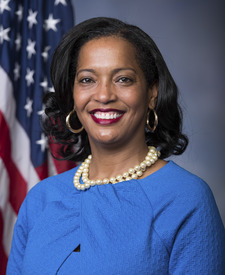
Legislative Progress
In CommitteeReferred to the Subcommittee on Nutrition and Foreign Agriculture.
Referred to the Subcommittee on Conservation, Research, and Biotechnology.
Ms. Salinas (for herself and Mr. Van Orden) introduced the …
Referred to the House Committee on Agriculture.
Introduced in House
Stakeholder Effects
cui bono?How this legislation distributes effects. Mention counts reflect frequency, not effect magnitude.
Beginning farmers, Grant recipients, Organic processors
Positive-direction: Beginning farmers, Organic processors, Organic producers
Negative-direction: Grant recipients
Bill Structure & Actor Mappings
Who is "The Secretary" in each section?
- "Secretary"
- → Secretary of Agriculture acting through the Administrator of the Agricultural Marketing Service
Key Definitions
Terms defined in this bill
A domestic certified or transitioning organic producer, cooperative, handler, commercial entity, Tribal government unit, or other USDA-designated entity not suspended or revoked under organic rules.
We use a combination of our own taxonomy and classification in addition to large language models to assess meaning and potential beneficiaries. High confidence means strong textual evidence. Always verify with the original bill text.
Learn more about our methodology