PROVIDE Act
Summary
What This Bill Does
The PROVIDE Act requires the Secretary of Veterans Affairs to issue regulations for priority processing of disability compensation claims under chapter 11 of title 38. It codifies priority categories that include extreme financial hardship, homelessness, terminal illness, Fully Developed Claim participants, and a new category for veterans living in areas with a presidential major-disaster declaration under the Stafford Act. For the disaster category, VA must establish flexible evidence requirements for veterans who cannot meet ordinary documentation rules because of fires, floods, or other major disasters, and flexible filing deadlines. VA must also post a permanent website notice explaining priority-processing eligibility within 60 days after enactment.
Who Benefits and How
Veterans affected by major disasters benefit because disability claims can be moved ahead when a disaster disrupts records, housing, employment, or access to evidence. Veterans facing homelessness, terminal illness, or severe financial hardship benefit from a clearer statutory list of priority categories. Veterans service organizations and claims representatives benefit from public VA guidance they can point applicants to when seeking faster handling.
Who Bears the Burden and How
VA claims staff bear administrative burdens because they must write regulations, identify disaster-area claimants, apply flexible evidence and deadline standards, update public notices, and train processors on the expanded priority categories. Other claimants may experience queue effects if disaster-affected claims receive priority. The Department also bears technology and outreach burdens to keep the priority-processing notice permanently available on its website.
Key Provisions
- Requires VA regulations for priority processing of disability compensation claims, including hardship, homelessness, terminal illness, Fully Developed Claims, and major-disaster impacts.
- Adds veterans in presidentially declared major-disaster areas as a priority-processing category.
- Requires flexible evidence rules and flexible filing deadlines for disaster-affected veterans who cannot meet ordinary claim requirements.
- Requires VA to post permanent website notice of priority-processing eligibility within 60 days.
Evidence Chain:
This summary is generated from the full bill text using AI analysis. Expand "Detailed Analysis" below for identified beneficiaries/burden bearers with clause-level evidence links.
At a Glance
What This Bill Does
Adds major-disaster-affected veterans to VA disability compensation priority processing and requires flexible evidence, flexible filing deadlines, and website notice.
Key Policy Areas
Veterans, Disaster Response, Government Operations
Primary Purpose
Adds major-disaster-affected veterans to VA disability compensation priority processing and requires flexible evidence, flexible filing deadlines, and website notice.
Policy Domains
Substantive provisions
Identified Gains
- Disaster-affected veterans
- Veterans service organizations
- Claim representatives
Identified Costs
- VA claims staff
- Department of Veterans Affairs
- Other claimants
Sponsors

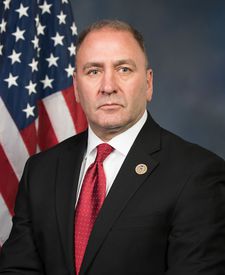

Legislative Progress
In CommitteeForwarded by Subcommittee to Full Committee by Voice Vote.
Subcommittee Consideration and Mark-up Session Held
Subcommittee Hearings Held
Referred to the Subcommittee on Disability Assistance and Memorial Affairs.
Mr. Panetta (for himself, Mr. Higgins of Louisiana, and Mr. …
Referred to the House Committee on Veterans' Affairs.
Introduced in House
Stakeholder Effects
cui bono?How this legislation distributes effects. Mention counts reflect frequency, not effect magnitude.
Bill Structure & Actor Mappings
Who is "The Secretary" in each section?
- "Secretary"
- → Secretary of Veterans Affairs
- "major disaster"
- → A disaster declared by the President under section 401 of the Stafford Act
We use a combination of our own taxonomy and classification in addition to large language models to assess meaning and potential beneficiaries. High confidence means strong textual evidence. Always verify with the original bill text.
Learn more about our methodology