Executive Action Cost Transparency Act
Summary
What This Bill Does
The Executive Action Cost Transparency Act amends baseline calculation rules under the Balanced Budget and Emergency Deficit Control Act. Unless the House and Senate Budget Committee chairs direct otherwise, CBO baseline calculations and updates in required reports must include the budgetary effects of judicial actions and executive actions, including proposed rules, final rules, executive orders, and memoranda, consistent with scorekeeping practices agreed to by CBO and the Budget Committees. For covered executive actions, the department, agency, establishment, regulatory agency, or commission that promulgates or implements the action must provide the CBO Director within 10 days a list describing all written implementation documentation, internal and external guidance for affected entities or private parties, and other relevant information or data the CBO Director determines appropriate.
Who Benefits and How
Congressional Budget Committees benefit because baseline estimates would capture fiscal effects from executive and judicial actions rather than only legislation. Members of Congress benefit from more complete fiscal projections when evaluating deficits, spending, or savings. CBO analysts benefit from agency documentation and data delivered within 10 days. Public budget watchdogs benefit from more transparent treatment of executive-order, rulemaking, memorandum, and judicial-action costs.
Who Bears the Burden and How
Federal agencies, regulatory commissions, and executive-branch establishments must identify covered actions and provide documentation to CBO within 10 days. CBO scorekeepers must incorporate executive and judicial effects into baselines unless budget committee chairs direct otherwise. Agency policy offices must collect implementation guidance, data, and documentation for CBO. Budget Committee staff must coordinate scorekeeping practices and review baseline changes.
Key Provisions
- Requires CBO baseline calculations to include budgetary effects of executive and judicial actions unless Budget Committee chairs direct otherwise.
- Covers proposed rules, final rules, executive orders, memoranda, and judicial actions.
- Requires agencies to provide CBO written implementation documentation within 10 days after executive actions take effect.
- Requires agencies to include internal and external guidance plus other relevant data requested by CBO.
- Directs scorekeeping practices to be agreed to by CBO and the House and Senate Budget Committees.
Evidence Chain:
This summary is generated from the full bill text using AI analysis. Expand "Detailed Analysis" below for identified beneficiaries/burden bearers with clause-level evidence links.
At a Glance
What This Bill Does
Requires CBO baseline reports to include budgetary effects of executive and judicial actions unless budget committee chairs direct otherwise, and requires agencies to send CBO implementation documentation within 10 days after executive actions take effect.
Key Policy Areas
Budget, Executive Branch, Congressional Oversight
Primary Purpose
Requires CBO baseline reports to include budgetary effects of executive and judicial actions unless budget committee chairs direct otherwise, and requires agencies to send CBO implementation documentation within 10 days after executive actions take effect.
Policy Domains
Substantive provisions
Identified Gains
- Congressional Budget Committees
- Members of Congress
- CBO analysts
- Public budget watchdogs
Identified Costs
- Federal agencies
- Regulatory commissions
- CBO scorekeepers
- Agency policy offices
- Budget Committee staff
Sponsors
Legislative Progress
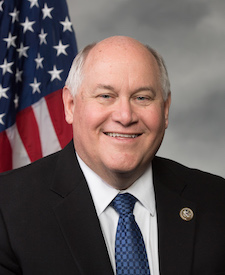
In CommitteeMr. Estes introduced the following bill; which was referred to …
Referred to the House Committee on the Budget.
Introduced in House
Stakeholder Effects
cui bono?How this legislation distributes effects. Mention counts reflect frequency, not effect magnitude.
CBO scorekeepers, Congressional Budget Committees, Federal agencies
Positive-direction: Congressional Budget Committees
Negative-direction: CBO scorekeepers, Federal agencies, Regulatory commissions
Bill Structure & Actor Mappings
Who is "The Secretary" in each section?
- "agencies"
- → ['Congressional Budget Office']
- "committees"
- → ['House Budget Committee', 'Senate Budget Committee']
We use a combination of our own taxonomy and classification in addition to large language models to assess meaning and potential beneficiaries. High confidence means strong textual evidence. Always verify with the original bill text.
Learn more about our methodology