Federal Food Administration Act of 2025
Summary
What This Bill Does
The Federal Food Administration Act creates a new food-focused agency within HHS no later than one year after enactment. The Federal Food Administration would review food and nutrition research, act on regulated-product marketing, ensure food is safe, wholesome, sanitary, and properly labeled, participate internationally on food public health and fair trade, consult with experts and stakeholders, and coordinate with USDA, CDC, NIH, and other science-based agencies. A presidentially appointed, Senate-confirmed Commissioner of Foods would lead it and could create technical and scientific review groups. The bill requires a risk-based inspection program: high-risk food facilities at least annually, intermediate-risk facilities every two years, low-risk warehouses and similar facilities every three years, and infant-formula manufacturers every six months. The Commissioner must contract with State officials for at least half of required inspections and conduct follow-up compliance checks within 30 days after issuing an FDA Form 483 equivalent. FDA Human Foods Program, Office of Inspections and Investigations resources, Center for Veterinary Medicine food functions, and other designated food-law resources transfer to the new agency. Related appropriations transfer, and such sums as necessary are authorized for fiscal year 2026 and later.
Who Benefits and How
Consumers benefit from a food-only federal agency focused on safety, labeling, research, and postmarket monitoring. Infant-formula buyers benefit from inspections at least every six months. State food inspectors benefit from contracts to perform at least half of required inspections. Food manufacturers and importers benefit from a single food-focused regulator, though the inspections may be more frequent for higher-risk facilities. Public-health researchers benefit from formal coordination among HHS, USDA, CDC, NIH, and science agencies.
Who Bears the Burden and How
HHS must stand up and staff a new agency within one year. FDA food-program staff must transfer authorities, resources, facilities, and enforcement functions. Food facilities must comply with risk-based inspection schedules and follow-up compliance checks. Infant formula manufacturers must undergo inspections at least every six months. State inspection officials must perform contracted inspection work. Federal taxpayers bear agency transition and continuing appropriation costs.
Key Provisions
- Establishes a Federal Food Administration inside HHS within one year.
- Creates a Senate-confirmed Commissioner of Foods and authorizes technical review groups.
- Requires risk-based food-facility inspections, including six-month inspections for infant formula manufacturers.
- Requires State officials to perform at least half of required inspections by contract.
- Transfers FDA food-related authorities, resources, centers, and enforcement functions to the new agency.
- Transfers related funds and authorizes such sums as necessary for fiscal year 2026 and later.
Evidence Chain:
This summary is generated from the full bill text using AI analysis. Expand "Detailed Analysis" below for identified beneficiaries/burden bearers with clause-level evidence links.
At a Glance
What This Bill Does
Creates a Federal Food Administration inside HHS within one year, transfers FDA food authorities and resources to it, establishes a risk-based food-facility inspection program with infant-formula inspections every six months, and authorizes ongoing funding.
Key Policy Areas
Food Safety, Public Health, Government Reorganization
Primary Purpose
Creates a Federal Food Administration inside HHS within one year, transfers FDA food authorities and resources to it, establishes a risk-based food-facility inspection program with infant-formula inspections every six months, and authorizes ongoing funding.
Policy Domains
Substantive provisions
Identified Gains
- Consumers
- Infant-formula buyers
- State food inspectors
- Food manufacturers
- Food importers
- Public-health researchers
Identified Costs
- HHS transition staff
- FDA food-program staff
- Food facilities
- Infant formula manufacturers
- State inspection officials
- Federal taxpayers
Sponsors



Legislative Progress
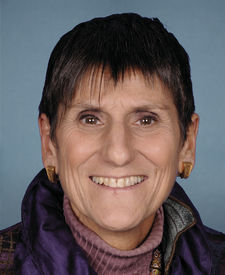
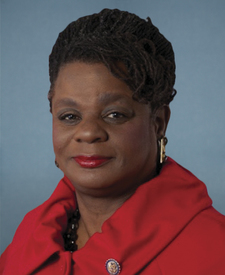
In CommitteeMs. DeLauro (for herself, Ms. Jacobs, and Mr. Bishop) introduced …
Referred to the House Committee on Energy and Commerce.
Introduced in House
Stakeholder Effects
cui bono?How this legislation distributes effects. Mention counts reflect frequency, not effect magnitude.
Commissioner of Foods, FDA food-program staff, Federal Food Administration staff
Federal Food Administration staff faces effects in multiple directions
Food importers, Food manufacturers, High-risk food facilities
Bill Structure & Actor Mappings
Who is "The Secretary" in each section?
- "agencies"
- → ['HHS', 'FDA', 'USDA', 'CDC', 'NIH']
- "programs"
- → ['Federal Food Administration']
We use a combination of our own taxonomy and classification in addition to large language models to assess meaning and potential beneficiaries. High confidence means strong textual evidence. Always verify with the original bill text.
Learn more about our methodology