Community Bank Representation Act
Summary
What This Bill Does
The Community Bank Representation Act changes Federal Reserve governance for community-bank supervision. It removes an older $10 billion asset qualifier and requires the Federal Reserve Chair to select one Board member with demonstrated primary experience working in or supervising community banks. That member must develop policy recommendations for supervision and regulation of Board-supervised banking organizations with less than $17 billion in total assets and oversee that supervision and regulation. The House-reported text says the work occurs in consultation with the Vice Chair for Supervision and any other Board member with demonstrated community-bank experience.
If the community-bank member is different from the Vice Chair for Supervision, that member must appear at semiannual hearings before the Senate Banking Committee and House Financial Services Committee on the Board's efforts, activities, objectives, and plans for supervising and regulating banking organizations under $17 billion. The bill also requires annual upward adjustment of relevant dollar figures when nominal U.S. GDP rises, using Bureau of Economic Analysis statistics and the highest nominal GDP year in the preceding five years. It amends the Federal Financial Institutions Examination Council Act so the Governor serving on FFIEC consults with the community-bank-experienced Governor.
Who Benefits and How
Community banks under $17 billion in assets benefit from a dedicated Federal Reserve Board member focused on their supervision and regulation. Banks between $10 billion and $17 billion benefit because the bill expands the community-bank focus above the older $10 billion threshold. Community-bank trade associations benefit from a clearer point of accountability at the Board. Rural banking customers benefit indirectly if regulation better accounts for smaller-bank business models. Senate Banking Committee members and House Financial Services Committee members benefit from semiannual hearings with the community-bank member.
Who Bears the Burden and How
The Federal Reserve Chair must select the community-bank-experienced member and manage consultation with supervisory leadership. The selected Board member must develop policy recommendations, oversee supervision for under-$17 billion banking organizations, and potentially testify semiannually. The Vice Chair for Supervision must coordinate with the selected member. Federal Reserve staff must calculate annual nominal-GDP threshold adjustments using BEA statistics. FFIEC representatives must consult with the community-bank-experienced Governor. Larger banks may receive less direct attention from the new community-bank-focused role.
Key Provisions
- Requires selection of a Federal Reserve Board member with demonstrated community-bank experience.
- Provides policy-recommendation and oversight duties for Board-supervised banking organizations under $17 billion.
- Requires semiannual congressional testimony by that member if different from the Vice Chair for Supervision.
- Requires annual nominal-GDP indexing of covered dollar thresholds.
- Requires use of Bureau of Economic Analysis nominal-GDP statistics.
- Adds consultation with the community-bank-experienced Governor to the FFIEC framework.
Evidence Chain:
This summary is generated from the full bill text using AI analysis. Expand "Detailed Analysis" below for identified beneficiaries/burden bearers with clause-level evidence links.
At a Glance
What This Bill Does
Requires the Federal Reserve Chair to select a Board member with primary community-bank experience to develop policy recommendations and oversee supervision of Board-supervised banking organizations under $17 billion in assets, requires that member to appear at semiannual congressional hearings if different from the Vice Chair for Supervision, indexes covered dollar thresholds to nominal GDP, and adds consultation with that Governor to the FFIEC process.
Key Policy Areas
Banking, Federal Reserve, Financial Regulation, Congressional Oversight
Primary Purpose
Requires the Federal Reserve Chair to select a Board member with primary community-bank experience to develop policy recommendations and oversee supervision of Board-supervised banking organizations under $17 billion in assets, requires that member to appear at semiannual congressional hearings if different from the Vice Chair for Supervision, indexes covered dollar thresholds to nominal GDP, and adds consultation with that Governor to the FFIEC process.
Policy Domains
House resolution provisions
Identified Gains
- Community banks under $17 billion
- Banks between $10 billion and $17 billion
- Community-bank trade associations
- Rural banking customers
- Senate Banking Committee members
- House Financial Services Committee members
Identified Costs
- Federal Reserve Chair
- Selected Federal Reserve Board member
- Vice Chair for Supervision
- Federal Reserve staff
- FFIEC representatives
- Larger banks
Sponsors
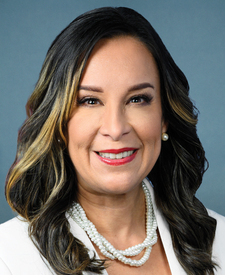
Legislative Progress
ReportedPlaced on the Union Calendar, Calendar No. 458.
Reported (Amended) by the Committee on Financial Services. H. Rept. …
Additional sponsors: Mr. Williams of Texas, Mr. Sessions, and Mr. …
Reported with an amendment, committed to the Committee of the …
Ordered to be Reported (Amended) by the Yeas and Nays: …
Committee Consideration and Mark-up Session Held
Committee Consideration and Mark-up Session Held
Ms. De La Cruz introduced the following bill; which was …
Referred to the House Committee on Financial Services.
Introduced in House
Stakeholder Effects
cui bono?How this legislation distributes effects. Mention counts reflect frequency, not effect magnitude.
Federal Reserve Chair, Selected Federal Reserve Board member, Vice Chair for Supervision
Banks between $10 billion and $17 billion, Community banks under $17 billion
Bill Structure & Actor Mappings
Who is "The Secretary" in each section?
- "ffiec"
- → Federal Financial Institutions Examination Council
- "federal_reserve"
- → Federal Reserve Board
We use a combination of our own taxonomy and classification in addition to large language models to assess meaning and potential beneficiaries. High confidence means strong textual evidence. Always verify with the original bill text.
Learn more about our methodology