TIER Act of 2025
Summary
What This Bill Does
The TIER Act raises several banking and financial-stability asset thresholds to account for historical growth in current-dollar U.S. GDP. It amends Federal Reserve Act assessment thresholds by replacing $100 billion with $150 billion and replacing the $100 billion to $250 billion range with $150 billion to $370 billion. It raises a Bank Holding Company Act merchant-banking-related $10 billion threshold to $15 billion. It amends multiple Financial Stability Act thresholds by replacing $250 billion with $370 billion, replacing $100 billion with $150 billion in enhanced prudential standards, and replacing $50 billion with $75 billion in certain stress-test or related provisions.
The bill then adds future indexing. New section 177 of the Financial Stability Act requires the Federal Reserve Board, by April 1, 2031 and every five years after that, to increase covered statutory thresholds by the ratio of current-dollar U.S. GDP to the calendar-year value preceding April 1, 2026, if that ratio is greater than one. Amounts of $100 billion or more are rounded up to the nearest $50 billion; lower amounts are rounded up to the nearest $5 billion. New section 178 requires the Federal Reserve, OCC, and FDIC to review regulations implementing section 165 or cross-referencing Federal Reserve section 165 regulations by June 30, 2026 and every five years afterward, and to modify nonstatutory asset or quantitative thresholds using current-dollar U.S. GDP, seeking uniform thresholds where feasible and using Department of Commerce GDP values.
Who Benefits and How
Regional banks near the old $100 billion and $250 billion thresholds benefit because higher thresholds may reduce or delay enhanced prudential, assessment, or stress-testing burdens. Savings and loan holding companies near covered thresholds benefit from the same upward adjustments. Bank holding companies near $50 billion, $100 billion, and $250 billion thresholds benefit from GDP-indexed thresholds that rise over time. Financial companies subject to stress testing benefit if thresholds move upward with GDP. Banking trade associations benefit from a repeatable indexing method rather than one-off statutory threshold fights.
Who Bears the Burden and How
Federal Reserve Board staff must calculate statutory threshold adjustments and publish notice within five days of adjustment years. OCC regulatory staff must review covered regulations and modify nonstatutory thresholds every five years. FDIC regulatory staff must perform the same review and adjustment for applicable regulations. Department of Commerce GDP data become the benchmark for calculations, increasing reliance on current-dollar GDP values. Financial stability watchdogs may face reduced coverage of mid-sized firms as thresholds rise. Consumers and borrowers could face indirect risk if less stringent oversight applies to growing regional banks.
Key Provisions
- Raises Federal Reserve Act assessment thresholds from $100 billion to $150 billion and from $100-$250 billion to $150-$370 billion.
- Raises a Bank Holding Company Act $10 billion threshold to $15 billion.
- Raises multiple Financial Stability Act $250 billion thresholds to $370 billion.
- Raises selected $100 billion and $50 billion thresholds to $150 billion and $75 billion.
- Requires future five-year statutory threshold indexing based on current-dollar U.S. GDP.
- Requires rounding up to the nearest $50 billion for large thresholds and nearest $5 billion for smaller thresholds.
- Requires Federal Reserve, OCC, and FDIC review of covered regulatory thresholds by June 30, 2026 and every five years afterward.
- Requires agencies to seek uniform thresholds where feasible and use Department of Commerce GDP data.
Evidence Chain:
This summary is generated from the full bill text using AI analysis. Expand "Detailed Analysis" below for identified beneficiaries/burden bearers with clause-level evidence links.
At a Glance
What This Bill Does
Raises historical asset thresholds in Federal Reserve and Financial Stability Act regulatory provisions, including moving $100 billion thresholds to $150 billion, $250 billion thresholds to $370 billion, $50 billion thresholds to $75 billion, and $10 billion thresholds to $15 billion, then requires future five-year threshold adjustments based on current-dollar U.S. GDP for statutory and agency-rule thresholds administered by the Federal Reserve, OCC, and FDIC.
Key Policy Areas
Banking, Financial Regulation, Federal Reserve, Regulatory Thresholds
Primary Purpose
Raises historical asset thresholds in Federal Reserve and Financial Stability Act regulatory provisions, including moving $100 billion thresholds to $150 billion, $250 billion thresholds to $370 billion, $50 billion thresholds to $75 billion, and $10 billion thresholds to $15 billion, then requires future five-year threshold adjustments based on current-dollar U.S. GDP for statutory and agency-rule thresholds administered by the Federal Reserve, OCC, and FDIC.
Policy Domains
House resolution provisions
Identified Gains
- Regional bank compliance managers
- Savings and loan holding company officers
- Bank holding company regulatory staff
- Financial company stress-testing staff
- Banking trade association staff
Identified Costs
- Federal Reserve Board staff
- Office of the Comptroller of the Currency staff
- Federal Deposit Insurance Corporation staff
- Department of Commerce GDP data staff
- Financial stability researchers
- Bank consumers
Sponsors
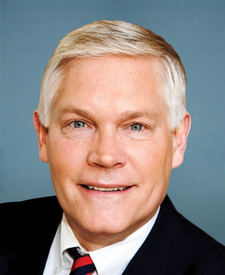
Legislative Progress
ReportedPlaced on the Union Calendar, Calendar No. 457.
Reported (Amended) by the Committee on Financial Services. H. Rept. …
Additional sponsors: Mr. Meuser, Mr. Williams of Texas, Mr. Moore …
Reported with an amendment, committed to the Committee of the …
Ordered to be Reported (Amended) by the Yeas and Nays: …
Committee Consideration and Mark-up Session Held
Committee Consideration and Mark-up Session Held
Mr. Barr introduced the following bill; which was referred to …
Referred to the House Committee on Financial Services.
Introduced in House
Stakeholder Effects
cui bono?How this legislation distributes effects. Mention counts reflect frequency, not effect magnitude.
Bank holding companies near regulatory thresholds, Banks subject to section 165 regulations, Financial companies subject to stress testing
FDIC regulatory staff, OCC regulatory staff
Bill Structure & Actor Mappings
Who is "The Secretary" in each section?
- "occ"
- → Office of the Comptroller of the Currency
- "fdic"
- → Federal Deposit Insurance Corporation
- "commerce"
- → Department of Commerce
- "federal_reserve"
- → Federal Reserve Board
We use a combination of our own taxonomy and classification in addition to large language models to assess meaning and potential beneficiaries. High confidence means strong textual evidence. Always verify with the original bill text.
Learn more about our methodology