New BANK Act of 2025
Sponsors

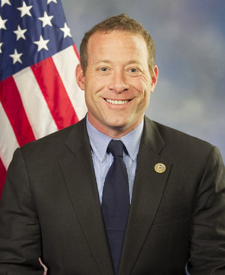

Legislative Progress
ReportedMr. Loudermilk introduced the following bill; which was referred to …
Summary
What This Bill Does
The New BANK Act of 2025 requires federal banking regulators to publish annual reports on the number, approval rates, processing times, and common rejection reasons for bank and credit union charter applications. The bill aims to increase transparency in a process that has been criticized as opaque, making it easier for prospective bank founders to understand what to expect when applying.
Who Benefits and How
Prospective bank founders, fintech companies seeking banking charters, and credit union organizers benefit from increased visibility into the application process. By publishing approval rates, processing times, and common denial reasons, applicants can better prepare their applications and set realistic expectations. Banking industry analysts and researchers also gain valuable data for studying market entry barriers.
Who Bears the Burden and How
Federal banking regulators - the OCC, NCUA, Federal Reserve, and FDIC - must compile and publish new annual reports, creating additional administrative work. State banking regulators must provide data for the joint federal-state report in Section 6. However, these burdens are relatively modest since regulators already track this data internally.
Key Provisions
- OCC must report on national bank and federal savings association charter applications
- NCUA must report on federal credit union charter applications
- Federal Reserve must report on bank holding company applications
- FDIC must report on deposit insurance applications
- Fed, FDIC, and NCUA must jointly report on state-chartered institution applications with state-by-state breakdowns
Evidence Chain:
This summary is derived from the structured analysis below. See "Detailed Analysis" for per-title beneficiaries/burden bearers with clause-level evidence links.
Primary Purpose
Requires federal banking regulators (OCC, NCUA, Federal Reserve, FDIC) to publish annual reports on bank charter applications, including approval rates, processing times, and common denial reasons to increase transparency in the banking charter process.
Policy Domains
Legislative Strategy
"Increase transparency in banking charter application process by requiring standardized annual reporting across all federal banking regulators"
Likely Beneficiaries
- Prospective bank founders and organizers
- Fintech companies seeking bank charters
- Credit union organizers
- Banking industry analysts and researchers
- Congressional oversight committees
Likely Burden Bearers
- Office of the Comptroller of the Currency (OCC)
- National Credit Union Administration (NCUA)
- Federal Reserve Board
- Federal Deposit Insurance Corporation (FDIC)
- State banking regulators
Bill Structure & Actor Mappings
Who is "The Secretary" in each section?
- "the_comptroller"
- → Comptroller of the Currency (OCC)
- "the_board"
- → National Credit Union Administration Board (NCUA)
- "the_board"
- → Board of Governors of the Federal Reserve System
- "the_corporation"
- → Federal Deposit Insurance Corporation (FDIC)
- "the_board"
- → Board of Governors of the Federal Reserve System
- "the_ncua_board"
- → National Credit Union Administration Board
- "the_corporation"
- → Federal Deposit Insurance Corporation (FDIC)
- "state_regulators"
- → State banking regulators and State credit union regulators
Note: 'The Board' refers to the National Credit Union Administration Board in Section 3, but to the Board of Governors of the Federal Reserve System in Section 4
Key Definitions
Terms defined in this bill
Any bank, banking association, trust company, savings bank, industrial bank, or other banking institution incorporated under the laws of any State
Any State of the United States, the District of Columbia, and any territory of the United States
Any building and loan association, savings and loan association, or homestead association incorporated under the laws of any State; and any cooperative bank incorporated under the laws of any State that is not a State bank
A State bank or a State savings association; and a State credit union, as defined in section 101 of the Federal Credit Union Act (12 U.S.C. 1752)
We use a combination of our own taxonomy and classification in addition to large language models to assess meaning and potential beneficiaries. High confidence means strong textual evidence. Always verify with the original bill text.
Learn more about our methodology