Regulation A+ Improvement Act of 2025
Summary
What This Bill Does
The Regulation A+ Improvement Act of 2025 amends Securities Act section 3(b), the JOBS Act exemption used by smaller issuers to raise capital without a full public offering registration. The House-reported version raises the smaller Regulation A tier from $5 million to $50 million, including no more than $12 million sold by affiliate selling security holders. It raises the larger tier from $50 million to $150 million, including no more than $50 million sold by affiliate selling security holders.
The SEC must adjust the dollar amounts for inflation every five years by publishing notice in the Federal Register and rounding to the nearest $10,000 based on the Consumer Price Index for All Urban Consumers published by the Bureau of Labor Statistics. The bill also conforms the existing SEC authority to increase those limits so the inflation adjustment is preserved.
Who Benefits and How
Small companies seeking capital benefit because the exempt offering ceiling rises to $50 million. Mid-sized private companies benefit because the Regulation A+ ceiling rises to $150 million. Affiliate selling security holders benefit from explicit caps allowing resale amounts within the exempt offering. Regulation A underwriters benefit because more offerings may be large enough to justify underwriting work. Securities lawyers benefit from more exempt-offering compliance work. Retail investors benefit from more access to private-company offerings, though with more exposure to issuer risk.
Who Bears the Burden and How
SEC Corporation Finance staff must administer larger exempt offerings and publish five-year inflation adjustments. SEC investor-protection staff must monitor a bigger Regulation A market with retail participation. Issuers using the exemption still must comply with Regulation A disclosure and qualification requirements. Traditional IPO underwriters may lose some offerings if issuers can raise more money through Regulation A. Retail investors bear risk if larger exempt offerings provide less protection than registered offerings.
Key Provisions
- Raises the Securities Act section 3(b)(1) exempt-offering limit from $5 million to $50 million.
- Adds a $12 million cap for affiliate selling security holders in the smaller tier.
- Raises the Regulation A+ section 3(b)(2)(A) limit from $50 million to $150 million.
- Adds a $50 million cap for affiliate selling security holders in the larger tier.
- Requires SEC inflation adjustments every five years using CPI-U and Federal Register notice.
- Preserves SEC authority to increase the limits in addition to the inflation adjustment.
Evidence Chain:
This summary is generated from the full bill text using AI analysis. Expand "Detailed Analysis" below for identified beneficiaries/burden bearers with clause-level evidence links.
At a Glance
What This Bill Does
Raises Securities Act Regulation A offering limits from $5 million to $50 million and from $50 million to $150 million, adds affiliate selling-security-holder caps, and requires SEC inflation adjustments every five years using the Consumer Price Index for All Urban Consumers.
Key Policy Areas
Securities, Capital Formation, Small Business, Financial Regulation
Primary Purpose
Raises Securities Act Regulation A offering limits from $5 million to $50 million and from $50 million to $150 million, adds affiliate selling-security-holder caps, and requires SEC inflation adjustments every five years using the Consumer Price Index for All Urban Consumers.
Policy Domains
House resolution provisions
Identified Gains
- SEC Regulation A issuers
- Small business issuers
- Mid-sized private-company issuers
- Affiliate selling security holders
- Regulation A underwriters
- Securities lawyers
- Retail investors
Identified Costs
- SEC Corporation Finance staff
- SEC investor-protection staff
- Bureau of Labor Statistics CPI staff
- Issuers using Regulation A
- Traditional IPO underwriters
- Retail investors
Sponsors
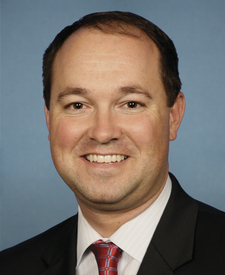
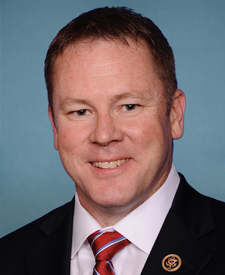
Legislative Progress
ReportedPlaced on the Union Calendar, Calendar No. 451.
Reported (Amended) by the Committee on Financial Services. H. Rept. …
Additional sponsor: Mr. Davidson
Reported with an amendment, committed to the Committee of the …
Ordered to be Reported (Amended) by the Yeas and Nays: …
Committee Consideration and Mark-up Session Held
Committee Consideration and Mark-up Session Held
Mr. Stutzman introduced the following bill; which was referred to …
Referred to the House Committee on Financial Services.
Introduced in House
Stakeholder Effects
cui bono?How this legislation distributes effects. Mention counts reflect frequency, not effect magnitude.
Affiliate selling security holders, Regulation A underwriters, SEC Corporation Finance staff
Positive-direction: Affiliate selling security holders, Regulation A underwriters
Negative-direction: SEC Corporation Finance staff
Bill Structure & Actor Mappings
Who is "The Secretary" in each section?
- "bls"
- → Bureau of Labor Statistics
- "sec"
- → Securities and Exchange Commission
We use a combination of our own taxonomy and classification in addition to large language models to assess meaning and potential beneficiaries. High confidence means strong textual evidence. Always verify with the original bill text.
Learn more about our methodology