National Military Civilian Medical Surge Program Act of 2025
Summary
What This Bill Does
The National Military Civilian Medical Surge Program Act adds a medical surge program to 10 U.S.C. section 1096. The Secretary of Defense, in collaboration with HHS, must carry out the Military-Civilian Medical Surge Program to support selected locations and enhance National Disaster Medical System interoperability, capability, and capacity during national emergencies, public health emergencies, wars, contingency operations, War Powers Resolution actions, and other presidential emergency or major disaster declarations. DoD acts through the Institute for Defense Health Cooperation at the Uniformed Services University of the Health Sciences, coordinating with the Chairman of the Joint Chiefs of Staff, the Defense Health Agency, and HHS. During contingency operations, the program supports the relevant combatant command through the Defense Health Agency as a combat support agency. DoD must coordinate with the military departments, Joint Staff, DHA, and HHS through semiannual meetings and quarterly updates. The program must maintain staffing, specialized training, research, and education requirements on patient regulation, movement, definitive care, and other critical matters. DoD must establish partnerships with public, private, and nonprofit health care organizations, academic medical centers, health care entities, and hospitals at locations critical to civilian medical response and proficient in national security domains such as high-consequence infectious disease, special pathogens, care, containment, management, and transportation. At least eight selected locations must be operationally relevant NDMS missions and aeromedical or logistics hubs in the United States, with additional strategic locations allowed. Annual reports must assess readiness, resources, interagency coordination, operational capability, and improvement recommendations, while preserving HHS authority over NDMS and public health response.
Who Benefits and How
Academic medical centers, teaching hospitals, infectious disease centers, and special pathogen treatment centers benefit from formal partnership opportunities with DoD and HHS. The Defense Health Agency and combatant commands benefit from civilian medical surge support during contingency operations. The National Disaster Medical System benefits from improved interoperability and surge capacity. Communities facing catastrophic events benefit if selected hubs can mobilize civilian medical personnel quickly. Uniformed Services University benefits from a management and training role through its Institute for Defense Health Cooperation.
Who Bears the Burden and How
DoD program managers must select locations, manage partnerships, staff the program, maintain specialized training and research requirements, coordinate semiannual meetings and quarterly updates, and report annually to Congress. HHS must coordinate enough to keep the program consistent with NDMS and public health authorities. Partner health systems must meet technical proficiency expectations and prepare for mobilization. Aeromedical and logistics hubs may need readiness planning. Federal taxpayers fund the program, staffing, training, research, and deployment infrastructure.
Key Provisions
- Establishes the Military-Civilian Medical Surge Program as a program of record.
- Requires DoD-HHS collaboration to improve National Disaster Medical System interoperability and medical surge capacity.
- Requires USUHS Institute for Defense Health Cooperation management with Joint Staff, DHA, combatant command, and HHS coordination.
- Requires partnerships with public, private, nonprofit, academic, and hospital health care organizations at at least eight selected locations.
- Requires staffing, training, research, and education on patient regulation, movement, definitive care, and related surge matters.
- Requires annual congressional reports on readiness, resources, interagency coordination, operational capabilities, and improvements.
- Preserves HHS authority over NDMS and public health preparedness and response.
Evidence Chain:
This summary is generated from the full bill text using AI analysis. Expand "Detailed Analysis" below for identified beneficiaries/burden bearers with clause-level evidence links.
At a Glance
What This Bill Does
Establishes the Military-Civilian Medical Surge Program as a Defense-HHS program of record to build partnerships at at least eight operationally relevant medical surge locations, strengthen National Disaster Medical System interoperability, coordinate through USUHS and the Defense Health Agency, support contingency and domestic emergency responses, and report annually to Congress.
Key Policy Areas
Defense, Healthcare, Emergency Preparedness
Primary Purpose
Establishes the Military-Civilian Medical Surge Program as a Defense-HHS program of record to build partnerships at at least eight operationally relevant medical surge locations, strengthen National Disaster Medical System interoperability, coordinate through USUHS and the Defense Health Agency, support contingency and domestic emergency responses, and report annually to Congress.
Policy Domains
Substantive provisions
Identified Gains
- Academic medical centers
- Teaching hospitals
- Infectious disease centers
- Defense Health Agency
- National Disaster Medical System
- Uniformed Services University
Identified Costs
- DoD program managers
- HHS emergency preparedness staff
- Partner health systems
- Aeromedical transport hubs
- Federal taxpayers
Sponsors

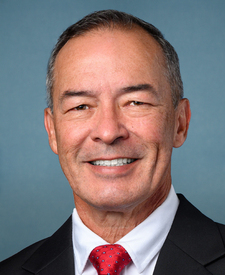
Don Bacon
R-NE | Primary Sponsor
Legislative Progress
In CommitteeMr. Bacon introduced the following bill; which was referred to …
Referred to the House Committee on Armed Services.
Introduced in House
Stakeholder Effects
cui bono?How this legislation distributes effects. Mention counts reflect frequency, not effect magnitude.
Academic medical centers, Infectious disease centers, Special pathogen treatment centers
Defense Health Agency, DoD program managers, HHS emergency preparedness staff
Bill Structure & Actor Mappings
Who is "The Secretary" in each section?
We use a combination of our own taxonomy and classification in addition to large language models to assess meaning and potential beneficiaries. High confidence means strong textual evidence. Always verify with the original bill text.
Learn more about our methodology