DHS Grants Accountability Act
Summary
What This Bill Does
The DHS Grants Accountability Act amends Homeland Security Act grant provisions administered through DHS and FEMA. It changes section 2002 so the Administrator must, not less frequently than annually, update terrorism-risk assessments for grant allocations instead of only having discretionary authority. It changes section 2007 so funds are allocated to States or areas on the basis of specified risk factors, and requires annual congressional notification to the House Homeland Security Committee and Senate Homeland Security and Governmental Affairs Committee before the applicable notice of funding opportunity is issued. It also adds grant-timing rules to section 2021 for specified grant programs: each notice of funding opportunity must be publicly available by any appropriations-act deadline, or within 60 days after enactment if no deadline exists; eligible recipients must have at least 30 days after the notice is public to submit applications; and DHS must make grant funds available for recipient use under statutory timing rules. The covered grant universe includes preparedness grants, transit security, port security, urban area security, nonprofit security, and related homeland security assistance streams.
Who Benefits and How
State homeland security agencies benefit from clearer annual risk-based allocation expectations and more predictable grant timelines. Urban areas receiving UASI grants benefit from public NOFO timing and minimum application windows. Transit agencies, port authorities, and railroad operators benefit from more predictable security grant availability. Nonprofit security grant recipients benefit from more accountable funding notices and application windows. Congressional homeland security committees benefit from annual notification before grant allocation notices go out.
Who Bears the Burden and How
DHS and FEMA grant staff must update risk assessments annually, prepare notices on statutory timelines, allow at least 30 days for applications, make funds available on time, and notify Congress before funding opportunity notices. Grant applicants still must prepare applications quickly once notices are published. FEMA may face reduced discretion when allocation factors and congressional notification requirements are specified. Security equipment vendors and grant consultants may see demand, but grant recipients must still justify purchases and comply with program rules.
Key Provisions
- Requires DHS terrorism-risk assessments for covered grant programs to be updated at least annually.
- Requires certain preparedness allocations to be based on specified risk factors.
- Requires annual congressional notification before notices of funding opportunity are issued.
- Requires public notices of funding opportunity by appropriations deadlines or within 60 days after enactment when no deadline exists.
- Provides eligible recipients at least 30 days after notice publication to submit applications.
- Requires grant funds to be made available for recipient use under statutory timing rules.
Evidence Chain:
This summary is generated from the full bill text using AI analysis. Expand "Detailed Analysis" below for identified beneficiaries/burden bearers with clause-level evidence links.
At a Glance
What This Bill Does
Tightens DHS preparedness, transit, port, urban-area, nonprofit, and homeland security grant administration by requiring annual terrorism-risk assessment updates, risk-based allocation rules, congressional notification before funding notices, public NOFO deadlines, minimum application windows, faster fund availability, and related accountability rules.
Key Policy Areas
Homeland Security, Grants, Public Safety
Primary Purpose
Tightens DHS preparedness, transit, port, urban-area, nonprofit, and homeland security grant administration by requiring annual terrorism-risk assessment updates, risk-based allocation rules, congressional notification before funding notices, public NOFO deadlines, minimum application windows, faster fund availability, and related accountability rules.
Policy Domains
Substantive provisions
Identified Gains
- State homeland security agencies
- Urban areas receiving UASI grants
- Transit agencies
- Port authorities
- Railroad operators
- Nonprofit security grant recipients
- Congressional homeland security committees
Identified Costs
- DHS grant staff
- FEMA grant administrators
- Grant applicants
- Security equipment vendors
- Grant consultants
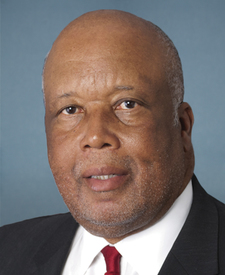
Sponsors


Legislative Progress
In CommitteeReferred to the Subcommittee on Highways and Transit.
Referred to the Subcommittee on Coast Guard and Maritime Transportation.
Referred to the Subcommittee on Railroads, Pipelines, and Hazardous Materials.
Referred to the Subcommittee on Transportation and Maritime Security.
Mr. Kennedy of New York (for himself and Mr. Thompson …
Referred to the Committee on Homeland Security, and in addition …
Introduced in House
Stakeholder Effects
cui bono?How this legislation distributes effects. Mention counts reflect frequency, not effect magnitude.
Congressional homeland security committees, DHS grant staff, FEMA grant administrators
Positive-direction: Congressional homeland security committees
Negative-direction: DHS grant staff, FEMA grant administrators
Port authorities, Railroad operators, Transit agencies
State homeland security agencies, Urban areas receiving UASI grants
Bill Structure & Actor Mappings
Who is "The Secretary" in each section?
We use a combination of our own taxonomy and classification in addition to large language models to assess meaning and potential beneficiaries. High confidence means strong textual evidence. Always verify with the original bill text.
Learn more about our methodology