Broadband for Americans through Responsible Streamlining (BARS) Act
Summary
What This Bill Does
The Broadband for Americans through Responsible Streamlining Act narrows federal environmental and historic-preservation review for specified communications projects. Covered projects and certain covered easements for communications facilities are not treated as major federal actions under NEPA or undertakings under the National Historic Preservation Act. The bill also rewrites section 6409(a)(3) so federal authorizations for eligible wireless or wireline facilities requests are not major federal actions, and the requests are not NHPA undertakings. Covered easements include rights to install, construct, modify, or maintain communications facilities on federal buildings or property, excluding tribal trust land unless the tribal government requests inclusion. Section 3 addresses FCC Form 620 and 621 tribal review: if an Indian Tribe receives or can reasonably be expected to have received a complete form and does not act within 45 days, the FCC or a court must presume the applicant made a good-faith effort to provide necessary information and that the Tribe disclaimed interest. A Tribe can overcome that presumption, and the FCC or court must give substantial weight to whether the applicant followed up between 30 and 50 days and whether FCC rules or forms violate a nationwide programmatic agreement. The bill preserves the FCC obligation to evaluate radiofrequency exposure under NEPA and defines communications facility, covered easement, covered project, eligible facilities request, eligible wireline request, Indian Tribe, and public right-of-way.
Who Benefits and How
Broadband infrastructure developers benefit because many collocations, replacements, wireline additions, and communications easements can avoid NEPA and NHPA review triggers. Wireless carriers and wireline providers benefit from faster approvals for eligible facilities requests and covered easements. Federal permitting agencies benefit from reduced review duties for covered authorizations. Consumers in underserved areas may benefit if deployment moves faster. Applicants benefit from a predictable 45-day tribal-response presumption for complete FCC Form 620 or 621 submissions.
Who Bears the Burden and How
Indian tribal governments bear the main procedural burden because failure to act within 45 days can create a presumption that they disclaimed interest in an undertaking, although they can overcome the presumption. Communities seeking environmental or historic-preservation review may have fewer review opportunities for covered communications projects. FCC staff and courts must apply the presumption, follow-up factors, and nationwide programmatic agreement considerations. Communications applicants still must handle radiofrequency exposure review and meet the bill definitions for covered projects or easements.
Key Provisions
- Provides NEPA and NHPA exemptions for covered communications projects and eligible facilities requests.
- Provides similar exemptions for covered easements on federal property or public rights-of-way.
- Creates a 45-day presumption that a Tribe disclaimed interest after receiving complete FCC Form 620 or 621 materials.
- Allows Tribes to overcome the presumption and requires weight for applicant follow-up and nationwide programmatic agreement issues.
- Preserves FCC radiofrequency exposure review under NEPA.
- Defines communications facility, covered easement, covered project, eligible facilities request, eligible wireline request, Indian Tribe, and public right-of-way.
Evidence Chain:
This summary is generated from the full bill text using AI analysis. Expand "Detailed Analysis" below for identified beneficiaries/burden bearers with clause-level evidence links.
At a Glance
What This Bill Does
Exempts covered communications projects and easements from NEPA major-federal-action treatment and NHPA undertaking treatment, creates a 45-day tribal-response presumption for FCC historic-preservation forms, preserves FCC radiofrequency exposure review, and defines covered broadband deployment terms.
Key Policy Areas
Telecommunications, Environmental Review, Tribal Nations
Primary Purpose
Exempts covered communications projects and easements from NEPA major-federal-action treatment and NHPA undertaking treatment, creates a 45-day tribal-response presumption for FCC historic-preservation forms, preserves FCC radiofrequency exposure review, and defines covered broadband deployment terms.
Policy Domains
Substantive provisions
Identified Gains
- Broadband infrastructure developers
- Wireless carriers
- Wireline providers
- Federal permitting agencies
- Consumers in underserved areas
- Communications applicants
Identified Costs
- Indian tribal governments
- Community historic-preservation advocates
- FCC review staff
- Federal courts
- Communications applicants
Sponsors
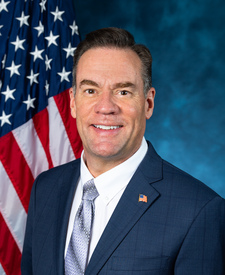
Legislative Progress
In CommitteeMr. Fulcher introduced the following bill; which was referred to …
Referred to the Committee on Energy and Commerce, and in …
Introduced in House
Stakeholder Effects
cui bono?How this legislation distributes effects. Mention counts reflect frequency, not effect magnitude.
Broadband infrastructure developers, Communications project applicants, Wireless carriers
Federal Communications Commission staff, Federal permitting agencies
Positive-direction: Federal permitting agencies
Negative-direction: Federal Communications Commission staff
Bill Structure & Actor Mappings
Who is "The Secretary" in each section?
We use a combination of our own taxonomy and classification in addition to large language models to assess meaning and potential beneficiaries. High confidence means strong textual evidence. Always verify with the original bill text.
Learn more about our methodology