Temporary Immigration Judge Integrity Act
Summary
What This Bill Does
The Temporary Immigration Judge Integrity Act creates a structured pool of temporary immigration judges while declaring that temporary judges should not replace permanent immigration judges. The bill authorizes the Attorney General to appoint temporary immigration judges for renewable terms of up to six months from five categories: former Board of Immigration Appeals members or appellate immigration judges, former immigration judges, administrative law judges employed by or retired from EOIR, administrative law judges at other federal agencies with at least ten years of post-bar immigration-law experience and agency-head consent, and DOJ attorneys with at least ten years of post-bar immigration-law experience. Temporary immigration judges have the same authority as immigration judges to adjudicate assigned cases and administer immigration court matters. The Attorney General, Chief Immigration Judge, and Regional Chief Immigration Judges must create management and training procedures for case assignment, performance oversight, work-product evaluation, at least eight weeks of initial training, and one day of ongoing training every two weeks. Recent former immigration judges, appellate immigration judges, or BIA members can be exempt from training if service begins within two years of their last service. Temporary judges can serve up to four consecutive six-month terms and cannot be reappointed to the temporary role for at least three years after reaching the two-year limit.
Who Benefits and How
EOIR immigration courts benefit from a defined temporary adjudicator pool that can add capacity without treating temporary judges as a permanent substitute. Immigration court litigants can benefit if added adjudicative capacity reduces delays, though outcomes still depend on case facts and judicial quality. Experienced former immigration judges, BIA members, administrative law judges, and DOJ immigration-law attorneys benefit from eligibility for temporary appointments. The Chief Immigration Judge and Regional Chief Immigration Judges benefit from statutory instructions for training, evaluation, and oversight.
Who Bears the Burden and How
Justice Department immigration court managers must recruit, appoint, train, assign, evaluate, and supervise temporary judges. Temporary immigration judges must complete eight weeks of training unless exempt and continue one day of training every two weeks. Federal agencies that employ administrative law judges may need to decide whether to consent to outside temporary service. Immigration court litigants face adjudication by temporary judges rather than only permanent judges. Federal taxpayers fund appointment, training, management, and oversight costs.
Key Provisions
- Authorizes renewable six-month temporary immigration judge appointments from specified experienced legal categories.
- Provides temporary judges the same authority as immigration judges for assigned cases and immigration court matters.
- Requires management procedures for caseload assignment, performance oversight, and work-product evaluation.
- Requires eight weeks of initial training and recurring two-week training unless a recent former immigration adjudicator exemption applies.
- Limits temporary service to four consecutive six-month terms and imposes a three-year waiting period after the two-year cap.
Evidence Chain:
This summary is generated from the full bill text using AI analysis. Expand "Detailed Analysis" below for identified beneficiaries/burden bearers with clause-level evidence links.
At a Glance
What This Bill Does
Authorizes the Attorney General to appoint temporary immigration judges from experienced immigration adjudicators, administrative law judges, and DOJ immigration-law attorneys for renewable six-month terms, with training, oversight, evaluation, case-assignment procedures, a two-year consecutive service cap, and a three-year waiting period before reappointment after that cap.
Key Policy Areas
Immigration, Judiciary, Government
Primary Purpose
Authorizes the Attorney General to appoint temporary immigration judges from experienced immigration adjudicators, administrative law judges, and DOJ immigration-law attorneys for renewable six-month terms, with training, oversight, evaluation, case-assignment procedures, a two-year consecutive service cap, and a three-year waiting period before reappointment after that cap.
Policy Domains
Substantive provisions
Identified Gains
- EOIR immigration courts
- Immigration court litigants
- Former immigration judges
- Administrative law judges with immigration expertise
- DOJ immigration-law attorneys
Identified Costs
- Justice Department immigration court managers
- Temporary immigration judges
- Federal agency heads
- Immigration court litigants
- Federal taxpayers
Sponsors




Legislative Progress
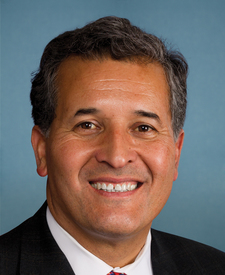
In CommitteeMr. Vargas (for himself, Ms. Velázquez, Ms. Norton, Mr. Soto, …
Referred to the House Committee on the Judiciary.
Introduced in House
Stakeholder Effects
cui bono?How this legislation distributes effects. Mention counts reflect frequency, not effect magnitude.
Administrative law judges with immigration expertise, DOJ immigration-law attorneys, EOIR immigration courts
Positive-direction: Administrative law judges with immigration expertise, DOJ immigration-law attorneys, EOIR immigration courts
Negative-direction: Justice Department immigration court managers
Immigration court litigants, Taxpayers
Positive-direction: Immigration court litigants
Negative-direction: Taxpayers
Former immigration judges, Temporary immigration judges
Positive-direction: Former immigration judges
Negative-direction: Temporary immigration judges
Bill Structure & Actor Mappings
Who is "The Secretary" in each section?
We use a combination of our own taxonomy and classification in addition to large language models to assess meaning and potential beneficiaries. High confidence means strong textual evidence. Always verify with the original bill text.
Learn more about our methodology