Streamline Transit Projects Act
Summary
What This Bill Does
The Streamline Transit Projects Act creates a new 49 U.S.C. section 5322 allowing certain transit agencies to assume responsibility for categorical-exclusion determinations. Eligible recipients must be direct chapter 53 funding recipients located in urbanized areas with more than 200,000 people and must show legal, technical, and financial capacity. The Transportation Secretary may assign responsibility for determining whether designated transit activities fall within categorical exclusions from environmental assessments or environmental impact statements. The Secretary may also assign related environmental review, consultation, or other federal-law responsibilities for categorically excluded activities, except government-to-government consultation with Indian Tribes. Each assignment requires a memorandum of understanding after public notice and comment, including terms, conditions, and reassumption circumstances. MOUs generally last up to three years, can be renewed, and can last five years for recipients with at least ten years of experience assuming categorical-exclusion responsibility. Recipients must accept federal court jurisdiction and become solely responsible and liable for assumed federal law compliance. The Secretary must provide technical assistance on request, monitor compliance and resources, and can terminate assignments after notice, at least 120 days for corrective action, and failure to correct. Recipients may terminate with 90 days notice and can use apportioned transit funds for directly attributable attorney fees.
Who Benefits and How
Eligible transit agencies benefit because they can make categorical-exclusion determinations themselves for designated activities, potentially speeding routine transit projects. Transit project sponsors benefit if local assumption shortens environmental review timing while preserving permissible delivery methods. Community members benefit from required public availability of information and public comment before MOUs. Indian Tribes benefit because government-to-government consultation is not delegated away from the federal government. Experienced agencies benefit from five-year MOU terms after ten years of successful assumption.
Who Bears the Burden and How
Transit agencies that assume authority carry the main burden: they must have legal, technical, and financial capacity, accept federal court jurisdiction, provide resources, meet the same procedural and substantive requirements as the Secretary, and become solely liable for assumed responsibilities. DOT environmental review staff must designate activities, create criteria, negotiate MOUs, provide technical assistance, monitor performance, and manage terminations or renewals. Agencies that fall short can receive noncompliance notices and at least 120 days of corrective-action obligations. Federal courts may see compliance and enforcement litigation tied to assumed responsibilities.
Key Provisions
- Establishes a transit agency assumption program for categorical-exclusion determinations.
- Limits eligibility to direct chapter 53 recipients in urbanized areas above 200,000 people with legal, technical, and financial capacity.
- Authorizes assignment of related environmental review responsibilities while preserving government-to-government tribal consultation.
- Requires public-notice memoranda of understanding, federal court jurisdiction, monitoring, renewal, and reassumption terms.
- Provides technical assistance, corrective-action procedures, termination rules, and attorney-fee eligibility for assumed responsibilities.
Evidence Chain:
This summary is generated from the full bill text using AI analysis. Expand "Detailed Analysis" below for identified beneficiaries/burden bearers with clause-level evidence links.
At a Glance
What This Bill Does
Lets large urbanized-area transit funding recipients assume federal responsibility for categorical-exclusion environmental determinations and related reviews through public-notice memoranda of understanding with the Transportation Secretary, while making recipients solely liable for assumed responsibilities and preserving tribal consultation at the federal level.
Key Policy Areas
Transportation, Environmental Review, Infrastructure
Primary Purpose
Lets large urbanized-area transit funding recipients assume federal responsibility for categorical-exclusion environmental determinations and related reviews through public-notice memoranda of understanding with the Transportation Secretary, while making recipients solely liable for assumed responsibilities and preserving tribal consultation at the federal level.
Policy Domains
Substantive provisions
Identified Gains
- Eligible transit agencies
- Transit project sponsors
- Community members seeking NEPA information
- Indian Tribes
- Experienced transit agencies
Identified Costs
- Transit agencies assuming federal review authority
- DOT environmental review staff
- Federal courts
- Transit agency legal departments
Sponsors

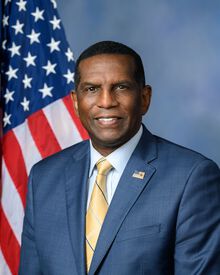
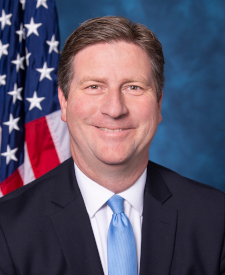
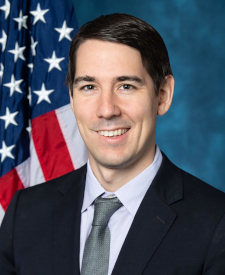
Legislative Progress
In CommitteeReferred to the Subcommittee on Highways and Transit.
Mr. Kennedy of Utah introduced the following bill; which was …
Referred to the House Committee on Transportation and Infrastructure.
Introduced in House
Stakeholder Effects
cui bono?How this legislation distributes effects. Mention counts reflect frequency, not effect magnitude.
Eligible transit agencies, Transit agencies assuming federal review authority, Transit agency legal departments
Positive-direction: Eligible transit agencies
Negative-direction: Transit agencies assuming federal review authority, Transit agency legal departments
Bill Structure & Actor Mappings
Who is "The Secretary" in each section?
We use a combination of our own taxonomy and classification in addition to large language models to assess meaning and potential beneficiaries. High confidence means strong textual evidence. Always verify with the original bill text.
Learn more about our methodology