The Facilitating Increased Resilience, Environmental Weatherization And Lowered Liability (FIREWALL) Act
Summary
What This Bill Does
The bill adds new refundable credit section 36C to the Internal Revenue Code for disaster mitigation expenditures. Individuals can claim a credit equal to 50 percent of qualified expenditures, capped at 25000 dollars per dwelling over time, with married-filing-separately rules, joint-occupancy allocation rules, and inflation adjustments after 2025. The credit phases out as adjusted gross income rises above 200000 dollars and is fully phased out over the next 100000 dollars. Qualified dwelling units must be principal residences in a state or territory with a recent federal disaster declaration for wildfire, hurricane, windstorm, or flood, a FEMA hazard-mitigation-assistance area, or a community disaster resilience zone tied to those hazards. Qualified expenditures include roof deck attachment, secondary water barriers, impact- or fire-resistant roofing, flood elevation, basement sealing, flood vents, stormwater systems, living shorelines, ignition-resistant construction, safe rooms, standby generators or batteries, lightning protection, automatic shutoff valves, alarms, defensible-space work, water and weather data, smoke-inhalation prevention, FORTIFIED designation work, and other FEMA-identified natural-hazard mitigation. Costs paid or reimbursed by insurance or government do not qualify. Claimants must provide documentation, cannot also deduct or credit the same expenditures, and must reduce property basis by the credit. The credit applies to taxable years after December 31, 2024.
Who Benefits and How
Homeowners in disaster-prone areas receive a refundable credit for half of qualifying mitigation costs, making roof, flood, wildfire, wind, safe-room, generator, alarm, and resilience upgrades more affordable. Contractors, suppliers, and resilience-product installers can see more demand for eligible mitigation work. Communities benefit if more homes are hardened before disasters.
Who Bears the Burden and How
Federal revenues bear the cost of the refundable credit. IRS must administer eligibility, income phaseout, documentation, reimbursement exclusions, no-double-benefit rules, and basis reductions. Taxpayers must document qualified expenditures and prove the home is a qualifying principal residence. Insurers and government grant programs may need to coordinate because reimbursed costs are excluded.
Key Provisions
- Adds a refundable section 36C credit equal to 50 percent of qualified disaster-mitigation expenditures.
- Limits the credit to 25000 dollars per dwelling, phases it out above 200000 dollars of adjusted gross income, and indexes dollar thresholds after 2025.
- Defines qualified homes by recent federal disaster declarations, FEMA hazard-mitigation areas, or community disaster resilience zones for wildfire, hurricane, windstorm, or flood.
- Covers roof, flood, wildfire, wind, safe-room, generator, alarm, defensible-space, FORTIFIED, and other FEMA-identified mitigation work.
- Requires documentation, denies double benefits, excludes insured or government-reimbursed costs, reduces basis, and applies after December 31, 2024.
Evidence Chain:
This summary is generated from the full bill text using AI analysis. Expand "Detailed Analysis" below for identified beneficiaries/burden bearers with clause-level evidence links.
At a Glance
What This Bill Does
Creates a refundable personal tax credit for 50 percent of qualified disaster-mitigation expenditures on a principal residence, capped at 25000 dollars per dwelling with income phaseout, documentation duties, no double benefit, and eligibility tied to recent disaster declarations, FEMA hazard-mitigation areas, or community disaster resilience zones.
Key Policy Areas
Tax, Disaster Recovery, Housing, Construction
Primary Purpose
Creates a refundable personal tax credit for 50 percent of qualified disaster-mitigation expenditures on a principal residence, capped at 25000 dollars per dwelling with income phaseout, documentation duties, no double benefit, and eligibility tied to recent disaster declarations, FEMA hazard-mitigation areas, or community disaster resilience zones.
Policy Domains
Substantive provisions
Identified Gains
- Homeowners in disaster-prone areas
- Contractors providing mitigation work
- Resilience-product suppliers
- Community disaster resilience zones
Identified Costs
- Federal revenues
- Internal Revenue Service
- Taxpayers claiming the credit
- Insurers
- Government grant programs
Sponsors
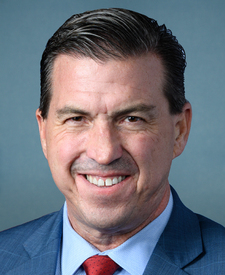

Legislative Progress
In CommitteeMr. Mullin (for himself and Ms. Salazar) introduced the following …
Referred to the House Committee on Ways and Means.
Introduced in House
Stakeholder Effects
cui bono?How this legislation distributes effects. Mention counts reflect frequency, not effect magnitude.
Federal revenues, IRS disaster-credit administration
Bill Structure & Actor Mappings
Who is "The Secretary" in each section?
We use a combination of our own taxonomy and classification in addition to large language models to assess meaning and potential beneficiaries. High confidence means strong textual evidence. Always verify with the original bill text.
Learn more about our methodology