Justice in Sentencing for Survivors Act of 2025
Summary
What This Bill Does
The bill responds to findings about incarceration, growth in incarcerated women, collateral consequences of criminal records, and high rates of sexual violence, partner violence, caregiver violence, and trauma among incarcerated people. Operatively, it gives federal courts authority, notwithstanding other law, to sentence a qualifying victim offender below a statutory minimum or to impose probation, community confinement, or a combination when considering sexual assault, stalking, dating violence, domestic violence, or severe trafficking experienced by the person. Eligibility does not require physical injury, long duration, contemporaneous abuse, or an offense against the abuse perpetrator. Failure to present abuse evidence before sentencing does not bar eligibility. Courts may consider an affidavit proving abuse, trauma, or neglect by a preponderance of the evidence. The bill applies prospectively and allows resentencing motions for prior federal convictions or sentences by the victim offender, Bureau of Prisons, government attorney, or court. The Sentencing Commission must review and amend guidelines and policy statements as appropriate to include qualifying abuse or trafficking history as a sentencing factor.
Who Benefits and How
Qualifying victim offenders benefit because courts can consider abuse, trafficking, trauma, and neglect as reasons for below-minimum or alternative federal sentences. Survivors with prior federal convictions benefit from a resentencing path. Defense attorneys and survivor advocates gain statutory criteria for presenting abuse history, including affidavits under a preponderance standard.
Who Bears the Burden and How
Federal courts must evaluate survivor-based sentencing claims, affidavits, eligibility criteria, and resentencing motions. The Bureau of Prisons, prosecutors, and courts may need to initiate or respond to resentencing requests. The Sentencing Commission must review and amend guidelines and policy statements. Prosecutors may face reduced mandatory-minimum leverage in qualifying cases.
Key Provisions
- Authorizes federal courts to sentence qualifying victim offenders below statutory minimums based on abuse or trafficking history.
- Authorizes probation, community confinement, or combined alternatives for qualifying victim offenders.
- Provides eligibility even when abuse caused no physical injury, was not long-running, was not contemporaneous, or involved someone other than the offense victim.
- Allows resentencing motions for prior federal convictions or sentences by the victim offender, BOP, government attorney, or court.
- Requires the Sentencing Commission to review and amend guidelines and policy statements for survivor-based sentencing factors.
Evidence Chain:
This summary is generated from the full bill text using AI analysis. Expand "Detailed Analysis" below for identified beneficiaries/burden bearers with clause-level evidence links.
At a Glance
What This Bill Does
Allows federal courts to impose below-minimum, probation, community-confinement, or combined sentences for qualifying victim offenders whose abuse or trafficking history significantly contributed to their offense, and directs the Sentencing Commission to update guidelines.
Key Policy Areas
Criminal Justice, Domestic Violence, Human Trafficking
Primary Purpose
Allows federal courts to impose below-minimum, probation, community-confinement, or combined sentences for qualifying victim offenders whose abuse or trafficking history significantly contributed to their offense, and directs the Sentencing Commission to update guidelines.
Policy Domains
Substantive provisions
Identified Gains
- Qualifying victim offenders
- Survivors of domestic violence
- Survivors of sexual assault
- Survivors of trafficking
- Defense attorneys
Identified Costs
- Federal courts
- Bureau of Prisons
- Federal prosecutors
- United States Sentencing Commission
Sponsors

Legislative Progress
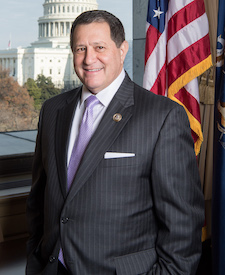
In CommitteeMr. Morelle (for himself and Mrs. Dingell) introduced the following …
Referred to the House Committee on the Judiciary.
Introduced in House
Stakeholder Effects
cui bono?How this legislation distributes effects. Mention counts reflect frequency, not effect magnitude.
Qualifying victim offenders, Survivors of domestic violence
Federal courts, United States Sentencing Commission
Bill Structure & Actor Mappings
Who is "The Secretary" in each section?
We use a combination of our own taxonomy and classification in addition to large language models to assess meaning and potential beneficiaries. High confidence means strong textual evidence. Always verify with the original bill text.
Learn more about our methodology