HALT Act of 2025
Summary
What This Bill Does
The bill combines a policy statement with a funding restriction. Its findings cite the New START extension, the Nuclear Non-Proliferation Treaty, the Comprehensive Nuclear-Test-Ban Treaty verification network, Stockpile Stewardship, Russian threats after the invasion of Ukraine, and nuclear modernization by Russia, China, India, Pakistan, and North Korea. The policy section says the United States should lead negotiations on arms-control, disarmament, and risk-reduction agreements, including renewed United States-Russia inspections, a verifiable freeze on testing, production, and deployment, numerical ceilings on delivery systems and warheads, no-first-use policies or declaratory transparency, expanded IAEA access through the Security Council, limits on launch-on-warning posture, protections for nuclear command and control, hypersonic transparency, nuclear stockpile data exchanges, a fissile-material cutoff treaty, head-of-state nuclear summits, CTBT ratification, and restraint on new warhead designs. The operative funding section bars fiscal year 2026 and later funds, plus unobligated prior funds, from being used for any explosive nuclear weapons test that produces yield unless the President submits a stockpile-condition addendum and Congress enacts a joint resolution approving the test. Zero-yield stockpile stewardship is not limited.
Who Benefits and How
Arms-control advocates, nuclear-risk reduction organizations, and communities concerned about nuclear testing benefit from a statutory preference for negotiated freezes and a congressional approval requirement before yield-producing tests. Congress benefits by gaining a veto point over explosive nuclear testing. International nonproliferation institutions benefit if the United States pursues CTBT ratification, fissile-material limits, IAEA access, and data exchanges.
Who Bears the Burden and How
The Department of Energy, National Nuclear Security Administration, Department of Defense, and any nuclear-test planners are barred from obligating funds for yield-producing tests unless the President files the required addendum and Congress approves a joint resolution. The President must justify any stockpile-condition change before testing. Diplomatic agencies would need to pursue a broad arms-control agenda if the policy is implemented.
Key Provisions
- States United States policy to pursue multilateral nuclear arms-control, disarmament, and risk-reduction negotiations.
- Directs policy attention to New START follow-on measures, nuclear-freeze agreements, warhead and delivery-system ceilings, no-first-use policy, IAEA access, NC3 protections, hypersonic transparency, and fissile-material limits.
- Encourages CTBT ratification and reciprocal commitments not to develop new nuclear warhead or bomb designs.
- Bars funds for explosive nuclear weapons tests with yield until the President submits a stockpile-condition addendum and Congress enacts a joint resolution approving the test.
- Protects zero-yield stockpile stewardship activities from the funding bar.
Evidence Chain:
This summary is generated from the full bill text using AI analysis. Expand "Detailed Analysis" below for identified beneficiaries/burden bearers with clause-level evidence links.
At a Glance
What This Bill Does
States a United States policy favoring multilateral nuclear-arms reduction and freeze negotiations, and bars funding for explosive nuclear-weapons testing with yield unless the President submits a stockpile-condition addendum and Congress approves the test by joint resolution.
Key Policy Areas
Defense, Foreign Affairs, Nuclear Nonproliferation
Primary Purpose
States a United States policy favoring multilateral nuclear-arms reduction and freeze negotiations, and bars funding for explosive nuclear-weapons testing with yield unless the President submits a stockpile-condition addendum and Congress approves the test by joint resolution.
Policy Domains
Substantive provisions
Identified Gains
- Arms-control advocates
- Nuclear-risk reduction organizations
- Congress
- International Atomic Energy Agency
- Comprehensive Nuclear-Test-Ban Treaty institutions
Identified Costs
- Department of Energy
- National Nuclear Security Administration
- Department of Defense
- President
- Nuclear-test planners
Sponsors

Legislative Progress
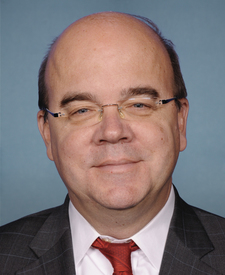
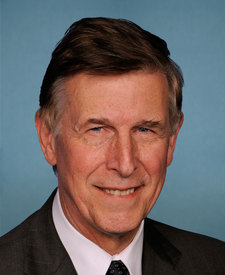
In CommitteeMr. McGovern (for himself, Mr. Garamendi, and Mr. Beyer) introduced …
Referred to the Committee on Armed Services, and in addition …
Introduced in House
Stakeholder Effects
cui bono?How this legislation distributes effects. Mention counts reflect frequency, not effect magnitude.
Congressional nuclear-oversight committees, President nuclear-test approval process, State Department arms-control negotiators
Positive-direction: Congressional nuclear-oversight committees
Negative-direction: President nuclear-test approval process, State Department arms-control negotiators
Department of Defense nuclear policy offices, NNSA nuclear-test programs, Zero-yield stockpile stewardship programs
Positive-direction: Zero-yield stockpile stewardship programs
Negative-direction: Department of Defense nuclear policy offices, NNSA nuclear-test programs
Bill Structure & Actor Mappings
Who is "The Secretary" in each section?
We use a combination of our own taxonomy and classification in addition to large language models to assess meaning and potential beneficiaries. High confidence means strong textual evidence. Always verify with the original bill text.
Learn more about our methodology